
It is 13° in Bansko now.  mostly cloudy
mostly cloudy
mostly cloudy
Traditional taverns, Kapama, and authentic regional flavours — your ultimate guide to eating like a local and must-try dishes.
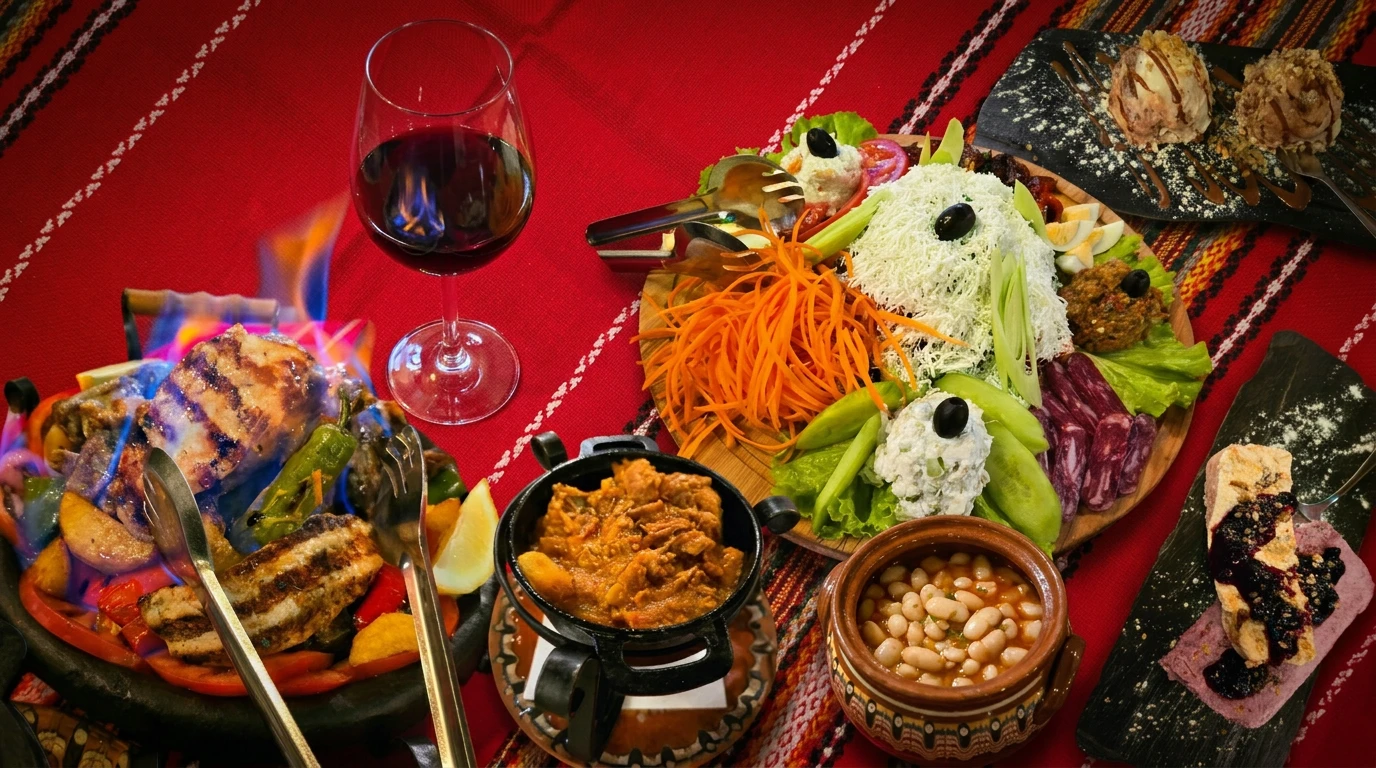
If you spot these three dishes on the menu, you're in the right place. Here is what they are and how to order them like a pro.
This isn't just "meat and cabbage". Authentic kapama is slow-cooked in a clay pot for 5–6 hours.It layers sauerkraut, rice, and at least three types of meat (pork, beef, chicken), along with local sausage and blood sausage. The secret touch comes from savory spices, bay leaf, and a splash of red wine. mulled wine and live music.
Order ONE kapama to share between two or three people. Portions are generous—if everyone orders their own, you'll be eating until morning!
Bone-in veal shank slow-braised overnight in a traditional oven with whole onions, potatoes, carrots, and red wine. The meat should fall off the bone effortlessly—if it doesn't, it's not ready.
A dry-cured pork delicacy seasoned with cumin and black pepper, traditionally cured in a casing. It’s the ideal pairing for red wine by the fireplace on a chilly winter evening.
A rich, hearty bean soup made with local heirloom dried beans (kostereta), seasoned with winter savory and onions. Nothing warms you up better after a day on the slopes.
Meat grilled over pinewood embers. Seeing "Na Borina" on the menu guarantees a rich, smoky flavour. The Borina sausage comes highly recommended.
A mixed platter of local delicacies: sujuk sausage, kebapche, regional sausages, and grilled yellow cheese (kashkaval). Perfect for sharing with friends.
Freshly baked pastry topped with warm honey and crushed walnuts. Served hot alongside fresh mountain milk, it makes a classic local breakfast.
Bansko has two distinct types of eateries: tourist traps and authentic, family-run mehanas. Here is how to spot the difference and pick the best ones.
Mostly located along Pirin Street (the main tourist drag). Expect barkers out front, loud music, and menus featuring photos of every dish.
Tucked away in the side streets of the Old Town around Holy Trinity Church. No barkers, no picture menus. Run and served by the family, with the inviting aroma of wood smoke and home cooking.
Stroll around Holy Trinity Church and the main square, then venture into the side streets like Otets Paisii Street or around Vazrazhdane Square. If you catch the aroma of wood smoke and cooked dishes at the door, step right in.
A legendary spot where tradition comes alive. If you are looking for the perfect blend of cozy hospitality, authentic Bansko spirit, and dishes crafted from forgotten local recipes, this is a must-visit tavern.
Far less touristy than Bansko, Razlog boasts a truly authentic culinary scene. Its local markets and family-run eateries are top-notch.
Every morning, local producers bring fresh goods — mountain brine cheese, kashkaval, artisan yogurt, fresh eggs, local honey, and homemade rakia. Stock up here for a mountain picnic or long-stay apartment supplies.
Razlog boasts its own cured meat traditions — the local sausage is lighter and more aromatic than Bansko's version. Grab some at the market to take home.
Razlog has a charming afternoon coffee culture right in the central square. Pull up a chair alongside the locals — this is where you will experience the authentic spirit of the region.
Grab some fresh local banitsa and cheese from the market and head to the City Park lake. It is an ideal spot for a relaxing outdoor lunch with the kids.
Dining here is the perfect addition to a spa day. You can explore the traditional taverns (mehanas) in Banya for lunch or enjoy authentic Macedonian grill in Dobrinishte for dinner.
Arrive in Banya around noon → eat at a local tavern → go to the SPA (not the other way around — on a full stomach in hot water is a bad idea!) → after 2 hours at the springs → dinner in Dobrinishte.
Soaking in 42°C water on a full stomach is a recipe for digestive discomfort. Wait at least 1.5–2 hours after eating before stepping into the thermal mineral pool.
The authentic taste of Macedonia in the heart of Dobrinishte! After a relaxing day in the mineral pools, a rich plate of gravche, traditional grill, a hilarious salad and live guitars await you here, creating an unforgettable festive atmosphere.
Nestled at the foot of the Pirin Mountains, Bansko is close to the Mesta and Struma river valleys—regions steeped in rich winemaking traditions. Here is what to sample.
The only grape variety indigenous exclusively to Bulgaria. Light, smooth, and fruit-forward, it pairs perfectly with rich Bansko cuisine.
A hybrid variety with a fuller body and firmer tannins than Shiroka Melnishka. An ideal choice for a cozy winter evening with kapama.
If offered "domashna rakia", ask whether it's grape (grozdova) or fruit-based (plodova). Alcohol hits faster in the mountains—watch the proof!
Mint, lemon balm, and oregano gathered from Pirin. Drink it after spa treatments to hydrate and soothe. Ask for "planinski chay"—they’ll bring you a full teapot.
Instead of scanning the wine list, ask your waiter: "What local wine do you recommend with the kapama?" In the best taverns, they will serve you an unlisted house wine sourced directly from a local winemaker.
Use these local terms and your waiter will instantly know you’re no ordinary tourist. Better service guaranteed!
Enter the tavern, sit down, and say, "Bring us whatever you recommend today — in a pot, on a spit, with house wine." If the establishment is genuine, you will receive an unforgettable dinner. If they ask you "what exactly" — get up and leave.
 Български Български
  English (UK)
 Русский