

Editor's note: This is an extended analysis of economic and urban transformations. If you are looking for specific information about the current season, check out our current guides.
The EU Effect: The Catalyst for Change
On January 1, 2007, Bulgaria became a full member of the European Union. For Bansko, this was not just a political act, but a powerful economic boost. Membership brought with it unprecedented optimism, which materialized in a „gold rush“ for land and square meters. The town became the hottest investment spot in the Balkans, attracting capital that had previously been directed to Alpine resorts or the Spanish coast.
This period marked the transition of Bansko from a local winter resort to an international destination. Investors saw Bansko as the "new Switzerland", but with far lower taxes and huge growth potential.
The Gold Rush: Property Bubble and Market Records
Looking at Bansko in 2007, we see the city physically transforming before the eyes of its residents. Optimism from the EU and easy access to bank loans created a „perfect storm“ in the property market. Buyers, mainly from the UK and Ireland, arrived on low-cost flights and bought apartments „on the spot“, often without even seeing the property in person.
| Factor | Market characteristics (2007) |
|---|---|
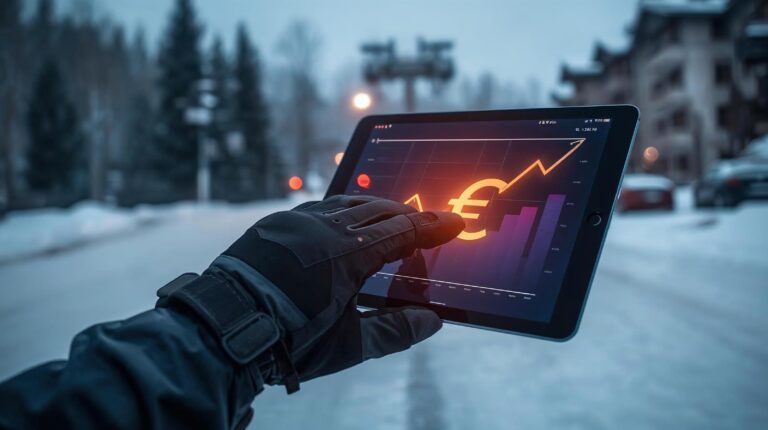
| Record prices | Transactions in the area of the lift base station exceeded 1,500 euros per sq m. |
| Foreign invasion | Over 70% of the buyers are British and Irish citizens. |
| Construction pace | Record building permits have been issued for over 500,000 sq m of floor area. |
The neighborhoods that changed forever
The "Gramadeto" neighborhood and the surrounding area Gondola became a huge construction site. The first modern aparthotels and shopping malls appeared. The traditional stone walls were replaced by glass and concrete, which sparked the first serious debates about the architectural appearance of the city and the preservation of its identity.
Infrastructure collapse and the historic moratorium
However, the unprecedented growth had its dark side. In 2007, it became clear that the city's underground infrastructure was not designed for such a scale. The outdated water supply network began to crack under the pressure of dozens of new hotels, leading to frequent breakdowns and huge water losses.
The electrical grid also reached its limit. During the peak moments of the winter season, when all the hotels turned on their heating and SPA systems, entire neighborhoods were left without power. This necessitated the intervention of the local authorities.
The construction moratorium of December 1, 2007.
The situation forced the then mayor, Alexander Kravarov, to take an unprecedented decision. On December 1, 2007, a complete ban on the movement of heavy construction equipment during the active winter season came into effect. This was an attempt to save the resort's tourist image and give a breath of fresh air to the congested urban environment.
Evolution of the Hotel Business: From Guesthouses to 5 Stars
Despite the chaos, Bansko in 2007 It also marks a qualitative evolution of the tourist product. Until then, small family hotels and taverns dominated, but this year, properties appeared that set new standards for luxury:
- Lucky Bansko SPA & Relax: Opened in 2007, the complex became a pioneer in luxury aparthotels, offering world-class service and a modern SPA center that operates year-round.
- Mountain Romance Hotel: An example of how traditional bathing style can be combined with the modern requirements of the Western European tourist.
These new investments, together with the already established Kempinski Grand Arena Hotel, have transformed Bansko into a destination capable of welcoming the most demanding guests, including royalty and world business leaders.
Culture, memory and environmental challenges
The year was not only marked by construction. On October 18, 2007, the Radenov House Museum was opened - an act that reminded everyone that Bansko is, above all, a city with a rich history and spiritual heritage. The donation of Gen. Krum Radonov preserved artifacts from Thracian times to the Middle Ages, balancing the aggressive modernization.
However, in ecological terms, tensions were growing. On March 2, 2007, Pirin Nature Park officially became part of the European Ecological Network. Natura 2000. This marked the beginning of a long-standing conflict between the ski area's needs for new slopes and facilities and the requirements for biodiversity conservation at the UNESCO site.
Sports Capital of the Balkans: The Star-Studded Opening
The culmination of the development of Bansko in 2007 came on December 15 with the official opening of the 2007/2008 ski season. The square and the slopes were announced by the names of legends such as Marc Girardelli, Janica Kostelic and Kietil André Amod.
The technological upgrade was impressive – the number of artificial snow guns was doubled, ensuring perfect coverage of the iconic Tomba slope. These improvements allowed the city to bid and win hosting European and World Cup competitions, solidifying its status as a leader in the region.
Do you want to know more about "The Anatomy of a Peak"?
Our team has prepared a detailed study of property cycles in Bansko from 2007 to the present.
Conclusion: The Lessons of 2007
Looking back, 2007 was the moment of the „Big Bang“ for Bansko. The balance sheet remains mixed: on the one hand we saw incredible economic prosperity, luxury hotels and international sporting recognition. On the other hand, overdevelopment and infrastructure deficits left scars that the town struggles with to this day.
The history of Bansko in 2007 is a valuable lesson in economics and sustainable development. It teaches us that growth without planning leads to crises, but also that the spirit of Bansko is strong enough to turn challenges into opportunities.