



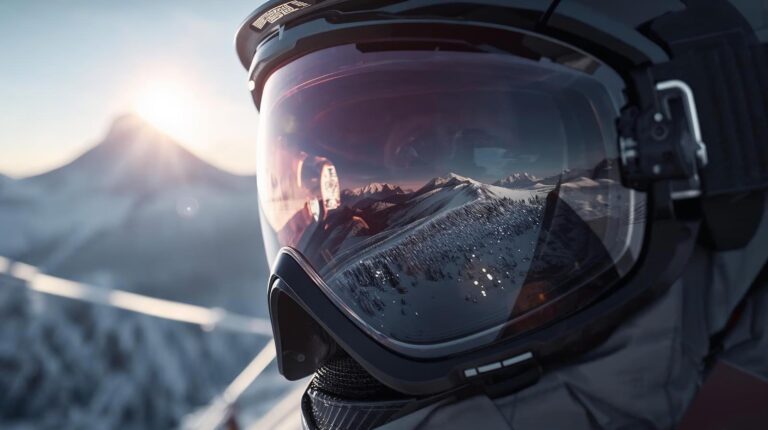
In this guide, we will look at all the working solutions for ski goggles with prescription, we will compare technologies and give you valuable tips on how to avoid the biggest enemy of winter sports - fogged windows.
Why aren't standard goggles enough on the track?
Many beginner skiers try to ski with only their everyday glasses or sunglasses with prescription lenses. In the conditions of the Pirin Mountains, this is not only uncomfortable, but also dangerous. The ski mask protects against wind, strong UV radiation, ice crystals and mechanical injuries in the event of a fall. That is why integrating your prescription lenses into the mask is critical for your safety.
Never use glass prescription lenses under a ski mask. In the event of an accident, the glass can break and cause fatal eye injuries. Always opt for impact-resistant polycarbonate.
Basic solutions for skiing with prescription lenses
1. OTG (Over The Glasses) – Glasses on top of glasses
This is the most budget and popular option. OTG ski goggles are designed with a larger volume and specific slots in the side foam that allow the frames of your prescription glasses to fit comfortably without pressing into your temples.
- Advantages: Affordable price and the ability to use your current glasses.
- Disadvantages: They sweat more easily because you have two layers of glass and limited airflow between them.
2. Optical Inserts
Many professionals in Bansko choose this method. The insert is a small frame that is mounted on the inside of almost any quality ski mask.
You order the insert, then the optician makes lenses according to your prescription. It “snaps” securely and provides excellent peripheral vision, without the discomfort of glasses under the helmet.
If you choose an insert, make sure it is fitted as close to the face as possible to reduce image distortions that occur when the distance between the eye and the lens is large.
3. Ski helmets with integrated visor
In recent seasons in Bansko we have seen more and more skiers wearing “spacesuit” type helmets. They have a large built-in visor that is easy to lift and remove. Since the visor does not fit tightly to the face (like a standard mask), there is enough space under it for any prescription frames, even the more extravagant ones.
Fighting condensation: How to keep your vision clear?
The sweating of ski goggles with prescription is the most common problem. When you exhale warm air or sweat during intense riding, moisture condenses on the colder lenses.
Here's how to deal with it:
- Anti-fog preparations: Apply a quality anti-sweat spray to your prescription glasses before each outing on the track.
- Proper ventilation: Do not cover the top of the ski mask with a hat or bandana. The ventilation holes must be free to allow warm air to escape.
- Do not put the mask on your forehead: This is the most common mistake. Your forehead gives off a lot of heat and moisture, which will immediately fog up the lenses as soon as you put the mask back on your face.
- Constant motion: Most modern masks are designed so that the airflow during movement cleans away condensation.
Where to find equipment in Bansko?
If you are in Bansko and find that your glasses are not compatible with your mask, visit the specialized shops around the starting station of Gondola. Most reputable ski lockers offer OTG models for rent, which is a great way to test comfort before investing in your own gear.
Are you ready for the slopes under Todorka Peak?
In conclusion, your prescription should not be an obstacle to your passion for winter sports. Whether you opt for contact lenses (which are an excellent option in combination with a normal mask) or a specialized dioptric insert, the important thing is to ensure crystal clear visibility to enjoy every turn on the white slopes of Pirin.