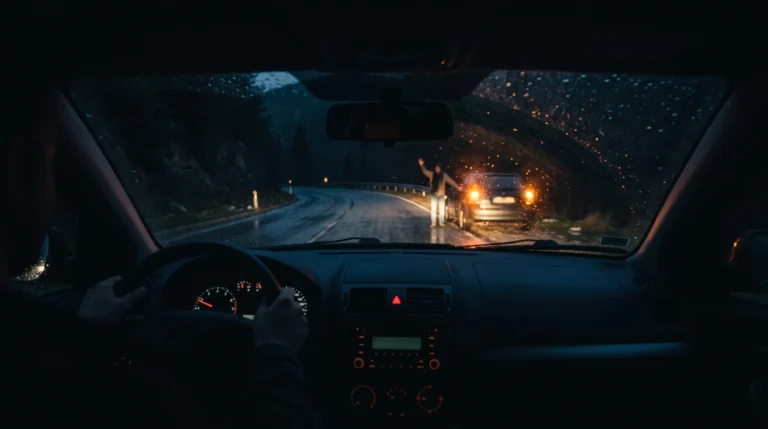




At this point, you have two choices. The first is to get into an argument (“Sir, you just can’t drive”), which guarantees a scandal and a 1-star Google review. The second is to apply professional techniques to dealing with difficult clients, to relieve tension and even turn this person into a loyal customer.
In this guide, we will give you specific "battle scripts" for your staff to defuse the most common conflict situations during the 2026 season.
1. Psychology of conflict: Why do they shout?
Before you react, you need to understand: In 90% of cases, the customer is not angry at you personally. He is angry because:
- He is tired and his legs hurt.
- He feels incompetent (he has fallen a lot) and his ego suffers.
- He's afraid he paid a lot of money for something he can't use.
Teach your team this acronym:
Listen (Listen without interrupting).
Apologize (Sorry for the inconvenience, not for wines).
Solve (Propose a solution immediately).
Thank (Thanks for the feedback).
2. Scenario 1: “The skis don’t turn / They’re stupid”
This is a classic. The client overestimates his skills, gets hard skis (Race carver) and can't manage them.
❌ Wrong reaction: “Skiing is great, it’s just hard.”
✅ Correct script: “I understand you had a rough day and I'm sorry about that. These skis are from the 'Race' series, which require a very hard track and speed. The snow was probably softer today. Let me immediately change them for you with an 'All Mountain' model, which is wider and more forgiving. You'll be born with them tomorrow. It's free.‘
Result: You are not insulting his skills, but blaming the “conditions” and giving him a solution.
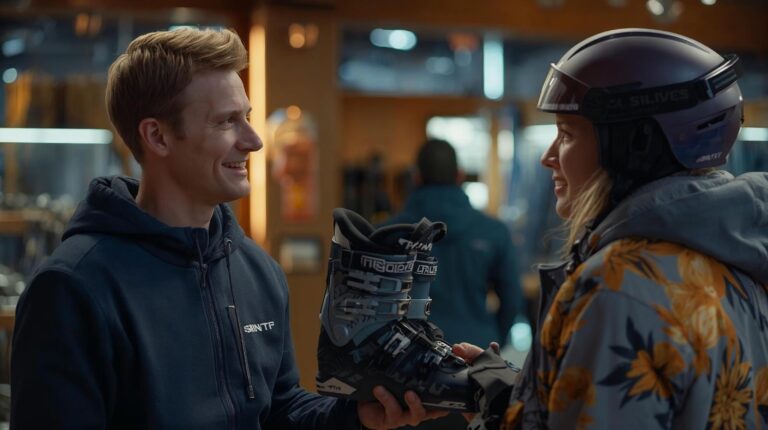
3. Scenario 2: “My shoes are killing me terribly”
Leg pain makes people irrational. Don't argue here.
❌ Wrong reaction: “It's normal, these are ski boots, not slippers.”
✅ Correct script: “I’m sorry you’re in pain. Let me take a look at your foot. I see you have a wider ankle/calf. This model is too narrow for your anatomy. Come sit down, I’ll give you a Dalbello/Head model that is specifically for a wider foot (High volume). I’ll also give you softer insoles as a bonus.”
4. Scenario 3: “I want my money back”
The most dangerous situation. If you return the money, you lose revenue. If you refuse, you risk a scandal.
✅ "Compensation" strategy: “Sir, according to our policy, refunds for used equipment are not possible. BUT, since we want you to be satisfied, here’s what I can do: I will give you a voucher for a free full service on your personal skis (or a friend’s) or I will upgrade your equipment to VIP class for the remaining days at no extra charge.”
Most customers agree to an upgrade because it gives them a feeling of victory and VIP status, and it costs you 0 leva.
5. Prevention: How to stop the scandal before it starts?
The best dealing with difficult clients is prevention.
- Manage expectations: When renting, say: “If you feel even the slightest discomfort with your shoes, please come and change immediately. Don’t bother!” This opens the door to communication.
- Train the Runners: When the customer returns the skis in the afternoon, the guy who accepts them should ask: “How was your day? Is everything okay?” If the customer is sour, the “Runner” should quietly signal to the manager to meet the problem at the door.
6. When to say “No”?
There is a limit. If the customer is drunk, aggressive, insults the staff, or threatens physical violence, politeness ends.
“Code Red” Protocol:
1. The manager stands in front of the employee.
2. Calm but firm tone: “Sir, please stop insulting your colleague. I will not speak to you until you calm down.”
3. If it continues: “Please leave the premises, or I will call security/police.”
Conclusion: Emotional intelligence is an asset
Heating is your biggest expense during winter in Bansko, where competition is at every meter, the ability to calm an angry customer is more valuable than the latest ski model. A “saved” scandal often leads to the most loyal customers because they remember that you took care of them when they had a problem.