
Since this is a specific narrow gauge line (with a track gauge of only 760 mm), the carriages differ significantly from those of the standard “large” BDZ trains. In this detailed guide, we will take you on a virtual tour of the compartments so you know exactly what to expect and how to prepare for a comfortable and unforgettable experience.
Space and feel: How cramped is it on the train?
The name “narrow gauge” doesn’t just refer to the tracks – the carriages themselves are physically narrower than standard ones. However, once you get inside, you won’t feel claustrophobic at all. The ceiling height is perfectly standard and even a tall person can stand upright on the aisle without any problem. The feeling is more of a shared coziness. The windows are huge and open downwards (in a classic retro style), which is absolutely perfect for photography enthusiasts in the warmer months.
Seats and seating arrangement
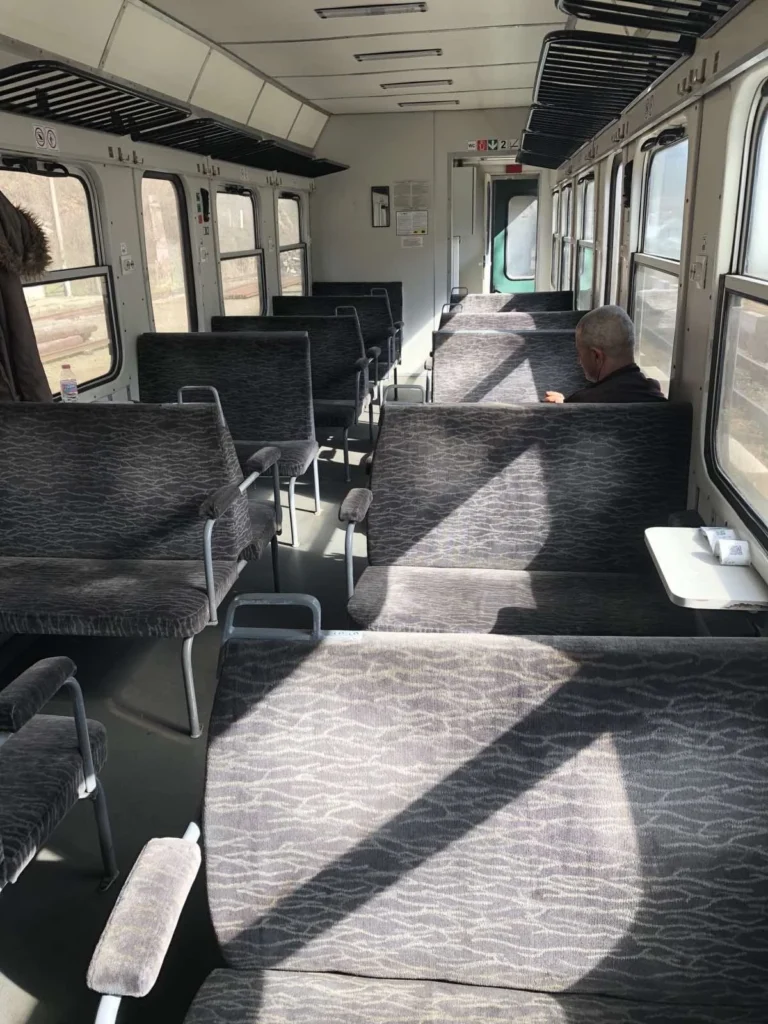
One of the main differences with the old express trains is that here there are no separate closed compartments with doors (of the "cabin" type for 6 or 8 people). The narrow-gauge carriages are built on the "salon principle" - one large, open space from end to end.
- The configuration: The seats are usually arranged in a 2+1 or 2+2 configuration (depending on the specific car series). The seats are grouped in pairs, facing each other, with a small wooden table by the window between them.
- Comfort: The seats are soft, upholstered (most often in classic red or blue fabric). Although they don't have the ergonomics of modern trains, they are perfectly comfortable for the 5-hour journey between Septemvri and Bansko.
- Tickets and seats: When purchasing a reserved seat ticket, you will have a specific seat number. On busy days (weekends, holidays) the conductors strictly monitor compliance. However, on quiet weekdays you can often sit where you like the view the most.
Is it possible to walk between the carriages?
The short answer is: Yes, absolutely! And that's actually one of the most exciting things about the whole trip.
The transition from one carriage to another takes place through the so-called “open transition platforms”. These are small metal balconies at both ends of each carriage. When you open the door, you literally go out into the open air as the train moves through the forest. These platforms are a favorite place for tourists, because from them you can feel the real breeze of the mountains and the smell of pine trees.
⚠️ Caution when crossing
Although it is permitted, the transition between the narrow gauge railway cars During movement, you should be careful. Hold on tightly to the railings! The train often “jumps” and shakes noticeably on sharp turns. Under no circumstances should small children go out onto the playgrounds without strict parental supervision.
Toilets and Hygiene: What is the Reality?
Let's be completely honest - there are toilets on the train, but they are far from the standards of modern hotels. Each carriage has a small toilet located at the very end.
- Pool Type: The toilets are of the classic old BDZ type (with direct access to the tracks). The sink offers only cold water.
- Purity: They are cleaned at the beginning of the course, but after a few hours of travel on a full train, their condition logically deteriorates.
- Consumables: The train is almost never stocked with toilet paper or soap.
💡 The Golden Rule of Hygiene
Be sure to pack a pack of dry toilet paper, wet wipes, and a small amount of hand sanitizer in your backpack. This is the most important tip for a hassle-free trip on any vintage train.
Heating, air conditioning and luggage space
Winter vs. Summer
One of the most common myths is that it is freezing cold on a train in winter. The truth is exactly the opposite! The carriages have extremely strong heating (steam from the locomotive or electric). Sometimes it gets so hot inside that passengers sit in T-shirts while snow is piling up outside near Bansko. Dress in “layers”.
In the summer, don't look for air conditioning. Coolness is provided by opening all the windows, which creates natural ventilation from the cool mountain air.
Where should we put our luggage?
Above the seats themselves are mounted sturdy metal racks for backpacks and small bags. If you are traveling to the ski area with huge suitcases and ski equipment, they will not accumulate there. Large luggage is usually left in the vestibule of the car or is “inserted” strategically into the spaces between the seat backs.
Is there a dining car?
In the regular courses of the narrow gauge there is no dining car. This means that you have to take care of your own provisions. Prepare water, a thermos of coffee and sandwiches in advance. Sharing homemade food on the small table is an integral part of the charm of this trip.
The journey in the narrow gauge railway cars is a deeply authentic experience. It may not offer you the sterile luxury of the 21st century, but it gives you something much more valuable – home comfort, warmth, and the feeling of being part of a living history.
🚂 Discover everything about the Rhodope Narrow Gauge Railway
Interested in current schedules, ticket prices, secret walking routes, or the history of the train? Check out our main page!