


1. Security and Access (Day 1: Before You Even Unpack)
Before you pack your bags and open that bottle of champagne, you need to ensure the physical integrity of your investment. Take these two critical steps the day you take possession:
- Changing the cylinder (lock): You can never be sure how many sets of keys are left with third parties – brokers, builders, cleaners, maintenance companies or previous tenants. The investment of 50 to 100 leva for a quality secret cylinder is absolutely mandatory for your peace of mind.
- Checking and recording water and electricity meters: Enter the property with the seller or agent and record (preferably take a photo with your phone) the exact readings of the water and electricity meters at the time of handing over the keys. Sign a Handover and Acceptance Protocol. This is your only legitimate proof in case you later receive a huge balance bill for utilities accumulated by the previous owner.
2. Administrative Duties (Deadlines are critical!)
Bureaucracy in Bulgaria is inevitable, but when you know the exact steps, the process is predictable and clear. Pay close attention to the following legal deadlines:
A. Registration under BULSTAT (Applies only to foreigners)
Deadline: 7 days after receipt of the notarial deed.
If you are not a Bulgarian citizen and do not have a Unified Citizen Number (EGN) or a Foreigner Personal Number (LNF), the state cannot identify you as a taxpayer. Therefore, the law requires you to register with the Registry Agency (BULSTAT Register) to receive a unique 10-digit identification code. Without this number, you will not be able to open electricity and water bills, nor pay your local taxes.
B. Declaration in the Municipality of Bansko (Tax Office)
Deadline: 2 months (60 days) after the date of the transaction.
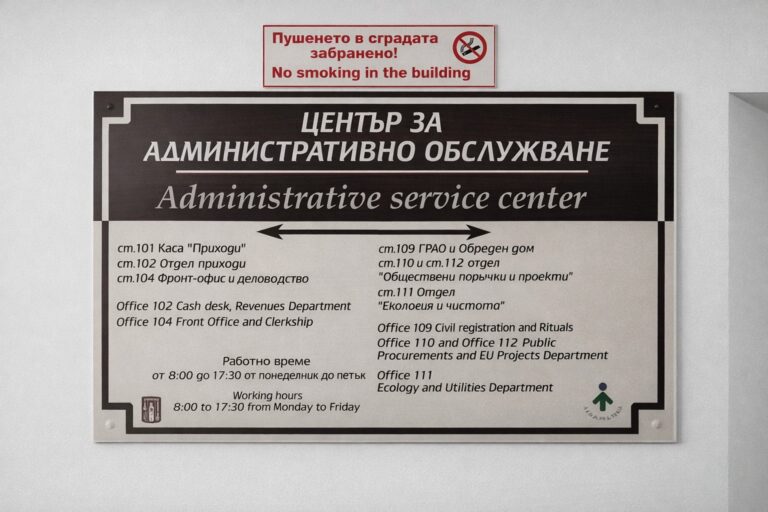
Each new owner is obliged to submit a Tax Declaration under Art. 14 of the Local Taxes and Fees Act (LTFA) to the Local Taxes and Fees Directorate at Bansko Municipality. With this act, you officially declare to the local authorities that you are now the new payer of the annual building tax and household waste (garbage) fee.
C. Cadastre Agency (AGKK)
By law, the notary submits the information about the change of ownership ex officio to the Agency for Geodesy, Cartography and Cadastre. However, it is a good practice to check online after about a month to see if your name is now correctly listed as the owner in the cadastral sketch of the property.
3. Change of lots (Electricity and Water)
This is the administrative step that most often confuses new owners. Utility bills are not automatically transferred to your name after the notary! You must initiate the process personally.
- Electrohold (Formerly CEZ): You need to visit the nearest customer center (in Razlog or Gotse Delchev) or submit the documents through their online portal. You will need a copy of the notarial deed, an ID card, and the meter reading report. Important notice: This is the time to make sure that the batch you are transferring is for household (and not industrial) electricity.
- Plumbing (Water Supply): The procedure is completely identical. In Bansko there is a local office of the Water and Sewerage Service, where you need to take the documents and the water meter readings. Keep in mind that in some aparthotels the water is measured on a common water meter and paid directly to the building management.
4. Relationship with Condominium Ownership and Management
If you have purchased an apartment in a housing cooperative or a gated holiday complex, you automatically become part of a community and have commitments to the common areas of the building.
Find the legitimate property manager or facility management company. Introduce yourself and provide your current contact information (phone and email) so they can reach you in the event of an emergency (e.g. a leak). Request a copy of the House Rules and clarify all the details about your maintenance fee – when is the due date, which bank account is it transferred to, and what services does it cover?.
5. Internet and Communications
To turn your property into a modern home, you need excellent connectivity. Bansko is a world-renowned destination and has attracted thousands of remote professionals in recent years. It is no coincidence that the city has established itself as a hub for digital nomads.
The infrastructure is at an extremely high level. The main local and national providers offer stable fiber optic internet with speeds from 100 to 300 Mbps and above. A big advantage of the local market is that some operators offer seasonal contracts – you can pay for internet only for the months in which you actually use the property, without being tied to onerous 24-month contracts.
6. Renovations and Furnishing: The Specifics of the Mountain
If your new home needs a refresh or major renovation, you need to consider the local mountain climate and labor market:
- Insulation: Winters in Bansko can be harsh. The investment in quality PVC windows (triple glazing) and internal wall insulation pays for itself literally in one or two winter seasons through drastically lower electricity bills.
- Heating System: Although inverter air conditioners are convenient for the transitional seasons, at temperatures of -15°C their efficiency drops significantly. For Bansko, the safest and preferred heating methods remain convector radiators, local pellet heating or heat pumps.
- Finding craftsmen: This is the biggest challenge. The good construction crews and craftsmen in the Bansko and Razlog regions are committed for months to come. Plan large-scale renovations for spring or summer. In the fall (October and November), just before the start of the ski season, finding a free ski master is almost an impossible mission.
Conclusion of the series
Buying a property is just the first step in your exciting adventure in Bansko. With this detailed five-part guide, you now have all the necessary “map” to walk confidently – from choosing the perfect location and checking for burdens, to administrative arrangements and your first cozy evening in front of the fireplace. Enjoy the magic of Pirin!