


Complete list of the 14 huts and shelters in Pirin
There are 14 officially operating sites within the national park that offer shelter to passing tourists. They vary greatly in their conditions – from massive, modernized chalets with easy car access and amenities, to extremely remote alpine shelters, where modern comfort is replaced by unspoiled nature, silence, and Spartan conditions.
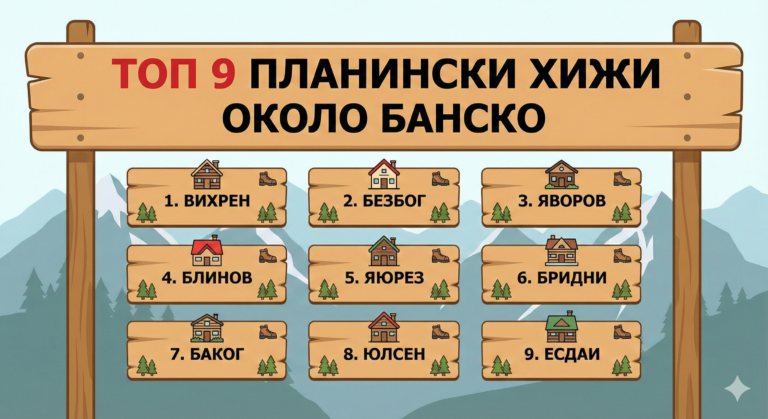
1. Vihren Hut (1950 m above sea level)
This is perhaps the most popular and busiest starting point in the entire Pirin, as it serves as a base camp for climbing the top peak Vihren (2914 m). The hut is accessible by car via an asphalt road from Bansko (16 km), as well as by regular bus lines during the active summer season.
- Capacity: About 80-90 beds, distributed in rooms with different numbers of beds.
- Services: Restaurant with hot food, indoor restrooms, tourist canteen.
- Starting point for: Vihren Peak, Kutelo Peak, Koncheto Ridge, Muratovo Lake, Sinanitsa, Tevno Ezero.
2. Bezbog Hut (2240 m above sea level)
Located on the picturesque shore of Lake Bezbozhko, it is one of the highest huts in Bulgaria. It is extremely preferred by families with children and beginner mountaineers, especially because of the convenient access via the chairlift starting from the Gotse Delchev hut (above Dobrinishte). From here begins the classic route to Polezhan peak and Popovoto lake.
3. Tevno Lake Shelter (2512 m above sea level)
Many mountaineers call this place the “heart” of Pirin. Located at an incredible height in the Belemeto circus, although officially a refuge, it functions as a full-fledged high-altitude mountain hut. There are permanent owners in the summer who offer tea, hot soups and the legendary beans with sausage. Access to it requires a serious hike (at least 3-4 hours from the nearest huts).
4. Yavorov Hut (1740 m above sea level)
It is located in the Razlogski Suhodol reserve and is the gateway to the majestic Main Marble Ridge. The hut is one of the best maintained in Bulgaria (winner of the “Best Hut” award). It offers excellent living conditions, private bathrooms in some rooms and delicious cuisine. From here the long hike to Koncheto from the north starts.
5. Banderitsa Hut (1810 m above sea level)
Located just a few kilometers below Vihren hut on the asphalt road. It is known not only for its hospitality, but also for its separate camping area for tents. Just a few minutes away is the Baykushevata mura - the oldest coniferous tree in Bulgaria, over 1300 years old.
6. Demyanitsa Hut (1895 m above sea level)
An important strategic point, nestled among centuries-old coniferous forests on the road between Bansko and the interior of the mountain (towards Tevno Lake). The road to it from Bansko passes by beautiful waterfalls (Yulenski Skok and Demyanishki Skok) and is suitable for easy hiking.
7. Sinanitsa Hut (2190 m above sea level)
Located on the shore of Sinanishko Lake, right under the sheer walls of the peak of the same name. This is one of the most photogenic and romantic places in Pirin. The hut is small, its capacity is limited (about 50 places), so prior arrangement is mandatory.
The other key sites in Pirin
- Kamenitsa Hut (Begovitsa) (1750 m): Main center in the southern part of the mountain, accessible from the town of Sandanski. Massive building with good conditions.
- Pirin Hut (1640 m): Located among picturesque forests in the lower parts of South Pirin, it is often used as a stopover on hikes to Melnik and the Rozhen Monastery.
- Shelter Spano pole (2055 m): Unique with its bungalows, colored in dots, resembling mushrooms. It offers a wonderful view and is an important point between the Vihren, Yavorov and Begovitsa chalets.
- Koncheto Shelter (2760 m): The highest shelter on the mountain. It is a wooden shack attached to the rocks with steel ropes. For emergency use only and shelter in case of sudden storms. It is not intended for tourist overnight stays.
- Kazana Shelter (2445 m): A small, metal shelter (van-type) in Golmiy Kazan, at the foot of the 400-meter north face of Vihren Peak. It is mainly used by climbers or in emergencies.
- Popina Luka Hut (1230 m): It is located near the waterfall of the same name above Sandanski. It has year-round asphalt access.
- Gotse Delchev Hut (1480 m): The starting point for the lift to Bezbog hut. Offers a restaurant and good conditions, accessible by car from Dobrinishte.
Logistics: Accommodation, Food and Reservations
Most huts and shelters in Pirin operate year-round, but some of the remote sites (such as Tevno Ezero and Sinanitsa) partially close during the harsh winter season or remain open only as unstaffed emergency facilities. Be sure to check their status if you are planning a winter hike.
Food in the mountains usually includes the classic mountain menu that warms the soul after a long hike: soups (beans, lentils, chicken), grilled meats (meatballs, sausage), omelets and a unique mountain tea made from herbs collected directly on the slopes. Prices are slightly higher than in the cities, which is completely logical given the fact that provisions are often carried up on backs or by horse.
| Venue | Access type | Services offered / Food |
|---|---|---|
| Vihren Hut | Asphalt road (in summer), minibus | Warm kitchen, dining room, indoor bathrooms |
| Tevno Ezero | Only on foot (minimum 3-4 hours hike) | Warm kitchen in summer, outdoor toilets |
| Bezbog Hut | Chairlift, on foot, off-road jeep | Restaurant, shared bathrooms, Wi-Fi |
| Yavorov Hut | Dirt road (high-pass vehicle), on foot | Excellent kitchen, bathrooms, rooms with private bathroom |
Are you planning your next adventure in Pirin?
Safety always comes first. Stay informed about the current situation and emergency contacts.
Important rules for staying in the park
As visitors to Pirin National Park, we have a duty to protect this fragile ecosystem. The nature here is home to protected species such as the edelweiss, the chamois and the bear. Here are some basic rules that you must strictly follow:
- Garbage is carried in a backpack: All waste – from packaging to wet wipes – must be taken back to the city. There is no garbage collection in the huts!
- Camping prohibited: Tents can only be pitched in the designated areas, such as the designated campsite around the Banderitsa hut. Sleeping outdoors near the lakes is absolutely prohibited and subject to a fine.
- Do not light a fire: Fire outside of designated fire pits is strictly prohibited due to the enormous risk of forest fires.
- Do not swim in lakes: Glacial lakes are a source of drinking water and a fragile habitat. Swimming in them is prohibited.
The Pirin trails are rocky, steep and often require overcoming large elevation changes. Always set out with stable, closed hiking shoes (never running shoes or sandals), appropriate clothing, including a windproof outerwear, and good physical fitness. Do not underestimate distances – in the mountains they are not measured in kilometers, but in hours of walking. Always carry a fully charged mobile phone with the free MES (Mountain Rescue Service) application installed and an external battery.