

To make your experience as enjoyable and safe as possible, proper logistical planning is key. Whether you are an experienced mountaineer heading to the iconic Vihren Peak or a family looking for a leisurely nature walk, this guide will walk you through everything you need to know about accessing Pirin National Park.
Main entry points to Pirin National Park
Access to the heart of the mountain is most often through two main settlements, which offer excellent infrastructure, accommodation and starting points for hikes.
Bansko: The Northern and Most Popular Gate
City Bansko is the largest and most established tourist center in the region. It serves as the main starting point for the most popular routes in Northern Pirin. From here begins the picturesque mountain road, which winds up the slopes and leads directly to key tourist nodes such as the area Shiligarnika, Banderitsa hut and Vihren hut. By choosing Bansko as your base, you ensure quick access to the routes to Vihren peak, Muratovo Lake, Sinanitsa and Koncheto Ridge.
Dobrinishte: The Calm Eastern Approach
Located only about 6 kilometers from Bansko, the town of Dobrinishte is an excellent, slightly quieter alternative, known for its mineral springs. It is the main entrance to the eastern part of the Pirin National Park. From Dobrinishte, a well-maintained asphalt road leads to the Gotse Delchev hut (about 11 km). From there, you can take the open-air chairlift that will take you directly to the Bezbog hut and the beautiful Bezbog Lake - a perfect starting point for hikes to Polezhan, Tevno Ezero and the Kremen Lakes.
How to get from Sofia to the foot of Pirin?
Traveling from the capital Sofia to Bansko and Dobrinishte is easy, convenient and offers several different options according to your preferences and budget.
Traveling by private car
This is the fastest and most flexible way to get around. The distance from Sofia to Bansko is about 155 kilometers and takes an average of 2 hours in normal traffic. The route runs along the Struma (A3) motorway in the direction of Kulata. At the Simitli junction, you should turn off in the direction of Bansko/Gotse Delchev and pass through the picturesque Predela pass. The road is in excellent condition and is maintained year-round.
Bus transport
If you prefer not to drive, bus transport is a reliable and regular alternative. Direct buses to Bansko and Dobrinishte depart daily from Sofia Central Bus Station and Ovcha Kupel Bus Station. The journey takes between 2.5 and 3 hours. It is recommended to purchase your tickets in advance, especially during the active summer and winter seasons when demand is high.
Alternative and romantic transport: The Rhodope Narrow Gauge Railway
For travelers with more time and looking for an unforgettable experience, the Septemvri – Dobrinishte narrow-gauge railway is a must. Although the journey is slow, it is the only operating narrow-gauge railway in Bulgaria, passing through breathtaking landscapes between the Rhodopes, Rila and Pirin Mountains. It stops in both Bansko and Dobrinishte.
Access to the high huts: Roads and infrastructure
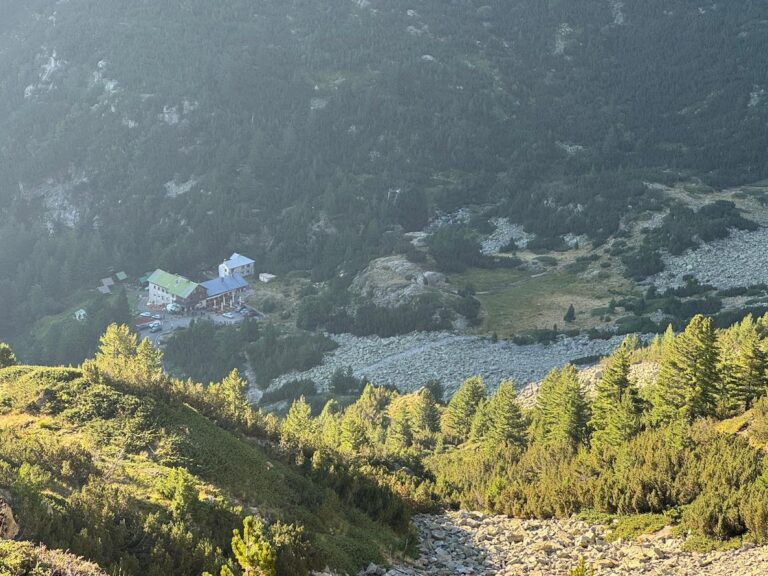
Many tourists prefer to save elevation gain and reach the highest point by car before starting their hike. The busiest car route in Pirin National Park is from Bansko to the Banderitsa (1810 m.a.s.l.) and Vihren (1950 m.a.s.l.) huts.
Useful information about the road:
It is important to dispel a common myth among novice tourists: The road from Bansko to Vihren hut is not a dirt road. The entire route, about 16 kilometers long from the city center, is completely asphalted and is fully accessible for standard passenger cars. The road has many bends and is narrow in places, so increased attention and appropriate speed are required.
Parking regime and summer restrictions in Pirin National Park
With the growing popularity of ecotourism, parking in the high parts of the mountain can be a real challenge. The spaces around Banderitsa Hut and Vihren Hut are limited and on weekends they fill up early in the morning (often before 07:30).
Warning: Summer restrictions for cars!
In order to protect the fragile ecosystem of Pirin National Park and avoid transport chaos, every summer (usually from early July to mid-September), the park management and the Bansko municipality introduce strict restrictions on the passage of private vehicles.
- In the time range between 08:00 and 16:00, the road is closed to cars in the section from the “Shiligarnika” area up to the “Vihren” hut.
- If you are planning a hike during this period, you must cross the barrier before 08:00 in the morning.
- It is highly recommended to leave your car in the parking lot at the starting station of the gondola lift in Bansko and use the special shuttle vans, which run according to an approved schedule to Vihren hut and back.
Expert advice for a successful transition in Pirin
Pirin National Park is an alpine-type mountain. Weather It is extremely dynamic here and can change dramatically within minutes, even in the height of summer.
- Equipment is mandatory: Always wear comfortable, closed-toe hiking shoes with a sturdy grip. A windproof and waterproof jacket is a must, even in August.
- Water and food: Although food is available at the huts, water sources on the high trails are not always reliable in late summer. Bring at least 1.5 – 2 liters of water per person.
- Plan your time: Start your hikes as early as possible in the morning. Afternoon summer storms in Pirin are a common occurrence and are accompanied by dangerous lightning.
- Follow the markings: Pirin National Park has excellent and updated tourist markings. Do not deviate from the marked trails to avoid entering the reserve areas and avoiding accidents.
Proper preparation will ensure that you enjoy the majesty of Pirin in the best possible way. The mountain is generous to those who respect it.