
💡 Did you know?
Bansko is officially home to thousands of foreigners, many of whom come from countries with Catholic or Protestant traditions. This turns the spring months into a true cultural exchange, where “Happy Easter” is heard just as often as “Chestit Velikden”.
Why is there a difference in the dates of Easter?
Before we dive into the festivities, let's clarify why we often disagree. It all comes down to ancient astronomy and church history. The Catholic and Protestant churches calculate the vernal equinox according to the modern Gregorian calendar. On the other hand, the Eastern Orthodox Church uses the older Julian calendar.
The result? Sometimes the two holidays coincide, but more often Catholic Easter is celebrated one to four weeks earlier. For the residents and guests of Bansko, this is not a problem, but an opportunity – the town gets a double reason to celebrate and a double dose of festive magic.
How foreigners celebrate Catholic Easter in Bansko
For many expats in Bansko, Easter is a time to connect with the community. Since Good Friday and Ash Wednesday are not always official holidays in Bulgaria, the international community organizes its own events.
The traditional Sunday Roast
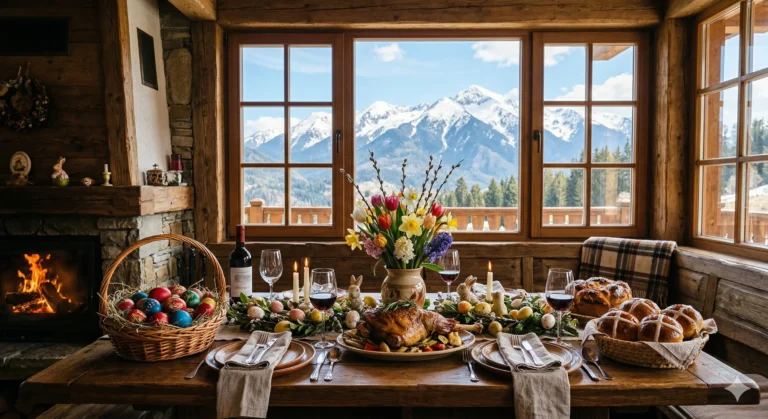
You may be thousands of miles from the UK or Ireland, but Bansko will not leave you hungry. Tradition dictates that on Easter, a hearty roast lamb is served, accompanied by roast potatoes, mint sauce, Yorkshire pudding and rich gravy.
Restaurants near the lift's base station and popular British pubs in the old town often prepare special menus. Important tip: Book a table at least a week in advance. Places for Easter Sunday Lunch at popular restaurants sell out quickly.
Easter Egg Hunt
One of the biggest challenges during Catholic Easter in Bansko is finding specific chocolate products. In Bulgaria, the focus is on real, painted eggs, so hollow chocolate bunnies and giant surprise eggs are rarer in small shops.
Fortunately, the larger supermarkets in the city now stock international brands. Many families from the international community flock to City Park or in the gardens of coworking spaces to organize an “Egg Hunt” for the kids. This is a great time for socializing and meeting new people.
Benefits for digital nomads during the holidays
If you are a digital nomad working from Bansko, the holidays are your biggest “hidden trump card”. When the West is on holiday for Catholic Easter, you get a few days of complete peace from emails and meetings. At the same time:
- All services, cafes and gyms in Bansko are operating with normal business hours.
- Internet speed is excellent as the networks are not overloaded by local revelers.
- The ski slopes (if the season is open) are much emptier compared to Orthodox Easter.
Comparison of traditions: East vs. West
To help you navigate the cultural environment more easily, see the main differences between the two holidays you will observe in Bansko:
| Tradition | Catholic Easter | Orthodox Easter |
|---|---|---|
| Symbol | Easter bunny | Red egg |
| Bread | Hot Cross Buns | Kozunak |
| Activity | Egg search | Ball fucking |
What to do in Bansko in spring?
Spring Easter in Bansko offers the best of both worlds – winter sports and spring awakening. Here are a few ideas:
Spring skiing and snowboarding
If the time allows, skiing in a T-shirt is an unforgettable experience. The sun on Todorka in April is strong, and the atmosphere in the bars on Banderishka Polyana. It's like a festival. Don't forget the sunscreen!
Relax in the mineral springs
After a festive lunch, there is nothing better than a visit to the neighboring villages of Banya or Dobrinishte. The mineral pools there are open year-round and are a favorite meeting place for the international community during the holidays.
Cultural walks and churches
Although there is no large Catholic cathedral in Bansko, many foreigners visit the Orthodox church. “Holy Trinity”, to enjoy the architecture and tranquility. The spirit of the holiday is universal and the locals always welcome guests with a smile.
Are you planning a stay in Bansko?
Don't miss a single event from the city's calendar! Follow our updates for the best parties, hikes and cultural festivals.
Conclusion: The Magic of the Double Feast
The celebration of Catholic Easter in Bansko is proof that traditions have no boundaries. Whether you are here for a short time or have chosen Pirin as your home, this period offers a unique chance to experience different cultures within a few weeks.
Share your lunch with neighbors, join in the egg hunt and enjoy the mountains. After all, Bansko is the place where everyone feels at home, no matter which calendar they follow.