

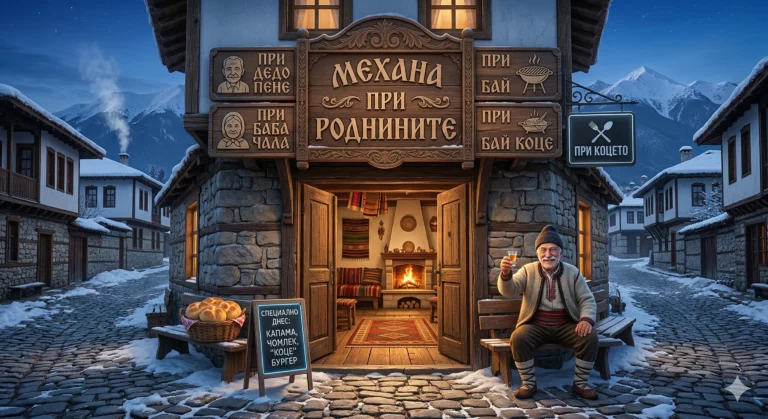
If the answer is "yes", then you have come face to face with one of the most charming, but also most confusing, phenomena in the Bulgarian restaurant industry. When we talk about restaurants in Bansko, the tradition of naming them after real (or imaginary) relatives, uncles, and elders has been elevated to a veritable cult.
Important clarification: The biggest misconception is that any establishment with a similar name is necessarily a “tavern”. In fact, behind these names lie completely different formats – from fast street food and lunch joints, to neighborhood pubs and elite restaurants. Therefore, it is critically important to know exactly what you are looking for!
Why are so many establishments in Bansko our "relatives"?
In the culinary capital of the Pirin Mountains, naming your business after your grandfather, your aunt, or a popular local flavor is tantamount to a certificate of authenticity. This is not a lack of imagination on the part of the owners, but a strategic message to the customer. When the name of the establishment begins with a preposition (Pri, Na), you subconsciously do not just enter a commercial establishment, but cross the threshold of someone's "home.".
Walking along the iconic Pirin Street or the cobblestones of the old town, you will notice dozens of similar signs. To bring order to this chaos and help you choose the right place for your dinner, lunch or just a beer after skiing, let's categorize these culinary institutions.
Name Classification: Not everything is a tavern!
1. Category "The Grandfathers": The Guardians of Tradition (The Authentic Taverns)
Typical representatives: At Dedo Kotse's, Santa Claus, Grandfather Tase, etc.
When you see the title "Grandpa" in front of the name, we are definitely talking about a classic, heavy tavern. These are usually the oldest, most established and renowned establishments in Bansko, which preserve the culinary history of the city.
- Venue format: A large, rustic-style restaurant. Often housed in houses over 100 years old with massive stone walls.
- The atmosphere: Expect tables made of heavy, unpolished wood, a burning fireplace, authentic costumes on the walls, and often live folklore music in the evening.
- The menu: You don't come here in a hurry. The menu takes time. You order here. Banska Kapama, which has been baked on a slow fire for 10 hours, chomlek, Banski starets and tender roasted meats.
- Who is it suitable for: For large companies, holiday dinners and tourists who want a full immersion in Bulgarian folklore and history.
2. Category "Bajovtsite and Chichovtsite": Masters of Fire (Barbecue and neighborhood pubs)
Typical representatives: Bai Kotse, Pri By Mile, Uncle Gosho
While "Dedo" sounds historical and settled, "Bai" is an address to the craftsman, to the master of the grill, to the man of the people. These are very rarely heavy taverns. Most often it is about unpretentious neighborhood pubs, bistros, or "grill-beer" establishments„.
- Venue format: Smaller establishments, often with tables placed on the sidewalk or cozy indoor halls without unnecessary luxury.
- The atmosphere: Much more casual, often noisier and livelier. These are the places where local craftsmen gather after work to drink rakia. The interior is functional, and the focus is on socializing.
- The menu: The absolute focus here is on charcoal grill and quick appetizers. Fresh kebabs, meatballs, homemade sausages, juicy steaks and cheese fries. At lunchtime they often offer excellent tripe soup and soups.
- Who is it suitable for: For a quick lunch, for men's companies after skiing, for an unpretentious snack on foot, or when you just feel like eating perfectly grilled meat at an affordable price.
3. Category "Grandmothers and Aunts": The Coziness of the Hearth (Inns and Bakeries)
Typical representatives: Grandma Chala, Aunt Vanche
Where there are grandfathers and grill masters, there must be a female presence to balance the softness, warmth, and aroma of freshly baked dough. These establishments are often lunch menu restaurants, small family restaurants or bakeries.
- Venue format: Compact bistros, self-service dining places or cozy family restaurants.
- The atmosphere: Warm and welcoming. The interior emphasizes hand-woven colorful rugs, embroidered tablecloths, pots of geraniums, and the feeling of being at a grandmother's house in the countryside.
- The menu: In this kingdom they rule cooked dishes, pasta and casseroles. Here you will find the best moussaka, stuffed peppers, Smiljan beans, fluffy flatbreads and real homemade banitsa for breakfast.
- Who is it suitable for: For lunch with colleagues, for relaxed family meals with young children, or when you need "comfort food" that reminds you of childhood.
4. Category "Diminutives": The Modern Reading (Pubs and Mix Concepts)
Typical representatives: Pri Kotseto, Vankata, Gosho
When the name is just a diminutive, without a title in front, you usually enter contemporary establishment, sports bar or mixed restaurant. The owner is probably a young enthusiast who wants to keep the personal touch but escape the heavy lifestyle.
- Venue format: A city bistro, sports pub or aperitif cafe.
- The atmosphere: Modern, often with large TVs showing football matches and winter sports. The music is contemporary (pop or rock) and the staff is young.
- The menu: Eclectic. Here you can find a traditional meatball, but next to it on the menu will be a pulled pork burger, pizza, Caesar salad and craft beer.
- Who is it suitable for: For a younger audience, watching sporting events, or when the company can't reach a consensus on what to eat.
Critical for the active season: Whether it’s the heavy-duty tavern at “Dedo” or the popular grill at “Bai”, the best restaurants in Bansko are packed during the months of December, January and February. If you want dinner after 7:30 p.m., advance reservations by phone are absolutely essential!
Practical tips: How not to make a mistake with the reservation?
To ensure that the entire company gathers in the same place and you receive exactly the type of service and food you expect, apply the following golden rules:
- Specify the format in advance: When someone suggests a place to eat, ask: “Is this a tavern or a beer bar?”. The difference in expectations and prices can be huge.
- The geographical principle: Never rely on the name alone. Always set an additional landmark in Bansko. “At Bai Kotse, the one next to the square” or “Grandpa Penne at the church”. The location saves the evening.
- Checking the interior from the outside: If there are more than three antiques and a huge wooden wheel displayed in front of the establishment – you are probably at "Pri Dedo" (tavern). If you smell a strong aroma of grilling from the street and see plastic chairs – it is "Pri Bai" (pub).
- Speak your full name when booking: When calling to reserve a taxi table, say the full name clearly. The difference between “Kotseto”, “Bai Kotse” and “Dedo Kotse” is the difference between three completely different neighborhoods and three radically different culinary experiences.
In conclusion
Bansko is a unique place where tradition intertwines with modern tourism in a unique way. In a world that is becoming increasingly global and uniform, where shiny neon signs of international fast food chains greet us everywhere, local establishments with their uncles, grandfathers and grandmothers are a true national treasure.
Yes, they can be confusing at first. You might expect a tavern, but end up in a bistro for lunch. But behind every such name, regardless of the form of the establishment, there is a real person who has staked his personal name (or that of his ancestors) to guarantee that he will feed you deliciously and greet you with a smile. And that is something that no franchise can offer.