

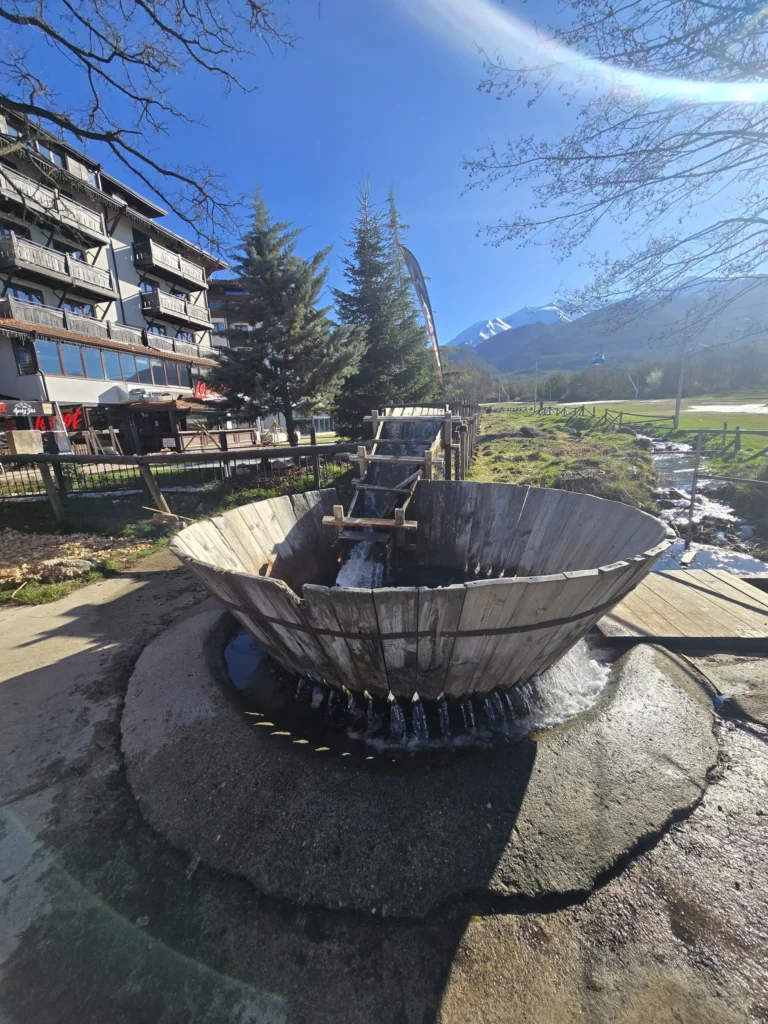
What is the traditional "valyavitsa" in Bansko?
The Valyavitsa is an authentic Bulgarian laundry facility, built entirely from natural materials – solid wood and stone. It is designed to capture and use the kinetic energy of fast-flowing mountain water. Visually, the facility has the shape of a large truncated conical or cylindrical wooden vat, which is very reminiscent of a huge, open-topped barrel.
The ingenious mechanism of action
The operation of any water washing machine is ingeniously simple, yet extremely effective and based on precise physical laws. The process goes through several steps:
- Water capture: Part of the rapid waters of the mountain river are diverted and led down a special wooden chute (trough).
- Jet direction: This chute is not placed by chance. It is directed at a strictly specific angle towards the inside of the wooden barrel.
- Creating a whirlpool: The water jet falls from a height with great force, hitting the walls and bottom of the facility. This creates a powerful, constant whirlpool.
It is this natural “centrifugal” effect that is the secret to success. The water spins with such speed and force that it literally knocks dirt out of fabrics, while simultaneously turning and twisting them, without the need for a drop of detergent.
What is most often washed in a rural water washing machine?
In the past, and still today in many parts of Bulgaria, the washing machines were used primarily for washing large and extremely heavy woolen fabrics. When they get wet, these items become too much for housewives to wash by hand. Among the most common items entrusted to the power of water are:
- Halishta and Kitenitsa – the heavy, thick winter blankets made of unspun wool that keep you warm during the harsh Bansko winters.
- Rugs and carpets – colorful home-loomed fabrics that adorn the floors of old houses.
- Yambolians and goats – traditional bedding made of goat or sheep wool, distinguished by great strength.
Besides the purely hygienic function of washing, the drum has another, no less important role – to “beat” (compact) the wool. The continuous friction of the material and the strong water jet make the woolen threads much stronger, denser, resistant to wind and cold, and visibly fluffier.
100% Eco-friendly Laundry: A Sustainability Lesson from the Past
In today's modern world, where topics such as green energy, reducing the carbon footprint, and sustainable living are constantly discussed, the traditional valiavitsa in Bansko stands as a perfect example of environmentalism from the past. Our ancestors knew how to live in complete harmony with nature.
First of all, the facility has zero electricity consumption. It is driven solely by gravity and the natural flow of water. Secondly, the process takes place absolutely chemical-free. The powerful mechanical action of water is more than enough to clean heavy fabrics to perfection, eliminating the need for soaps and synthetic detergents that pollute rivers and soils.
Why visit and see this attraction today?
Bansko is one of the towns in Bulgaria that most zealously preserves its roots, history and folklore. Today, the preserved and restored ski lifts in the resort are not just a beautiful backdrop for tourist photos, but also living open-air museums. They continue to function and are a silent testimony to the hard work and practical mind of the Bulgarian people.
Next time you plan your vacation in the region, take a few minutes to stop by one of the working water washing stations. Hear the mesmerizing roar of the water element, watch as the wooden trough tames the mountain river, and imagine the harsh but real life of people before the era of modern technology. It is an authentic experience that connects the past with the present in a truly beautiful and inspiring way!