

Part I: The Global Context and the Local Shock
1.1 Macroeconomic Prerequisites: The End of the „Golden Era“
To understand the depth of the crisis in Bansko in 2009, It is imperative to analyze the previous period (2000–2008). Bulgaria was experiencing an economic boom, fueled by optimism about the EU and easy credit. Bansko transformed from an agricultural town into the fastest growing winter resort in Eastern Europe.
This growth was driven by the „holiday property“ model, aimed at the UK and Ireland. The investment logic was simple: prices lower than the Alps and expectations of huge capital gains. By 2008, prices had risen by around 300%, leading to hypertrophied construction without urban planning logic.
1.2 The mechanics of the 2009 crash.
Through 2009 The music stopped. The global financial crisis hit the holiday property segment with full force. When the Island's credit markets froze, the flow of liquidity to Bulgaria dried up instantly.
| Indicator | Value | Context and Analysis |
|---|---|---|
| Price drop (Bansko) | Up to -70% | In greenfield and secondary market sales. |
| Transaction volume | -80% | Decline from peak in 2007. |
| Average price per sq m | ~€650 | A decline from peak levels above €1300. |
1.3 The crisis of confidence and the „English Patient“
The phenomenon of "buying green" became the catalyst for the crash. Thousands of Britons stopped their contributions, which led to the insolvency of builders. The emblematic case is the Pirin Park Resort, where 300 homeowners risked losing £6 million due to properties mortgaged by the developer without their knowledge. This scandal destroyed confidence in the market in 2009.
Part II: The Urban Scar — The Ghost Town Phenomenon„
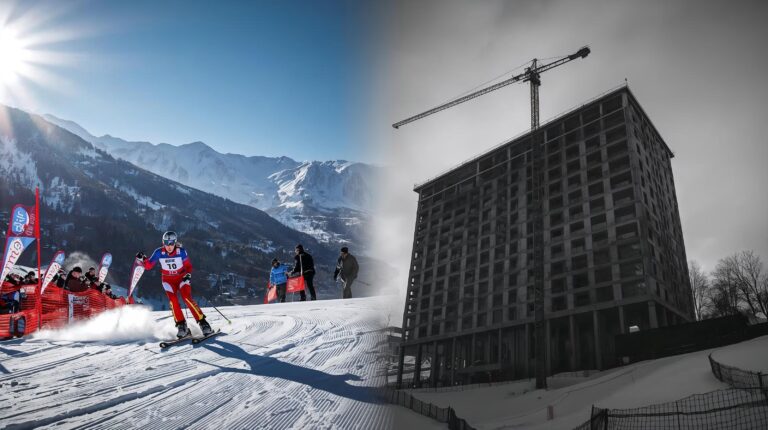
By mid-2009, the new zones (Gramadeto and Sveti Ivan) had taken on an ominous appearance. Dozens of complexes stood frozen. Foreign journalists described „skeletons of buildings“ that jut out like monuments to greed.
„Things in Bansko have changed for the worse. All the charm of the old town has disappeared… It’s sad, but greed has prevailed over reason.“ – Maria Toteva, local resident (March 2009)
Part III: The Everest of Sports — the Ski World Cup
Amidst the economic gloom, 2009 brought the greatest sporting triumph. Hosting the Women's FIS World Cup was a turning point that legitimized the resort as a world-class destination.
3.2 Lindsey Vonn and the triumph of "Banderitsa"„
Lindsey Vonn's star presence turned the competition into a global event. On March 1, 2009, she dominated the Super-G (super giant slalom) with a time of 1:14.49. Vonn praised the hosts: „"I like it here in Bansko, the atmosphere is great."“ These words were invaluable advertising that turned sport into the new engine of the economy.
Part IV: Cultural Sustainability — The Jazz Festival
XII International Jazz Festival in Bansko 2009 (August 8–13) played a key role in the summer's survival. The organizers, led by Dr. Emil Iliev, kept the concerts free to attract tourists to the then-empty base.
Stars of the festival in 2009:
- Candy Dulfer: The world-famous saxophonist gathered thousands in the square.
- Jamie Davis: „"The Chocolate Baritone" by Count Basie's Orchestra.
- Clare Teal: The BBC Radio star who captivated the British community.
Part V: Infrastructure and the „Water Cycle“
While the private sector was shrinking, the public sector undertook the €25 million Water Cycle project. In 2009 The town was literally dug up to build a new sewage treatment plant and sewerage system capable of handling the tourist capacity. This was a lifesaver for the resort's ecological security.
Part VI: The Battle for Pirin — The Ecological Conflict
В Bansko in 2009 The conflict over Pirin National Park has escalated. The EC has launched a criminal procedure against Bulgaria for violations in the ski area. However, Mayor Alexander Kravarov defended the development as the only chance for the locals to make a living after the collapse of tobacco production.
Part VII: Survival Strategies
The crisis forced businesses to adapt. The first summer attractions appeared on Banderishka meadow. In the luxury segment, it was discovered Premier Luxury Mountain Resort, which marked the transition from mass to elite tourism. These investments showed faith in the future of Bansko, despite the panic and speculation.
Conclusion: The Lesson of 2009
2009 ended the illusions of easy get-rich-quick concrete. It was the end of the „Wild East“ and the beginning of the mature European resort. The property crash left its scars, but sports and culture proved that the city has a soul that is stronger than the financial markets.
Do you want to learn more about the investment climate today? Contact our experts!
 English (UK)