


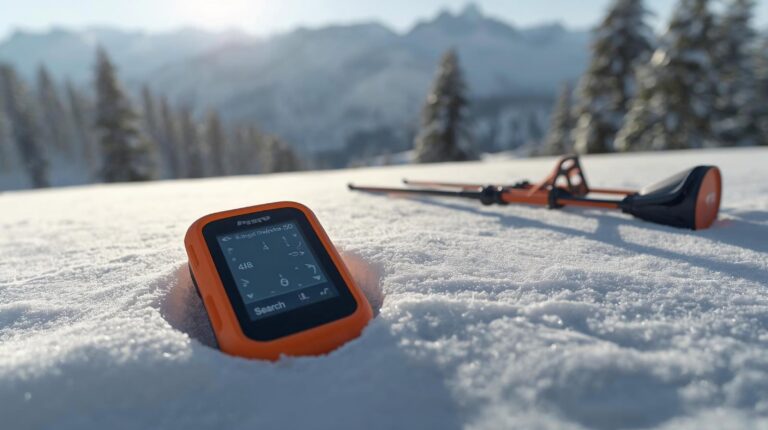
Why off-piste riding without avalanche transceiver is Russian roulette and how does this little box save your friends' lives?
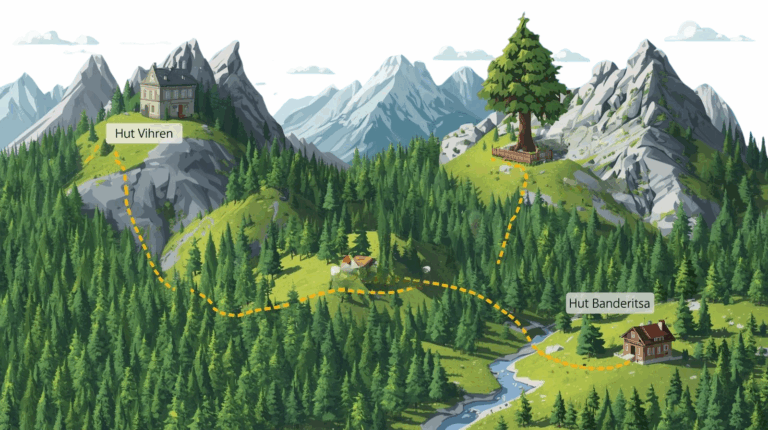
If you've ever looked at the forests around "“Banderishka meadow” or the steep chutes under Todorka Peak with the thought “It must be great to ride there”, you are already a potential freerider. But before you cross the lanes and exit the groomed area of Bansko, you need to know one basic rule: Never go out without an avalanche transceiver.
In Bulgaria we often call it “Pips” (after one of the most popular brands – Pieps), but the correct technical name is an avalanche transceiver. Unlike the RECCO system, which is passive, your avalanche transceiver is the heart of the “buddy aid”. It is the only device that can find you within the critical 15 minutes.
What is it and how does it work?
The avalanche transceiver is a radio transmitter and receiver in one. It operates on a worldwide standardized frequency (457 kHz), which means that all brands (Pieps, Mammut, Ortovox, BCA, Arva) are compatible with each other.
The device has two operating modes that you should know to perfection:
| Mode | Function | When is it used? |
|---|---|---|
| SEND (Transmission) | It emits a pulsating signal that passes through snow and ice. | ALWAYS when you are in the mountains skiing/snowboarding. |
| SEARCH | It listens for signals from other devices and guides you to them through sound and display. | ONLY if someone is buried and you are looking for them. |
The 15-minute golden rule
Why every modern avalanche transceiver is that important? The statistics are ruthless. When buried by an avalanche, the chance of survival is over 90% if the victim is pulled out to 15 minutes. After the 18th minute, the survival curve drops sharply due to suffocation.
The Mountain Rescue Service (MRS) in Bansko is extremely professional, but it takes them time to get to you (by snowmobile or helicopter). The only people who can get you out in 15 minutes are the friends you ride with. Therefore, it is mandatory for the entire group to have devices.
REMEMBER:
Your friend's avalanche transceiver is your life insurance. Your transceiver is his insurance. If you ride with someone who doesn't have a "pips", he's not endangering himself, but you, because it won't be able to find you if you're buried.
The Holy Trinity of Avalanche Equipment
Just having an avalanche transceiver is not enough. It shows you where the person is, but it can't dig them out. That's why in freeriding there is the concept of "“Holy Trinity“":
- 📡 1. Avalanche Device (Pips): To localize the signal (finds the area).
- 🥢 2. Avalanche probe: A long, foldable stick that you use to "prick" the snow to find out the exact depth and position of the body.
- 🏗️ 3. Avalanche shovel: For quick digging. Snow in an avalanche hardens like concrete – it is impossible to dig with your hands.
How to wear the device correctly?
In Bansko, we often see beginner freeriders carrying their equipment in their backpacks. THIS IS WRONG!
- The device is worn on the body, under the jacket (usually comes with a strap system).
- If it is in a trouser pocket, the pocket must have a zipper and the device must be secured with a leash.
- The reason: Avalanches are powerful elements that often tear backpacks off your back. If your device is in your backpack and it flies out, rescuers will dig out the backpack, not you.
Practice is more important than purchase
To buy an expensive one avalanche transceiver and not knowing how to use it is like buying a piano and expecting to play like Mozart. The stress during a real-life incident is enormous.
There are excellent places to train in Bansko. Before you climb to the peaks:
- Gather with friends in a safe clearing (for example, in the lowlands).
- Bury a backpack with a device turned on in the snow.
- Try to find it with your timing devices.
Modern digital devices with 3 antennas make searching much easier, showing direction and distance, but they require training.
Conclusion
The mountain does not forgive mistakes, but it loves those who are prepared. Your avalanche transceiver It is an investment in your life and that of your friends. Don't think of it as an expensive gadget, but as a ticket home.
Before you hit the slopes of Pirin this season: check the batteries (always above 40%), switch to “SEND” and enjoy the powder sensibly!
Looking for where to buy equipment or hire a guide in Bansko? Check out our sections for Sale or rent of winter gear.

 English (UK)