

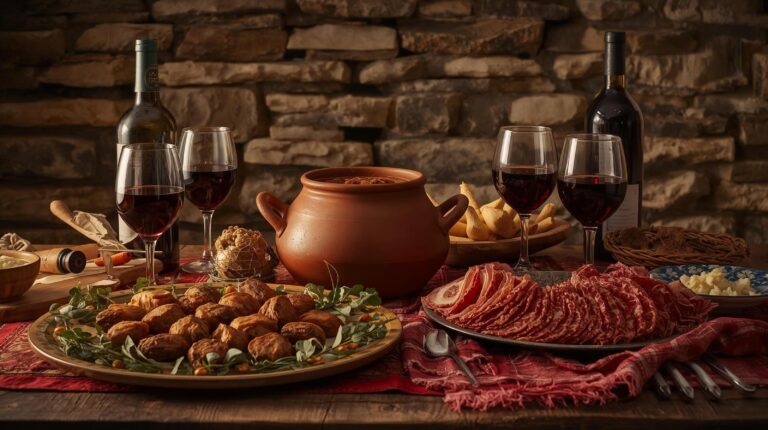
To the unprepared guest, however, the menu in a traditional tavern can sound like a complex cipher of the local dialect. What exactly is „cholmek“? Why is the kapama cooked all night and why is „waiting“ so important? In this detailed guide, we will guide you through the labyrinth of the authentic Bansko cuisine and we will teach you how to distinguish the true guardians of traditions from commercial establishments created solely for the tourist flow.
Kapama vs. Chomlek: The Eternal Culinary Battle
The two most iconic dishes in the region often cause confusion among visitors. Although both are slow-cooked in clay pots, they represent two completely different philosophies in cooking. Here's what you need to know about the "heavy artillery" of the Bansko table:
1. Banska Kapama – The Queen of the Winter Table
This is not just a manja, but a true "architectural masterpiece" in a pot. A true kapama requires not only quality products, but also mathematical precision in the arrangement of the layers.
- Concept: Kapamata is a layered dish. Sauerkraut is placed at the base, followed by rice, various types of meat, and specific local spices.
- The meat: Variety is a must here – tender pork, beef, chicken and the most important components: the authentic Banska krvavitsa and "čekane" (pickled beetroot).
- The technology: The pot is hermetically sealed with dough. Baking is a ritual – a minimum of 5 to 8 hours on low heat. This allows the flavors to „embrace“ each other without losing their identity.
2. Chomlek – The Aristocrat of Slow Cooking
If kapama is a festival of diversity, chomlek is a triumph of veal and natural vegetables. It is more refined, but incredibly deep in flavor.
- Main ingredients: The main character here is the beef shank, which is always cooked with the bone to give the broth thickness.
- Vegetables: Everything in the chomlek is whole – whole onions, whole potatoes, and whole cloves of garlic. During slow cooking, they don't fall apart, but turn into a creamy temptation.
- The magic: Adding red wine and a little vinegar balances the fat and makes the meat so tender that it falls apart just by touching it with a fork.
| Characteristics | Banska Kapama | Banski Chomlek |
|---|---|---|
| Main products | Meat (pork, beef, chicken), sauerkraut, rice | Veal shank, whole potatoes, whole onion |
| Taste | Sour-salty, spicy, complex | Soft, rich, naturally beefy |
| Baking time | 6-10 hours | 4-6 hours |
Other must-try classics of Bansko cuisine
Outside of the "big two", the Bansko table offers delicacies that you will not find anywhere else in Bulgaria in this form:
Banski old man and Babek: These are raw-dried appetizers that are the pride of local craftsmen. "The Old Man" is made from the best pork fillet and tenderloin, seasoned with cumin and black pepper. It matures in special dryers throughout the winter.
Catino appetizer: Contrary to its name, this is a serious main course. It is braised pieces of pork and beef with lots of onions, mushrooms and fresh lemon, baked in a clay pot. The lemon is the secret ingredient that gives lightness to otherwise heavy meats.
Waiting Perch: This is the "soul" of Bansko on a plate. Broad beans (kostureta) cooked with chopped pickled sugar beets (chekane). The combination is specific, slightly sour and incredibly warming on cold Pirin evenings.
Pro tip: How to find the authentic tavern?
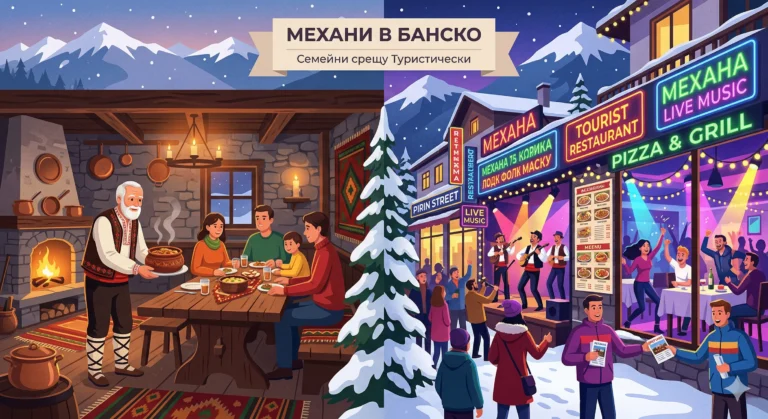
Pirin Street is dotted with places to eat, but not all of them will give you the true taste of Bansko. Here's what to look out for:
-
- ✅ Search for "Banski Starcheta": If an authentic folklore band (not chalga) plays live in the tavern, this is a good sign of respect for traditions.
- ✅ The short menu is an advantage: Taverns that take pride in their cuisine have a 2-3 page menu with local specialties, not 50-page catalogs with sushi and pizza.
- ✅ The aroma of wood: True Bansko cuisine is prepared over an open fire or in an oven. The air in the tavern should smell of wood and spices.
- ❌ Avoid aggressive shouters: The best places in Bansko fill up through recommendations and often require reservations days in advance. They don't need people pulling your sleeve off the street.
Why is the food in Bansko so different?
The secret is not only in the recipes, but also in the microclimate of Pirin. The meats that are dried here acquire a unique taste due to the specific air currents. The sauerkraut (chekane) ferments differently because of the local water. When you sit in a real tavern, you are not just consuming food, you are participating in a historical process that has remained almost unchanged since the weather of the Renaissance.
Bansko cuisine is heavy and was created for people who spend their day in the mountains. So don't be surprised by the generous portions. Combine them with a heavy local red wine (Shiroka Melnishka or Mavrud varieties) and set aside at least two hours for dinner. In Bansko, rushing is a sin, and enjoyment is a must.
Whether you choose kapama, chomlek or just a warm kapama with homemade bread, one thing is for sure – the taste of Bansko will stay with you long after you take off your skis and go home.
 English (UK)