


⚠️ This is an abridged version of the report. For the full socio-economic and urban analysis with all graphs and data, please visit the original article:
👉 Transformation of Bansko 2005: Full Analysis
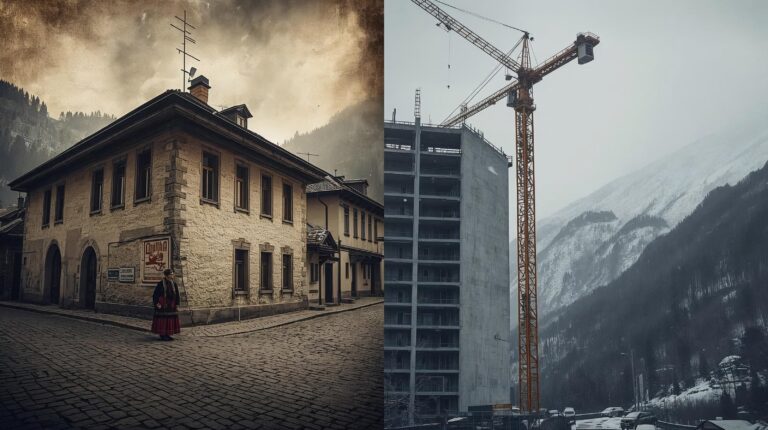
In the modern history of Bulgaria, few cities have experienced such a drastic and comprehensive transformation as Bansko in 2005. This is not just another calendar year, but the tipping point, which defined the fate of the resort for decades to come. In the context of the then upcoming membership in the European Union, the mountain town became a testing ground for the absorption of foreign capital, urban experiments and a clash between traditions and globalization.
The Gold Rush and the Concrete Legacy
The economic dynamics of 2005 were dictated by external, speculative capital. It was the year of the „Gold Rush,“ when British and Irish investors bought up greenfield properties, driven by promises of high returns. The price of land reached a record 30,000 euros per hectare, turning local farmers into capitalists overnight.
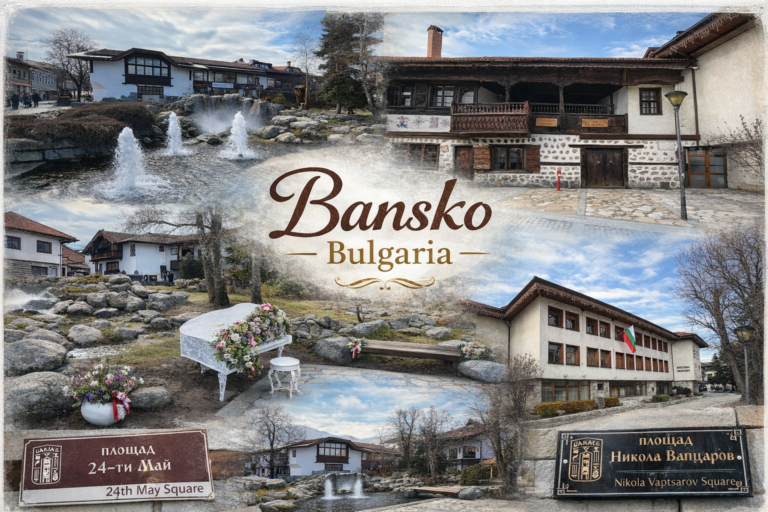
The result of this pressure was the final shift of the city's center of gravity. While the historic square around the Holy Trinity Church retained the spirit of the Bulgarian National Revival past, an entirely new, concrete city emerged in the Gramadeto area. Gigantic apartment hotels blocked the views of the mountains, creating a density of development more characteristic of a metropolitan district than a mountain resort. 2005 was the year in which the "ghost buildings" were born - monuments to unrealized ambitions that still mark the landscape today.
Infrastructure collapse and environmental battles
The unprecedented construction brought the infrastructure to the brink of collapse. Heavy machinery crushed Glazne and Bulgaria streets, forcing the municipality to launch emergency repairs and plan a bypass to divert traffic. The city was literally suffocating from dust and noise as it tried to welcome over 400,000 tourists during the winter season.
In parallel, the conflict over nature flared up. The decision to expand the ski area by another 112 hectares became the subject of long-standing disputes between the investor Yulen AD and environmental organizations. Despite the protests, the ski area was modernized with new lifts and installations for artificial snow, which was critical for the establishment of Bansko as a modern destination.
The birth of the world resort
Despite the chaos of growth, 2005 also brought undeniable successes that put Bansko on the world map. The opening of Kempinski Hotel Grand Arena introduced for the first time true five-star luxury and the concept ski-in/ski-out. The hotel became an anchor for attracting a higher-class clientele.
On the sporting front, the Balkan Open Cup on the reconstructed Alberto Tomba track proved that the resort has the technical capacity to host top-level competitions. This event, supported by the legend Marc Girardelli, paved the way for future World Cup starts.
Conclusion
Bansko since 2005 has been a place of contrasts – the jazz festival played against the backdrop of construction cranes, and old taverns coexisted with new English pubs. This was the year of the „Big Bang“, which created the modern resort with all its advantages and disadvantages. The town paid a high price – loss of architectural identity and ecological balance, but in return received an economic boom and international recognition.
Want to learn more?
View the full report with detailed property price tables, a list of new hotels, and a timeline of events.


 English (UK)