


The Path to Sustainable Transformation: A Comprehensive Analysis of the Socio-Economic Development, Tourism Infrastructure and Environmental Policy of the City of Bansko in 2018
Socio-economic context and macro-framework of regional development
In 2018, the town of Bansko is at a critical point in its development, characterized by a transition from a phase of turbulent, often chaotic expansion to attempts at qualitative stabilization and diversification of the economic base. As a leading tourist center in Southwestern Bulgaria, the town not only defines the face of winter tourism in the country, but also serves as a laboratory for new social models, including the rise of digital nomadism and year-round resource management in mountainous regions.1 The economic dynamics during this calendar year are deeply connected to the international prestige of the resort, which has managed to defend its status as the "winter capital of the Balkans" through a series of awards and hosting of world-class events.3
In this context, the conflict between the need to expand the ski area and the commitments to the preservation of Pirin National Park as a UNESCO World Heritage Site is reaching its peak, engaging the attention of national and international institutions.6 This multi-layered nature of the processes requires detailed research into each segment of the local economy and social life.
The real estate market in Bansko in 2018: Stabilization, price levels and investment activity
The real estate market in Bansko in 2018 showed signs of maturity and sustainable growth, supported by the return of Bulgarian buyers and stable interest from international investors. After the period of volatility that followed the global economic crisis, the sector is entering a period in which property quality and professional management are becoming decisive factors for its market value.8
Analysis of price levels and market dynamics
In 2018, the average price of properties in Bansko reached 1,092 euros per square meter, according to data from leading consulting companies.9 This indicator is a result of the increased demand for apartments near the ski lift and in well-maintained complexes with additional services. The data shows that the sales volume has increased by 12%, which is a clear indicator of the liquidity of the market.9 It is important to note that while prices in Sofia and Plovdiv are experiencing double-digit increases, Bansko maintains its competitiveness, offering excellent conditions for vacation properties at relatively lower investment entry levels.8
| Key market indicator (2018) | Value / Change |
|---|---|
| Average price per square meter | €1,092 9 |
| Sales volume growth | 12.0% 9 |
| Growth in building permits | 30.6% 9 |
| Property affordability ratio | 1.47 (stable compared to 2017) 9 |
The growth in issued building permits by 30.61% testifies to the renewed confidence of construction entrepreneurs in the potential of the region.9 However, this process is accompanied by stricter control over urban development plans, aimed at avoiding the mistakes of the past and preserving the natural appearance of the city. The investment profile of buyers is changing - they increasingly consider properties in Bansko not only as a place for personal recreation, but also as an asset for generating income through short-term rental platforms, which is stimulated by the extension of the active tourist season.9
Factors influencing the investment decision
The investment climate in Bansko in 2018 was strongly influenced by several key factors:
- Tax policy: The low flat tax of 10% in Bulgaria, which makes the country an attractive destination for foreign individuals and companies.11
- Digital nomadism: The development of digital nomadism, which creates a permanent base of long-term tenants.2
- Location: Improving infrastructure and proximity to the border with Greece, which expands the perimeter of potential visitors during the summer months.10
The affordability of properties, measured by a coefficient of 1.47, indicates that the market remains in equilibrium, with prices aligned with the purchasing power of target groups.9 Compared to other mountain resorts in Europe, Bansko offers some of the lowest maintenance and tax costs, which strengthens its position as a leading investment destination in the region.8
Environmental Policy and International Commitments: The Case of Pirin and UNESCO
In 2018, Bansko found itself at the center of one of the most significant environmental disputes in Bulgaria's modern history. The issue of expanding the ski area and building a second gondola lift grew from a local transportation issue into an international case involving the management of World Heritage sites.1
The decision of the Supreme Administrative Court and the legal consequences
On January 15, 2018, the Supreme Administrative Court (SAC) of Bulgaria adopted a decision that annulled the changes to the Pirin National Park Management Plan submitted by the Council of Ministers in December 2017.1 These amendments provided for the possibility of construction of new ski slopes and facilities on an area covering almost half of the park's territory (48%).1 The court ruled that any decision to change the protection regime must be preceded by a Strategic Environmental Assessment (SEA), in accordance with Bulgarian and European legislation.1
This legal act is the result of intense protests by environmental organizations and civil society, including an international petition signed by over 125,000 people.1 The main concerns are related to the potential destruction of ancient white and black pine forests, as well as the disruption of brown bear and wolf habitats.13 WWF points out that the expansion of the ski area so far has already caused irreversible damage to over 160 hectares of forest.1
The position of the 42nd session of the UNESCO World Heritage Committee
During its 42nd session in Manama, Bahrain, held in the summer of 2018, the World Heritage Committee adopted Decision 42 COM 7B.72.7 In it, UNESCO officially calls on Bulgaria to implement the SAC decision and to refrain from any new amendments to the Pirin management plan until a full strategic environmental assessment has been carried out.7
| UNESCO Key Demands (2018) | Context and meaning |
|---|---|
| Conducting an SEA for the new management plan | Ensuring that construction will not damage the universal value of the park.7 |
| Limiting new ski infrastructure | Preventing ecosystem fragmentation in the Alpine zone.6 |
| Sustainable Tourism Strategy | Promoting forms of tourism that do not depend on massive construction.5 |
| Clear demarcation of borders | Using GPS systems to prevent entry into protected areas.6 |
The committee also expresses concern about the changes that allow the construction of water intake facilities in the park for the needs of artificial snowmaking and powering hotels.7 The international community emphasizes that the "outstanding universal value" of Pirin is an asset that goes beyond the short-term economic benefits of expanding the ski area.6
Sports achievements and international advertising: Bansko Ski Center on the world map
In 2018, Bansko solidified its reputation as a top-tier winter sports host. The town not only hosts elite athletes, but also wins prestigious awards that put it on a par with the top-tier Alpine resorts.3
Snowboarding World Cup and the presentation of Bulgarian hopefuls
In early 2018, Bansko hosted the Snowboarding World Cup, attracting thousands of spectators and millions of television fans around the world. The main highlights are Radoslav Yankov and Alexandra Zhekova, who are the faces of Bulgarian winter sports.15
- Radoslav Yankov: Under the thunderous applause of the home crowd, Yankov demonstrated exceptional form. In the direct eliminations, he managed to win first place in his discipline, demonstrating technical mastery in variable weather conditions.15 In a dramatic final of the giant parallel slalom, he took second place behind Sylvain Dufour.15
- Alexandra Zhekova: The crowd favorite reached the semifinals, where she narrowly missed out on the grand final. However, she won the „small final,“ taking a prestigious 7th place in the overall standings and adding 360 points to her FIS ranking.15
These events have a huge impact on the promotion of Bansko as a destination for active athletes. The conditions of the track, prepared by the concessionaire team "Yulen", have been highly appreciated by international observers, despite the challenges of the weather, like the sudden rain during qualifying.15
World Ski Awards 2018: Bansko's triumph
At the official World Ski Awards ceremony in November 2018, Bansko was named "Best Ski Resort in Bulgaria" for the sixth consecutive time.4 The awards, which are considered the equivalent of the Oscars in the travel industry, are determined by online voting by professionals and consumers.4
| Award (Bulgaria, 2018) | Winner |
|---|---|
| Best ski resort | Bansko 4 |
| Best ski hotel | Kempinski Hotel Grand Arena Bansko 4 |
| Best Boutique Ski Hotel | Alpin Hotel (Borovets) 4 |
| Best ski chalet | Villa Gella 4 |
Bansko's dominance in these categories is not accidental. It is the result of targeted investments in infrastructure and service. Kempinski Hotel Grand Arena Bansko, as the only ski-in/ski-out hotel in the region, wins the award in its category once again, highlighting the luxury segment of the resort.21 At the regional level, the hotel was also recognized as the best ski hotel in Central and Eastern Europe at the International Hospitality Awards held in Kiev.21
Bansko's New Economy: The Rise of Digital Nomadism
One of the most impressive phenomena of 2018 was the transformation of Bansko into a European hub for remote workers. What started as a small experiment by enthusiasts has become a driver for economic diversification of the city, reducing the negative effects of seasonality.2
Coworking Bansko and the "magnet" effect„
Founded in late 2016, the shared workspace Coworking Bansko reached its maturity in 2018. Under the leadership of Matthias Zeitler and Uwe Allgauer, the project not only became profitable, but also expanded with a new location near the ski slopes at the end of the year.2
Matthias Zeitler describes the phenomenon of the „Bansko magnet“ – a process in which digital nomads, who came for a few days, change their plans and stay for months, and in some cases settle permanently.2 In 2018, Coworking Bansko supported an average of 30-40 full members in the summer and up to 75 in the winter.2
| Socio-economic benefits of the nomadic community | Impact description |
|---|---|
| Reducing seasonality | Nomads live and consume in the city all year round, including in the "dead" months.2 |
| Support for small businesses | They prefer local taverns and rental apartments to closed hotel complexes.10 |
| Demographic renewal | Attracting young, educated people from Europe and North America; in 2018, 22 foreigners moved their residency to Bansko.2 |
| Knowledge exchange | Organizing seminars on biohacking, marketing and software technologies for the local community.2 |
The success of this model in Bansko is due to the combination of affordable prices, good internet connectivity and the presence of a strong social community. Nomads are not just looking for a desk and Wi-Fi, but a sense of belonging, which in Bansko is expressed through shared dinners, mountain hikes and board games.24 This model of "rural coworking" is becoming an international example, with the founders being regular speakers at global forums on the topic.2
Bansko's cultural calendar in 2018.
Cultural life in Bansko in 2018 is full of events that attract a diverse audience and contribute to the city's image as a cultural center at an international level.
21st International Jazz Festival in Bansko
The Bansko Jazz Festival, the largest summer music event in the country, celebrated its 21st edition in August 2018.25 The festival was opened by Mayor Georgi Ikonomov and founder Dr. Emil Iliev.25 Despite the bad weather on the opening night, which necessitated a one-hour delay, Nikola Vaptsarov Square remained full of music fans.25
- Awardees and participants: Honorary plaques for their contribution to jazz and for establishing Bansko as an international jazz center were received by the great Bulgarian performers Kamelia Todorova, Yordanka Hristova and Vasil Petrov.25 A special award for lifetime contribution and care for animals was presented to Barbara Rutting - world-renowned actress and public figure.25
- Program: For one week, the stage hosts performers from 18 countries, including the American project JeSante and the Bulgarian formation Brass Association COMBO.25
Bansko Film Festival 2018: The mountaineering spirit in footage
In November 2018, Bansko became the world capital of mountain cinema. The 18th edition of the festival included 83 film premieres from 43 countries, including Kazakhstan, Iran, Bhutan and India.27
| Film / Award (2018) | Director / Country | Topic |
|---|---|---|
| Grand Prix | Ben Sturgulewski (Afghanistan, Germany, USA) | „"Champions of the Golden Valley" – a story about ski culture in Afghanistan.28 |
| Bansko Municipality Award | Guillaume Broust (France) | „"The Future of Sport Climbing.".29 |
| Peter Atanasov Award (screenplay) | Pavol Barabas (Slovakia) | „"The Tribe Within.".29 |
| Best implementation in extreme conditions | Alessandro Beltram (Italy) | „"Northern Odyssey".29 |
| Award for Bulgarian film/TV production | Petar Penev (Bulgaria) | „"Under the Skins" – a story about the tradition of the Kukeri.29 |
The film "Champions of the Golden Valley" is cited as one of the most inspiring, telling the story of young Afghan Alisah Farhang, who tries to become his country's first Olympian and organizes ski competitions with wooden skis in his homeland.28 The festival is accompanied by presentations by legendary mountaineers such as Reinhold Messner and Georgi Georgiev (on the occasion of the 80th anniversary of the ascent of the Eiger).31
Bansko Beat Music Experience
In the summer, the town also hosts the more modern Bansko Beat festival, which attracts a younger audience. In 2018, headliners included world stars such as Eurovision winner Loreen, James Arthur and Balkan sensation Laris.32 These events demonstrate Bansko's ability to offer a diverse cultural product, covering a wide range of tastes - from classic jazz and elite cinema to mainstream pop music.32
Infrastructure and urban management
The rapid development of Bansko necessitates the need for more efficient management of urban resources. In 2018, the main debates focused on improving mobility in the resort and addressing its environmental footprint.
Suggestions for optimization of the ski area
Due to the lack of a second gondola line, queues at the starting station remain a major complaint among tourists. Environmental organizations and civic associations are proposing alternative measures to address the problem without requiring new large-scale construction in the park. 5:
- Change of working hours: Opening the ticket offices and the lift at 07:00 in the morning to distribute the flow of people.5
- Technical optimization: Using the maximum lift speed and eliminating VIP queues that often slow down general movement.5
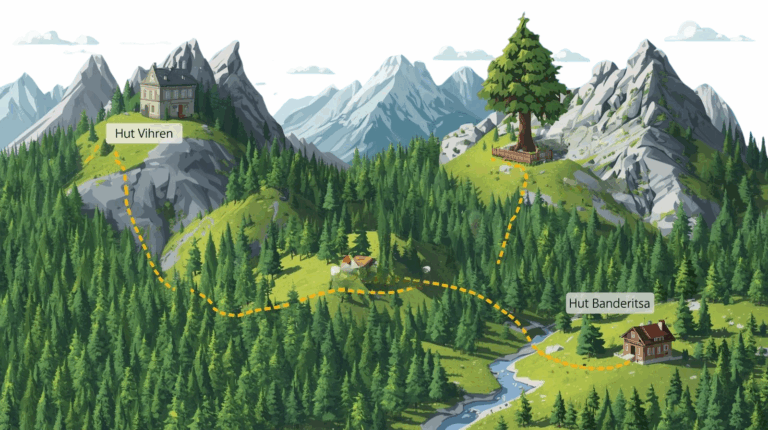
- Ecological transport: Introducing a system of hybrid or electric shuttle buses to intermediate stations such as Banderishka meadow.5
- Flexible pricing policy: Differentiation of lift ticket prices – lower prices for Monday to Thursday and introduction of half-day morning tickets.5
These proposals aim to maximize the capacity of the existing base, while preserving the integrity of the protected area. In 2018, the municipality began to pay more attention to parking in the city, planning new free parking lots and restricting access for private cars to the higher parts of the mountain.5
Socio-economic analysis: Demographics and labor market
Bansko in 2018 is an example of a region that manages to resist negative demographic trends in the Bulgarian countryside. While the Blagoevgrad region as a whole is experiencing problems with the migration of young people, Bansko is attracting a new type of settlers.2
Change in employment structure
Traditionally, the labor market in Bansko is highly seasonal, relying on hotel and restaurant staff during the winter. However, the presence of over 100 digital nomads per month in 2018 is starting to change that.11 These people not only consume services, but also come into contact with the local population, sharing skills in areas such as digital marketing, software engineering, and online business models.2 Matthias Zeitler emphasizes that the goal of the coworking community is to inspire local young people to develop skills that will allow them to work for the global market while remaining in their hometown.2
The mathematical dimension of this influence can be represented by the nomad economic impact index (Ien):
- N is the number of nomads.
- Cdaily is the average daily expenditure on food and services (excluding rent).
- D is the number of days of stay.
- Rlong is the income from long-term rentals of apartments that would otherwise be empty during the off-season.
According to rough estimates, in 2018 this community generated over 1 million euros in direct revenue for small and medium-sized businesses in Bansko, without burdening the ski infrastructure or requiring new construction in the mountain.
Conclusion and strategic perspectives
2018 was a watershed year for Bansko. The city managed to defend its global prestige as a sports destination, but at the same time faced the legal and environmental limits of its previous growth model. The decisions of the Supreme Administrative Court and UNESCO outline the path to more responsible management of Pirin National Park, which requires a balance between economic ambitions and environmental sustainability.1
The stabilization of the property market and the unexpected success of Bansko as a global hub for digital nomads offer a new vision for the future. Bansko is no longer just a „winter resort“, but a year-round center for work and life, combining nature, history and modern technological culture. The challenge for local authorities and businesses in the coming years will be to build on this model, providing infrastructure that is compatible with nature conservation, and a social environment that attracts talents from all over the world.2
 English (UK)