



Summary
The year 2019 represents a fundamental watershed in the development of the Bansko municipality, marking the end of an era of extensive expansion and the beginning of a forced but necessary transformation towards sustainability. Situated at the intersection of aggressive tourism growth and strict European and international environmental regulations, Bansko has become a national and Balkan case study of the complex interplay between economic ambitions and the preservation of natural heritage. This report provides a comprehensive analysis of the municipality’s state during this pivotal year, viewing it not simply as Bulgaria’s leading winter resort, but as a developing socio-economic ecosystem that reached its pre-pandemic peak in 2019, while simultaneously facing insurmountable legal and infrastructural constraints.
The analysis reveals that 2019 is defined by three critical vectors of change: the final judicial blocking of the „Second Gondola Line“ project, which forced a rethinking of infrastructure priorities; the stabilization of the real estate market after a decade of volatility, driven by a new demographic wave of „lifestyle migrants“ and digital nomads; and the diversification of the tourism product by hosting world-class events such as the Alpine Skiing World Cup and established cultural festivals. The document synthesizes data from national statistics, international UNESCO reports and market analyses to outline the structural changes that positioned Bansko on the eve of the global crisis.
Chapter I: Macroeconomic Framework and Real Estate Market
In 2019, the economic climate in Bulgaria was characterized by sustainable growth, as the country prepared to enter the Eurozone waiting room. In this context, the economy of Bansko showed signs of maturity, moving away from the speculative model of the early 2000s. The real estate sector, long considered a barometer of local well-being, entered a phase of „healthy correction“ and stabilization in 2019.
1.1 Post-recession price stabilization
Analysis of the real estate market in 2019 shows that the long-awaited balance between supply and demand is finally in place, putting an end to the period of oversupply. Unlike in the capital Sofia, where housing prices increased and reached levels of around 1080 euros/sq m at the beginning of the year1, the market in Bansko followed a different logic, dictated by secondary sales and the clearing of "toxic" assets from investors' portfolios.
Data shows that in 2019 property prices in the resort stabilized in the range of 650 to 850 euros per square meter for apartments in good condition.2 This represents a downward adjustment of approximately 12% to 15% compared to previous periods when sellers held artificially inflated prices in the range of 800-1000 EUR/sq m.2 This decline was not a signal of crisis, but rather of market efficiency - realistic prices led to a surge in transactions and the absorption of the stagnant building stock.
1.1.1 Market segmentation
The market in 2019 was characterized by a clear differentiation of assets based on location and quality of maintenance:
| Property Type | Price Range (€/sq m) | Market Dynamics (2019) |
|---|---|---|
| Studios/One-Bedroom Apartments (Secondary Market) | €350 – €500 | High transaction volume driven by cash buyers |
| Middle class (Good location) | €650 – €850 | Stabilized demand, balanced market |
| Premium / Ski-in Ski-out | €800 – €1,100 | Limited supply, value retention |
| Houses / Villas | €1,200+ | Niche market, lack of quality offers |
Data synthesized from market reports and analyses of real estate agencies.2
An interesting phenomenon during the period under review was the change in the buyer profile. While in the previous decade the market was dominated by British and Russian speculative investors, 2019 marked the return of the Bulgarian buyer looking for a vacation property for personal use, as well as growing interest from citizens of neighboring Balkan countries (Romania, Macedonia, Serbia).5 This resulted in a more stable ownership structure, less dependent on currency fluctuations of the British pound or the Russian ruble.
1.2 The role of new economic entities
Alongside the traditional holiday property market, 2019 saw the establishment of a new economic driver: long-term rentals and year-round occupancy by foreigners. Low property prices, combined with low taxes and living costs in Bulgaria, have made Bansko a magnet for people seeking “geographic arbitrage” – earning money in Western currency and spending it in a cheaper economy. This process has helped to mitigate seasonality by providing a steady stream of revenue for local businesses (restaurants, supermarkets, internet providers) outside the busy winter season.
Chapter II: A Socio-Cultural Phenomenon: The Rise of Digital Nomads
If 2016-2018 were the years of emergence, then 2019 was the year in which Bansko firmly established itself as the „European capital of digital nomads.“ This phenomenon is not just a curious demographic detail, but a structural factor for the city’s modern economy, which has begun to generate a significant share of the municipality’s GDP through services, rents, and consumption.
2.1 Evolution of the Coworking Ecosystem
At the heart of this transformation is the initiative Coworking Bansko. Founded by Matthias Zeitler and Uwe Allgäuer, whose idea was born during a sailing expedition in the Bay of Bengal6, by 2019, the community had already reached critical mass. Statistics show that since 2019, the city has seen a 245% growth as a remote work hub, overtaking destinations like Las Vegas and Helsinki in the Nomad List rankings.7
In 2019, Coworking Bansko’s business model evolved from simply providing office space to creating a complete social ecosystem. The weekly calendar for members this year included daily events: from board games and football to group dinners, barbecues and skill-sharing presentations.8 This social density was the key factor in retaining visitors for periods of 1 to 3 months, as opposed to the average stay of a conventional tourist of 2.1 nights.9
2.2 Community events and festivals in 2019
- Bloggers on Top (October 4-6, 2019): „A "non-conference" for travel bloggers that positions Bansko as a destination for content creators.10
- Coworking UN Conference (8-10 November 2019): An event bringing together coworking space owners and operators from around the world to discuss the future of the industry.10
These events were strategically placed during the so-called „dead seasons“ (October and November), when traditional tourism is at a standstill. This proves the potential of the nomadic economy to solve the problem of seasonality – the biggest economic challenge for mountain resorts.
2.3 Economic and social footprint
The impact of this community on the city in 2019 was multi-layered:
- Utilization of the building stock: Nomads rented apartments that would otherwise remain empty, generating income for property owners.11
- Marketing effect: Through their blogs, social networks, and professional contacts, these visitors created organic, high-quality marketing for Bansko, presenting it as a modern, safe, and technologically connected destination.
- Cultural exchange: The integration of hundreds of foreigners from all over the world has created a unique multicultural environment, rarely found in cities of similar scale in Eastern Europe.12
Chapter III: Tourism infrastructure and sporting events
Despite the rise of new forms of tourism, winter sports remained the backbone of Bansko's economy in 2019. The year was marked by the hosting of top-notch events that tested the limits of the available infrastructure and organizational capacity.
3.1 FIS Alpine Ski World Cup 2019
In February 2019, Bansko hosted rounds of the Men's Alpine Skiing World Cup, cementing its place on the world ski map. The event (February 22-24) included the Alpine Combined, Super-G and Giant Slalom disciplines.13
3.1.1 Infrastructure challenge and success
The organization of a competition of such a rank required impeccable preparation of the Alberto Tomba track (Banderitsa). The artificial snow infrastructure and security systems were subjected to maximum load, and the successful conduct of the starts proved the technical competence of the concessionaire Yulen AD and the Bulgarian Ski Federation. The logistics included accommodation for hundreds of athletes, teams and media, which filled the bed capacity of high-class hotels.9
3.1.2 The “Albert Popov” effect”
The 2018/2019 season was the breakthrough of Bulgarian star Albert Popov into the world elite. Although his top achievements (such as 6th and 9th place) were registered in other resorts (Schladming, Kitzbühel), his participation in Bansko generated unprecedented interest from the Bulgarian public. Although in the giant slalom on February 24, 2019 in Bansko he did not achieve a top 30 ranking in the first run (starting number 59, 32nd place in the first run 14), his very presence and his successes during the season acted as a powerful catalyst for domestic tourism.
3.2 Cultural calendar and festival policy
The Bansko municipality's strategy for 2019 included aggressive "festivalization" of the summer season to compensate for the lack of snow.
Bansko International Jazz Festival (August 2019): The 2019 edition was one of the strongest in the festival's history. The program included world legends such as funk icon Maceo Parker (USA), Jamal Thomas Band, as well as leading European and Balkan artists such as Gadjo Dilo (Greece) and Vasil Petrov with Big Band Blagoevgrad.15 The festival transforms the central Nikola Vaptsarov Square into a huge open-air stage, attracting an older and more affluent audience, different from typical ski tourists.
Bansko Film Festival (November 2019): The International Mountaineering and Extreme Film Festival in November 2019 brought together the elite of mountaineering and extreme sports. The Grand Prize went to the film “Piano to Zanskar”, which tells the story of transporting a piano to the Himalayas – a metaphor that resonates with the spirit of Bansko as a place for impossible endeavors.16 The festival is a key element of the city's identity, connecting it to global mountaineering culture and environmental causes.
Chapter IV: Environmental Policy and the Pirin Legal Node“
Bansko's environmental policy in 2019 was not a matter of local self-government, but of national and international legal conflict. The year was marked by the culmination of a decade-long dispute over the expansion of the ski area and the construction of a second gondola line.
4.1 The decision of the Supreme Administrative Court (January 2019)
On January 16, 2019, a five-member panel of the Supreme Administrative Court (SAC) issued a final decision that overturned the changes to the Pirin National Park Management Plan adopted by the Council of Ministers in December 2017.17
4.1.1 Nature of the case
The government was attempting to authorize the construction of new sports facilities on 48% of the park's territory (a significant increase over the existing areas) without an Environmental Assessment (EA) and a Natura 2000 Compatibility Assessment (CA) having been carried out.19 The court ruled that this was illegal.
Legal arguments: The Supreme Administrative Court confirmed that the Protected Areas Act only allows for the repair and maintenance of existing facilities, but not the construction of new ones within the national park without the relevant strategic environmental assessments.
Result: The project for a second cable car line was legally blocked. This decision was a victory for the coalition of NGOs “For Nature to Remain in Bulgaria” and WWF, which organized mass protests not only in Sofia but also abroad.21
4.2 International pressure: UNESCO and the 43rd session in Baku
In July 2019, the UNESCO World Heritage Committee held its 43rd session in Baku, Azerbaijan, where the Pirin case was examined in detail.
The “Buffer Zone” Debate: In an attempt to circumvent the strict restrictions, the Bulgarian state proposed a change in the boundaries of the World Heritage site, with the ski areas above Bansko and Dobrinishte being excluded from the actual site and reclassified as a “buffer zone”.22 The goal was to apply a lighter management and construction regime in this buffer zone.
The Committee's reaction: In Decision 43 COM 7B.72, UNESCO remained firm in its position that any change to the Management Plan must be preceded by a full Strategic Environmental Assessment (SEA). The organization welcomed the decision of the Bulgarian court and demanded that the state strictly comply with environmental legislation, threatening otherwise with the inscription of the park on the List of World Heritage in Danger.23
4.3 Ecological impacts and biodiversity
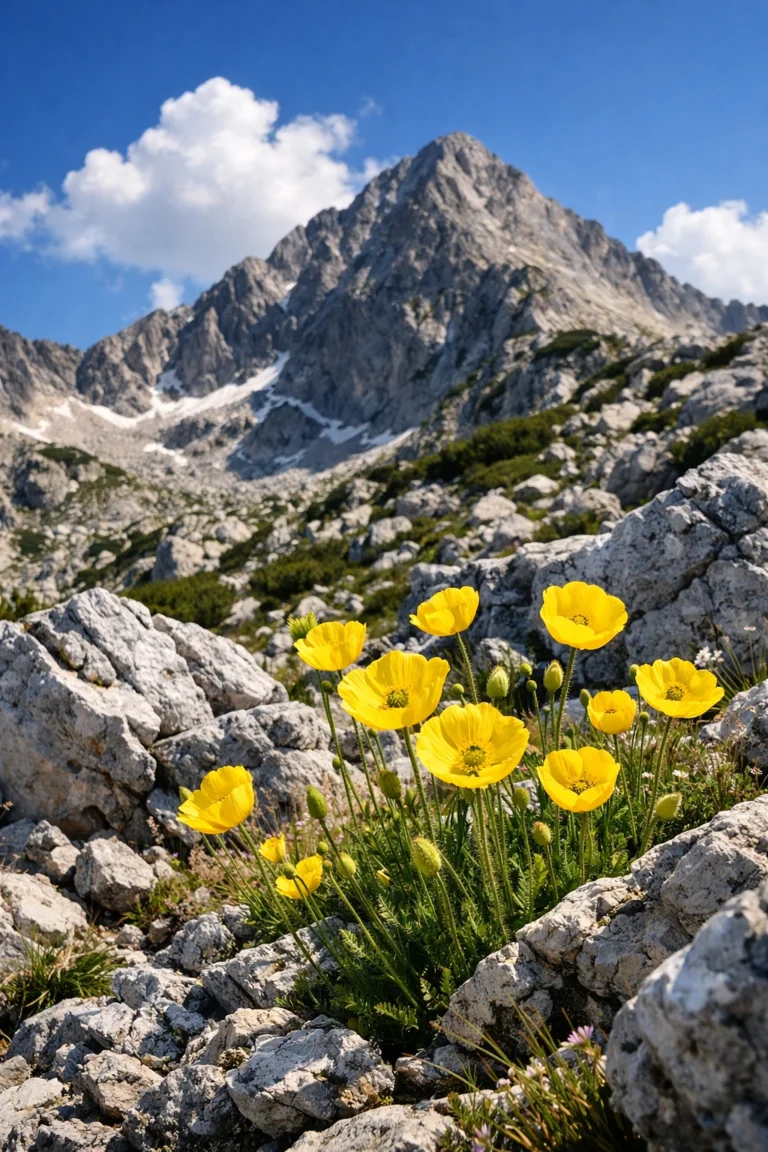
Сблъсъкът през 2019 г. бе продиктуван от опасенията за уникалното биоразнообразие на Пирин. Паркът е дом на вековни гори от бяла мура (Pinus heldreichii), включително Байкушевата мура, и местообитание на видове като кафявата мечка и сивия вълк. Липсата на СЕО означаваше, че кумулативният ефект от сечта и строителството върху тези екосистеми оставаше неоценен, което бе неприемлив риск според европейските директиви за местообитанията.20
Chapter V: Comparative analysis and tourism statistics
In 2019, Bansko consolidated its leading position among Bulgarian mountain resorts, with attendance and revenue data often used as a basis for comparison in subsequent years.
5.1 Quantitative indicators for 2019.
Statistics for 2019 outline the profile of a "golden year" for Bulgarian tourism before the pandemic.
- Revenue: In November 2019 (an indicator of pre-season activity), overnight revenue at the national level reached 42.8 million leva, with mountain resorts making a significant contribution.9
- Visitors: Foreign tourists make up a significant share, with the main markets being Romania, Greece and the United Kingdom.25 However, the domestic market remains key, especially in the wings of the season.
- Typology of visits: The data shows that about 32.3% of the visits are for the purpose of visiting friends and relatives (VFR), and 21.8% are classic holiday trips.26 This highlights the importance of social connections and owning a second home in the region.
5.2 Comparison with competing destinations
Compared to Borovets and Pamporovo, Bansko in 2019 was distinguished by a more pronounced urban environment and a more developed après-ski scene.
Bed base: Bansko offered the largest capacity, but also the biggest challenge with occupancy outside peak dates.
Price competitiveness: With property prices significantly below those in Alpine resorts and competitive prices for ski services, Bansko remained a preferred choice for budget-minded Western European tourists, despite the infrastructure "plugs" of the gondola lift.
Chapter VI: Conclusion – Sustainable Transformation
The analysis of 2019 reveals a paradoxical conclusion: the failure of plans for large-scale industrial expansion (the Second Cabin) became a catalyst for more sustainable development. The legal and environmental barriers erected in January 2019 by the Supreme Administrative Court forced the local economy to seek growth not in spatial expansion towards the mountain, but in the qualitative and temporal densification of the urban environment.
Rather than becoming another industrialized ski “mega-resort,” Bansko began its metamorphosis into a year-round destination in 2019. The rise of digital nomads, the stabilization of the property market through real use rather than speculation, and a rich cultural calendar are evidence of the adaptability of the local community. This development model – based on existing infrastructure, cultural tourism, and new forms of labor – proved to be the winning strategy that ensured Bansko’s resilience in the face of subsequent global challenges.
Appendix: Key indicators for 2019.
| Indicator | Value / Trend (2019) |
|---|---|
| Revenue from overnight stays (National level, November) | 42.8 Million BGN9 |
| Property price (Middle segment) | €650 – €850 / sq m2 |
| Property price adjustment | -12% to -15% (Decrease)2 |
| Growth of the digital nomad hub | Start of 245% growth7 |
| Purpose of visit: Vacation | ~21.8%26 |
| Purpose of visit: Visit (VFR) | ~32.3%26 |
| Key court decision | Cancellation of changes to the Management Plan of Pirin National Park17 |
| Sporting event of the year | Ski World Cup (February) |

 English (UK)