

Editor's note: This article is part of our historical series. For the full socio-economic analysis, including details on the changing investor profile, see our main story here:
Bansko: The transformation of a resort.
Bansko Sports Summit 2011: The world looks to Pirin
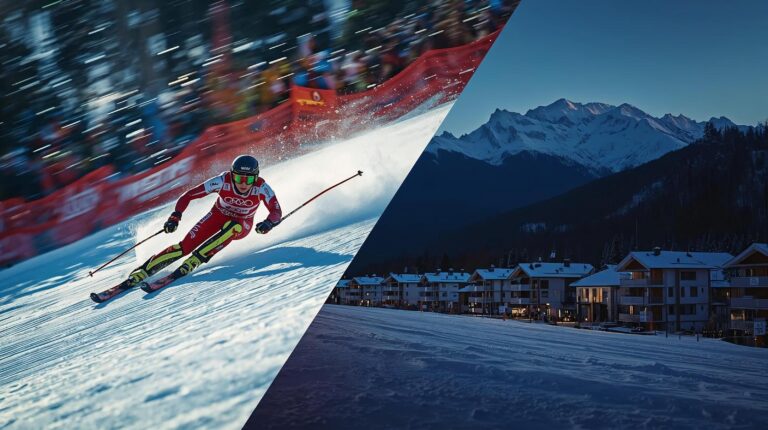
February 2011 was the month in which Bansko officially entered the "League of the Big Ones". The host of Men's Alpine Skiing World Cup It was not just another event, but a diplomatic and organizational test. The preparation of the Banderitsa track was on par with the best Austrian and Swiss resorts.
Eurosport television cameras and dozens of international channels broadcast live from Banderishka meadow, showing Bansko in its best light. The sporting spirit was enhanced by the local flavor – while the technicians prepared the „ice mirror“ on the track, the guests tasted a giant „Bansko starets“, reminding us that traditions are the foundation of this city.
World Cup 2011 results
| Discipline | Winner | Time / Achievement |
|---|---|---|
| Slalom (27.02.2011) | Mario Matt (Austria) | 1:50.35 min. |
| Super combination | Christoph Innerhofer (Italy) | Gold medal |
The Economic Shake: The Bursting of the Real Estate Bubble
In parallel with the glamour of ski racing, Bansko 2011 was experiencing its worst real estate market hit. The period was marked by the so-called "Great British Withdrawal". Thousands of investors from the United Kingdom, squeezed by the domestic recession and the oversaturation of the Bansko market, began to sell their apartments at a pittance.
The statistics for the year were eloquent: if in 2008 prices in "Gramadeto" and "Glazne" reached levels of 1500 euros per sq m, then in 2011 the market stabilized (or rather collapsed) at levels of 400 - 550 euros per sq m. This dramatic drop of over 25% in just one calendar year completely changed the face of investments.
The new buyer profile
In place of speculative English capital, buyers from Russia and neighboring Balkan countries began to appear. Unlike their predecessors, they were not looking for a quick resale, but a "second home" for vacation. This was the beginning of the transformation of Bansko from a construction site into a real tourist destination.
Cultural challenges and summer ambitions
Realizing that ski tourism alone is not enough for sustainable development, the municipality of Bansko invested heavily in the summer calendar in 2011. The Jazz Festival solidified its international reputation with the guest appearance of Mungo Jerry, attracting thousands of fans to the square in the old town.
However, not everything went according to plan. The ambitious music festival Elevation, held on Predela, became a lesson in mountaineering logistics. Strong winds destroyed part of the stage, and headliner Jamiroquai was unable to perform due to injury. This event, although partially unsuccessful, showed the region's potential for large-scale summer productions.
Infrastructure and sustainable development
After the devastating floods of the previous year, the priority in 2011 was to strengthen the Glazne River bed. Procedures were also launched for the "Water Cycle" - a project worth hundreds of millions, which aimed to modernize the city's outdated sewage system, which was suffering from rapid overbuilding.
Conclusion: The Lessons of 2011
In retrospect, Bansko 2011 was the year in which the resort "grew up". The city stopped believing in the endless growth of prices and began to invest in image and quality of services. The world ski triumph gave self-confidence, and the property crash - the necessary humility to rethink the future at the foot of Pirin.
This article was prepared by our editorial team with the aim of preserving the historical memory of Bansko's development as a leading European resort.
 English (UK)