

Summary of the report
The year 2004 remains in the modern history of Bulgaria as a turning point for mountain tourism, and for Bansko in 2004 it is the year of irreversible metamorphosis. This report provides an in-depth analysis of the processes that transformed a Bulgarian Renaissance town at the foot of Pirin into an internationally recognized winter resort. The period under review is characterized by unprecedented investment pressure, large-scale infrastructure construction, and complex social dynamics generated by the collision between global capital and local tradition.
Economically, 2004 marked the peak of the speculative real estate market, fueled by Bulgaria’s expected accession to the European Union. In terms of infrastructure, this was the year in which the ski area gained European scale with the launch of the new gondola lift and the Alberto Tomba piste. Culturally, the city established itself as a world-class venue through the International Jazz Festival, while ecologically it became the scene of a fierce debate over the Pirin National Park Management Plan. This analysis synthesizes data from multiple sources to present the full picture of this crucial moment.
1. Macroeconomic context and investment environment
To understand the Bansko 2004 phenomenon, we must first analyze Bulgaria's macroeconomic framework at the time. The country was on the cusp of EU accession, which generated enormous optimism among foreign investors.
1.1. The property bubble phenomenon and price dynamics
2004 is shaping up to be the absolute peak in real estate price growth in Bulgaria for the decade. After a period of stagnation at the beginning of the century, the market exploded. According to national statistics and analyses by leading agencies, residential property prices in the country recorded a nominal growth of 47.48% in just one year. Even after accounting for inflation, the real increase amounted to an impressive 38.94%.
In Bansko, this trend has not only multiplied, it has taken on hyperbolic dimensions. The town has become a prime target for a specific class of investors – second home buyers, mainly from the UK and Ireland. This foreign capital, seeking high rental yields and capital gains from rising property prices, has created a market environment in which prices have become detached from the economic fundamentals of the local population.
| Indicator | Nominal growth (2004) | Real growth (relative to inflation) | Context |
|---|---|---|---|
| Average height for Bulgaria | 47.48% | 38.94% | Historical peak for the decade 2000-2010 |
| Growth in Sofia | ~40% | ~32% | Driven by urbanization and income |
| Growth in Varna | 12-14% | – | Moderate growth in the maritime capital |
| Market in Bansko | Hyper-speculative | N/A (Volume driven) | Formed entirely by external demand and greenfield construction„ |
While in Sofia prices in prestigious neighborhoods such as Lozenets and Iztok ranged between 510 and 1,200 euros per square meter, in Bansko off-plan properties began to be offered at prices that were quickly catching up with the capital. Investors bought apartments in complexes that existed only as architectural drawings, relying on the marketing myth of the „Switzerland of the Balkans.“.
1.2. Foreign Direct Investment (FDI) and Structural Effect
The influx of capital into Bansko in 2004 was part of a wider wave of FDI in Bulgaria, which reached 2.72 billion euros for the year. Estimates show that over 2001–2004 were invested in the resort 180 million euros. This capital didn't just build hotels; it changed the social fabric.
Unemployment in the municipality of Bansko fell to record levels – below 41%, and in the town itself it was practically non-existent. The construction sector absorbed all the available labor not only from the town, but also from neighboring settlements such as Razlog and Dobrinishte. This economic boom led to a sharp increase in incomes, but also to dependence on a single sector – construction and tourism.
Land prices in 2004:
- Plots in regulation around the "Olymp" hotel: 100 euros/sq.m.
- Plots of land in Dobrinishte: 125 euros/sq.m.
- Unregulated areas (ring road area): 55 euros/sq.m. (indicator of expected expansion)
2. Construction and Urban Planning: Resort Engineering
If the economy was the engine, then construction was the transmission that transmitted the energy of growth to the physical reality of Bansko. The municipal administration, led by Mayor Alexander Kravarov, faced the challenge of modernizing the infrastructure of a Renaissance town to accommodate a flow of tourists that many times exceeded the local population.
2.1. The "Super Bansko" program and municipal investments
In 2004, the municipality launched an ambitious infrastructure renovation program worth around 9 million leva. This amount was colossal for the scale of the municipal budget and was intended to prevent an infrastructure collapse.
The main projects included:
- Rehabilitation of the street network: Key arteries such as Glazne, Bulgaria, Patriarch Evtimii, Father Paisii, Drama and Tsar Boris streets were completely resurfaced. The street leading from the lift base station to the Strazhite hotel was widened to three lanes to accommodate skier traffic.
- Ring Road: The design and construction of a 6-kilometer ring road began, the aim of which was to take heavy construction trucks and tourist buses out of the historic center.
- New bridge over the Glazne River: The facility was critically important for the connection between the old town and the new tourist area around the lift, serving as a preventive measure against traffic jams.
The financing of these projects revealed the symbiosis between the private and public sectors. The Municipal Council introduced a fee of 2 leva per square meter of gross floor area (GFA) for all new construction, which investors paid for infrastructure development. Later, as construction grew, this fee was increased to 4 leva, but in 2004 the mechanism was still being imposed.
2.2. Expansion of the hotel base
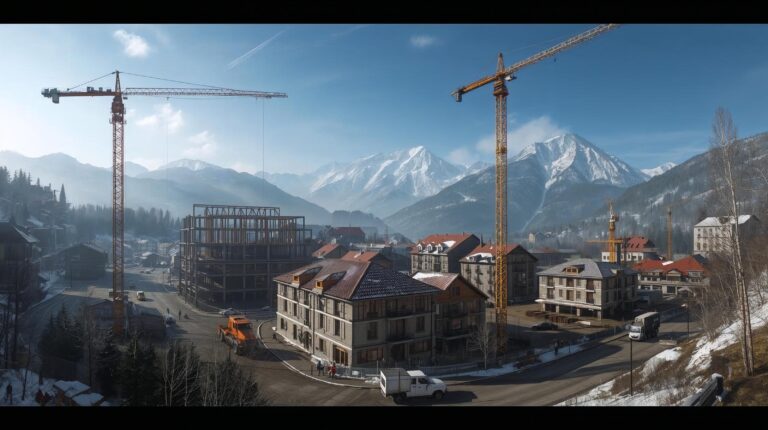
2004 was the period of mass construction of bed facilities. The issued building permits exceeded 400 for the period 2004-2006. The most significant project was the construction of Kempinski Hotel Grand Arena. Located directly opposite the gondola lift station, this five-star complex, managed by the global chain Kempinski, has set a new standard for luxury not only in Bansko, but throughout Bulgaria. Although its official opening was scheduled for October 2005, extensive construction work in 2004 dominated the landscape in the upper part of the town.
Alongside the giants, local entrepreneurs and foreign investors launched dozens of smaller hotels. The Florimont Group opened the Casa Florimont hotel in 2004, marking the beginning of its expansion in the resort. Construction activity was so intense that the number of beds was expected to exceed 6,000 for the following season.
2.3. The Water Crisis: The Foretold Catastrophe
Despite investments in sewage systems, the pace of housing construction dramatically outpaced the capacity of the water supply network. In 2004, the foundations were laid for a problem that would escalate in 2006, when dozens of new complexes were left without water. The lack of adequate planning for water catchment and wastewater treatment in the new southern areas of the resort created a hidden deficit that infrastructure fees failed to cover in time.
3. Tourism: Quantitative leap and change in profile
Statistics for 2004 paint a picture of exponential growth. The winter season 2004-2005 registered around 400,000 tourists, representing an almost 100% increase over the 250,000 visitors in the previous season.
3.1. Demographic change of visitors
The profile of the tourist in Bansko has undergone a radical change:
- The Greek market: Greece remained the leading source of foreign tourists to Bulgaria with over 700,000 visits in 2004. For Bansko, this meant a steady flow of weekend tourists who filled the hotels and taverns.
- British invasion: 2004 marked the beginning of mass British tourism, stimulated by cheap package holidays and the opportunity to buy property. The number of tourists from the UK to Bulgaria increased by 36,10% on an annual basis, with a significant proportion of them being directed to the ski resorts.
- Domestic market: Bulgarians were also rediscovering Bansko, although rising prices began to create social tension. The price of a daily lift pass was increased, causing discontent among local tourists accustomed to more affordable conditions.
3.2. Strategy for a year-round resort
Recognizing the risk of seasonal dependence, the municipality and the tourism industry made efforts to develop summer tourism. In the summer of 2004 and 2005, numerous cultural and sports events were organized, attracting over 200,000 visitors outside the ski season. This was part of the long-term strategy to transform Bansko into a year-round destination combining skiing, spa, cultural and eco-tourism.
4. Sports Infrastructure: The Road to the World Cup
In 2004, Bansko took the decisive step from a local ski center to a resort capable of hosting competitions of the highest rank of the International Ski Federation (FIS).
4.1. The cable car and the new ski area
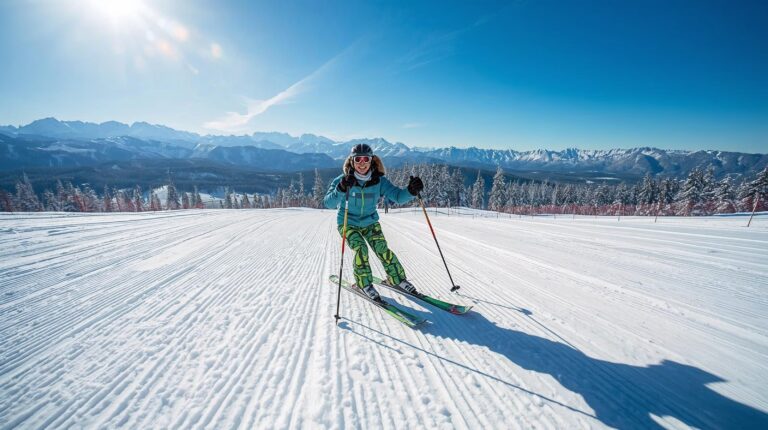
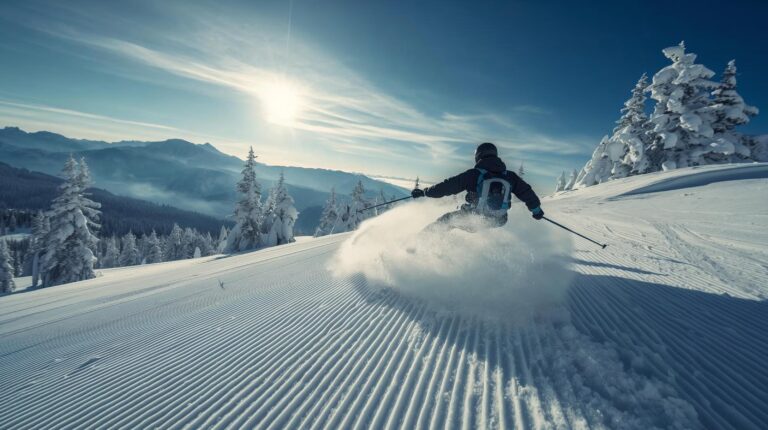
The most significant event for the ski area was the commissioning of the new gondola lift in the 2003/2004 season. The 6 km long facility, manufactured by the Austrian company Doppelmayr, connected the city directly to the area. Banderishka meadow. This lift not only solved the logistical problem of transporting skiers, but also became a symbol of modernization. The capacity of the ski facilities reached 2,000 people per hour, and the slopes under Todorka Peak could accommodate up to 8,000 skiers.
4.2. Alberto Tomba Runway and the Starlight
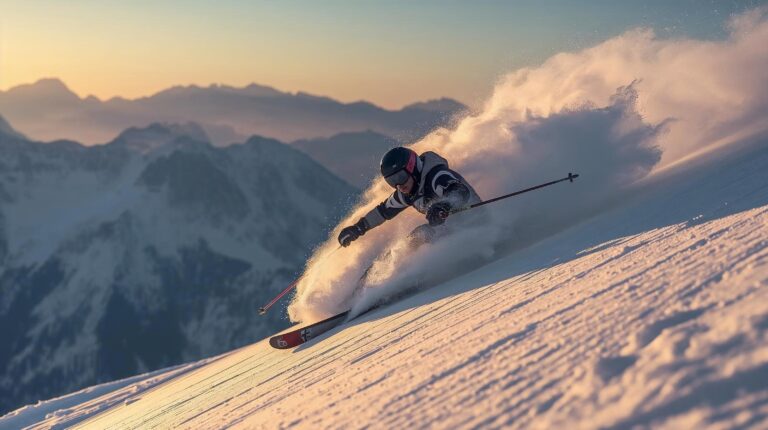
The opening of the Alberto Tomba piste (black piste, number 9) was a marketing triumph. Naming the most difficult course after the Italian legend Alberto Tomba, who personally attended the opening in December 2003 and again in the following years, legitimized Bansko's sporting ambitions. This piste was designed to meet all FIS requirements for hosting slalom and giant slalom.
4.3. Mark Girardelli: The consultant and face of the resort
In 2004, five-time World Cup winner Mark Girardelli officially became a consultant to the Bulgarian Ski Federation and the face of Bansko. His role was key in attracting international competitions. Girardelli not only provided expert advice on the profiling of the slopes, but also used his influence in the FIS for lobbying. (Years later, in 2018, he would announce that he was the majority owner of the concessionaire „Yulen“ AD, but in 2004 his role was publicly perceived as an expert one.).
4.4. Competitive activity: Pirin Cup 2004
In April 2004, the Pirin Cup competition, included in the FIS calendar, was held. This event served as a dress rehearsal for the organization of larger forums. The successful conduct proved that the Yulen teams and the federation can prepare world-class courses. Additionally, in 2004, the biathlon shooting range was completed, which opened the doors to hosting competitions in this sport as well, and the first amusement park (Fun Park) in the Balkans was built for snowboarders.
5. Culture: Jazz and traditions at the foot of Pirin
Along with concrete and snow, Bansko is investing heavily in its cultural image, using festivals as a tool for differentiation from competing resorts.
5.1. International Jazz Festival Bansko 2004
The seventh edition of the International Jazz Festival, held in August 2004 at Nikola Vaptsarov Square, established itself as the largest summer music event in the country. The highlight of the program was the concert of the legendary "King of Rock and Soul"„ Solomon Burke. His presence was a sign of prestige; Burke arrived with a security team and gave an emotional concert, seated on a special throne on stage, in front of the packed square.
The Big Band of the Bulgarian National Radio, the Big Band of Vili Kazasyan, as well as international formations such as the SHAPE International Big Band (NATO's representative orchestra) also participated. The festival not only entertained tourists, but also created a unique atmosphere, combining cosmopolitan jazz with the authentic architecture of the old town.
5.2. Preservation of cultural heritage
Despite the construction boom on the outskirts, the historic core of Bansko has retained its character. The municipality has focused on preserving the 150 cultural monuments, including the emblematic "Bansko fortified houses" such as Velyanovata and The Benin House. The Holy Trinity Church with its 30-meter tower remained the spiritual and visual center of the town. The cultural calendar was also filled with other events, such as festivals of Bansko cuisine and folklore festivals, aimed at showing that Bansko is more than just ski slopes.
6. The Ecological Conflict: The Battle for Pirin National Park„
2004 was also a critical year from an environmental perspective. The development of the ski area entered the territory of Pirin National Park, a UNESCO World Heritage Site, which caused a long-standing conflict.
6.1. The Management Plan (2004–2014)
In 2004, the government adopted the new ten-year Management Plan for Pirin National Park. This document was crucial, as it regulated the zones in which the construction of ski infrastructure was permissible. Environmental activists from WWF and the coalition „For Nature to Remain in Bulgaria“ raised the alarm that the plan legitimized the excessive expansion of the ski area and threatened the centuries-old white pine forests.
6.2. UNESCO's reaction
The UNESCO World Heritage Committee was monitoring the situation with concern. In its decisions from that period, the organization demanded strict adherence to the site's boundaries and expressed concerns about excluding "tourist zones" from the protected area to allow construction. The 2004 UNESCO/IUCN mission report found that the development of the ski resort had had a significant impact on the integrity of the park, causing damage to forest ecosystems.
Despite protests and international pressure, the economic imperative prevailed. The concessionaire Yulen AD continued with the implementation of its investment program, referring to the approved plan and concession agreement from 2001. This conflict between development and conservation created an „ecological debt“ that would weigh on the resort for decades to come.
7. Conclusion
2004 was a time of „critical mass“ for Bansko – the moment when the accumulated energy of transition was released in explosive growth. The economic indicators were dazzling: a 50% increase in property prices, a doubling of tourists and full employment. The infrastructure projects launched that year defined the physical appearance of the modern resort.
But the price of this success was high. The overheating of the real estate market created a bubble, the bursting of which would later leave hundreds of unfinished apartments. Rapid construction outpaced the capacity of the water supply network, leading to crises. And the compromises with the preservation of Pirin created a legal and ethical wound that has not healed to this day.
In retrospect, Bansko in 2004 is an example of the audacity and risks of rapid modernization – a year of triumph for entrepreneurs and a year of alarm for environmentalists, but undoubtedly the year in which Bansko became a global destination.
Expert Analysis: Secondary Findings and Insights
The analysis of the 2004 data allows for the derivation of several deeper observations that explain the long-term processes in the resort:
1. The "Ghost Town" Model„
The huge volume of greenfield sales in 2004 to foreign investors created a structural anomaly. Homes were bought for investment purposes, not for living. This set the pattern of „dark windows“ – entire neighborhoods that are only lively for 2-3 weeks a year, but require year-round infrastructure maintenance by the municipality.
2. The concession monopoly as a double-edged sword
The consolidation of the ski area into the hands of a single concessionaire (Yulen AD) in 2004 allowed for extremely efficient and integrated management of the ski product (single map, modern lifts). At the same time, it created an asymmetry in power – the municipality became economically dependent on a private entity, which blurred the boundaries between public interest and corporate strategy.
3. Culture as a marketing tool
The success of the Jazz Festival, featuring a star of the stature of Solomon Burke, proved that "high culture" could be successfully imported and commercialized in a rural area. This encouraged the creation of numerous subsequent festivals (opera, cinema, ballet), making event tourism a major tool for combating seasonality.
4. Ecological debt
The 2004 decisions to adopt the Management Plan despite UNESCO's reservations set an institutional precedent. This "legalization" of expansion into protected areas led to a permanent punitive procedure by the EC and put Bulgaria in a defensive position on the international stage.
Appendix: Key statistics (2004)
| Category | Indicator | Value/Description |
|---|---|---|
| Economy | Property price growth (Bulgaria) | +47.48% (nominal) |
| Economy | Investments in the resort (2001-2004) | > 180 million euros |
| Tourism | Number of tourists (Season 04/05) | ~400 000 |
| Infrastructure | Municipal investments | 9 million leva |
| Infrastructure | Builders' fee | 2 BGN/sq m of total area |
| Sports | Lift capacity | 2,000 people/hour |

 English (UK)