

Key emphasis: In 2010, the city not only received the prestigious recognition, but also began a large-scale battle for sustainability, facing the challenges of the global economic crisis and UNESCO's environmental standards.
The establishment of Bansko as the winter capital of the Balkans
The culmination of the resort's branding strategy occurred on September 30, 2010 in the Serbian city of Novi Sad. During the International Tourism Fair, Bansko was officially awarded the “Winter capital of the Balkans”. The choice of location was significant – Serbia, home to the main regional competitor Kopaonik, became the stage on which the Bulgarian resort was crowned as the leader.
The decision of the Balkan Hoteliers and Restaurateurs Association (BAHA) was supported by the European and World Hoteliers Associations, giving the award global legitimacy. This label served as a powerful platform for the advertising campaign targeting markets such as the UK, Russia and Greece.
Sports infrastructure and preparation for the world elite
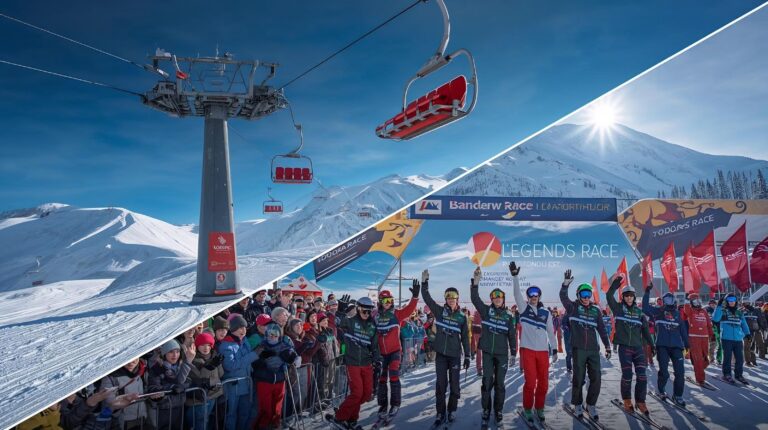
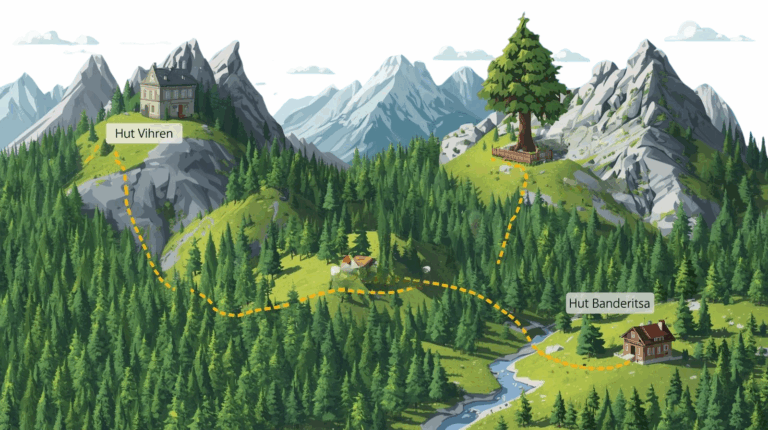
In 2010, Bansko was living with the rhythm of preparation for the most significant sporting event in its history – hosting the Alpine Skiing World Cup in February 2011. The main focus was on the Tomba (Banderitsa) track, which had to meet the strictest requirements of the FIS.
Technological innovations in the ski area
Significant resources were invested to secure the competitions:
- Artificial snow system: By the end of the year, the area had 260 snow guns covering 75 km of slopes.
- Expert team: The work was led by Anders Forsel and Viktor Dimitrov, with monitoring by Alberto Schiavone.
- Financing: The government allocated a targeted subsidy of 2 million euros to the organization.
The Engineering Transformation: Water Cycle and Gasification
While the ski area was preparing for sporting glory, the town was undergoing a massive reconstruction. Rapid growth had outpaced the utilities, necessitating the launch of the “Bansko Integrated Water Cycle Project”.
The project, financed under the OP “Environment”, covered the rehabilitation of nearly 160 km of water supply and sewage networks. This was a critical step for the protection of the Glazne River and the improvement of sanitary conditions in the resort. In parallel, the expansion of the gas distribution network continued with the aim of improving air quality – a key factor for the image of any modern resort. winter capital of the Balkans.
The Property Market: From British Investment to the “Russian Wave”
The real estate sector went through a classic “sobering up” in 2010. After the bursting of the property bubble, prices saw a serious decline, with studios and apartments in complexes such as Aspen Golf were offered at levels of 12,000 – 14,000 euros.
Change in buyer profile
While British owners were massively selling off their assets, a powerful wave of Russian buyers entered the market. They were looking for properties for personal use (“dacha” in the mountains) and preferred completed, luxury complexes, which stabilized the high-end segment of the market.
Cultural Renaissance: Jazz and Opera under the Open Sky
To overcome seasonality, Bansko has opted for a large-scale cultural calendar. XIII International Jazz Festival in August 2010, it became a legendary event with the participation of soul icon Solomon Burke. Nikola Vaptsarov Square gathered thousands of music fans, stimulating local businesses on the hottest summer days.
In the same year, the beginning was also made of Bansko Opera Fest. The performances of "Tosca" and "The Queen of Csárdas" under the open sky proved that the resort can attract an audience through high classical art.
Statistical review of 2010
| Indicator | Details |
|---|---|
| Award | Winter capital of the Balkans (Novi Sad) |
| Ski infrastructure | 260 snow guns on 75 km of slopes |
| Water cycle | 160 km of new water supply network |
| Culture | Start of “Bansko Opera Fest” |
Ecology and UNESCO: The Difficult Balance
One of the most controversial topics in 2010 was the status of Pirin National Park. The UNESCO World Heritage Committee decided to reclassify the ski areas above Bansko and Dobrinishte as a “buffer zone.” This legitimized the existing infrastructure, but also set strict limits on future expansion, which remains a subject of debate between investors and environmentalists to this day.
 English (UK)