

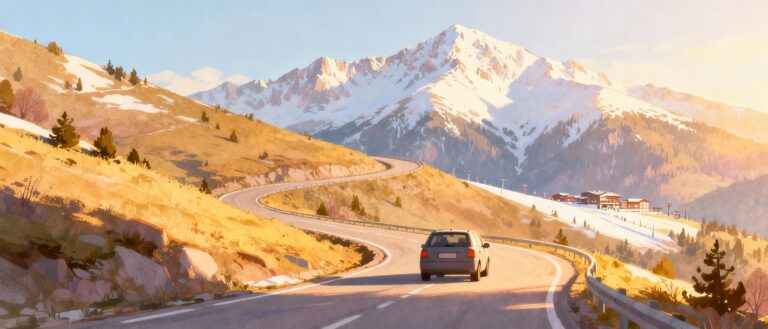
The drive from Sofia Airport to Bansko is between 155 and 180 km long and usually takes 2 to 2.5 hours in normal traffic. The route is scenic, combining fast highway travel with driving on a first-class mountain road.
In this guide you will find up-to-date information about the route, road conditions, safety measures, useful contacts and answers to the most frequently asked questions.
Route and navigation
The fastest, most convenient and frequently used route from Sofia Airport to Bansko is:
-
Sofia Airport → Ring Road (Southern or Northern Arc) → Struma Highway (A3/E79) → Simitli → Road II-19 (Predel Pass) → Bansko
This is a direct and easy to navigate route. It starts off on the capital's Ring Road, then you join the Struma Highway (A3). It is a modern thoroughfare that takes you to the key junction – the city of Simitli. There you get off the highway and take the secondary road II-19 to the Predel pass, which leads directly to Bansko.
-
Distance: 155–180 km (depending on the starting point in Sofia).
-
Duration: 2–2.5 hours by car; a little more by bus or organized transfer.
-
Alternatives: There are other routes (for example, via Yundola or Belmeken), but they are significantly slower, with narrower roads, and are not recommended during the winter season unless you have serious experience in mountain driving.
Pavement condition and traffic
-
Struma highway (A3): The road is in excellent condition, with wide lanes and quality asphalt. The section includes numerous tunnels and viaducts, where speed limits must be strictly observed.
-
The Simitli – Bansko section (Predel Pass): After the turnoff at Simitli, the road becomes two-way (with one lane in each direction). The terrain is mountainous, with many bends and elevation changes. The pavement is good, and in places there are separate lanes for overtaking slower vehicles. Be especially careful of sharp bends and narrowing of the road.
Safety and driving features
-
Overtaking: Risky and incorrect overtaking is the most common cause of accidents on two-way roads in Bulgaria. Watch out for oncoming traffic and only make maneuvers in authorized areas with excellent visibility.
-
Two-way traffic: Be vigilant in the section after the highway (Simitli - Bansko), especially when passing through populated areas.
-
Altitude and climate: The road climbs from about 300 m above sea level (at Simitli) to over 1100 m (at Predel) and descends to 900 m in Bansko. In winter, conditions can change in minutes – from dry asphalt to snow, ice and thick fog.
-
Speed limits: Control has been tightened. The standard limits are: 50 km/h in built-up areas, 90 km/h outside them and 140 km/h on the highway (unless signs indicate otherwise).
-
Police control: Speed cameras (stationary and mobile tripods) are a common sight, especially on the Struma highway and at the beginning of settlements.
-
Lights: Driving with dipped or daytime running lights on is mandatory all year round, as well as during the day, and at night.
Vignette fee (Road tax)
-
Electronic vignette: It is mandatory for all non-urban roads in Bulgaria. It can be purchased at gas stations, terminals or online at bgtoll.bg.
-
Control: The lack of a vignette is automatically detected by the toll system's cameras and leads to the imposition of a "compensatory fee" (fine).
-
Car rental: For rented cars, the vignette is usually included in the price, but always request confirmation from the agency.
Vehicle and equipment requirements
Year-round:
-
Documents: Driver's license, small car registration card, valid third party liability insurance and an annual technical inspection document.
-
Lights: Always on while driving.
Winter season (November 15 – March 1):
-
Winter tires: Tires designed for winter conditions, or those with a tread depth of at least 4 mm, are mandatory.
-
Chains for snow: It is mandatory to have a set of chains in the trunk. Their use is only required in heavy snowfall and the presence of a "Chains Required" road sign, but their absence during inspection may result in a fine.
-
Wiper fluid: Make sure the tank is full of winter fluid that is resistant to freezing temperatures. temperatures.
Summer season:
-
The roads are mostly dry, but summer storms in the mountains can suddenly make the pavement slippery (aquaplaning).
Seasonal risks
-
Winter: Snow drifts, icing (especially the so-called "black ice" early in the morning) and reduced visibility. The road to Bansko is being cleaned with priority, as it is a major tourist destination, but during heavy rainfall the situation becomes more complicated.
-
Summer: Heavy traffic during the weekends and risk of falling rocks in the mountain passes. Watch out for agricultural machinery moving at low speed.
Useful telephone numbers
Save these numbers in your phone before traveling:
-
112: Single European emergency number (police, ambulance, fire department).
-
146: Roadside assistance (SBA – Union of Bulgarian Motorists).
-
0700 130 20: Road Infrastructure Agency (RIA) – for up-to-date information on road conditions and closed sections.
-
1470: Mountain Rescue Service (MSS) – an important number if you are planning hiking or skiing in the mountains.
Frequently Asked Questions (FAQ)
1. Do I need a 4×4 vehicle to get to Bansko? Not required. The main road to the resort is regularly cleaned and is passable for normal cars. However, 4×4 drive is an advantage if your hotel is located on a steep or uncleaned secondary street in the town itself.
2. Can I pay a fine to the police officer in cash? Absolutely not. Paying fines by hand is illegal and considered a bribe. All fines are paid by bank transfer, via EasyPay or online after you are given a slip or act.
3. Where are the most convenient places to rest along the way? On the Struma highway, there are several large gas stations with shops and toilets (OMV, Shell, Gazprom) in the Studena area and before Blagoevgrad. After the Simitli turnoff, stopping options are more limited.
4. When is traffic heaviest? Avoid traveling on Friday evening (towards Bansko) and Sunday afternoon (towards Sofia), when traffic is heaviest due to weekend tourists.
5. Are they closing the road because of snow? Very rare. The Predel Pass is a strategic link and is maintained with high priority. Temporary closure (for 1-2 hours) is possible only in extremely heavy blizzards for road cleaning or in the event of a road accident.
Summary
-
Distance: 155–180 km.
-
Duration: 2–2.5 hours.
-
Main risks: Incorrect overtaking, mountainous terrain after Simitli, winter conditions (ice/snow).
-
Required: Vignette, lights on, winter tires (in season).
-
Control: Frequent speed checks; follow the limits strictly.


 English (UK)