


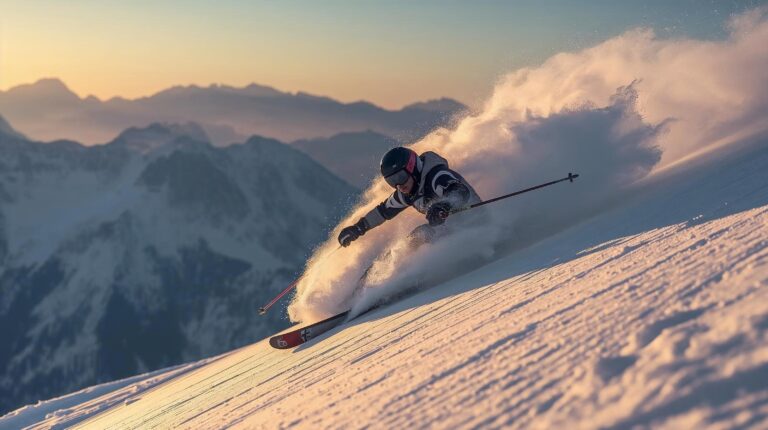
One of the best examples of quality online learning is the popular video tutorial on Stomp It Tutorials, which has garnered nearly a million views worldwide. This guide brilliantly deconstructs the complex biomechanics of carving into easy-to-learn, logical steps. Watch the video below, then we'll dive into the deepest details of what we can learn from the experts, how to choose the right gear, and where in Bansko to apply that knowledge to the snow.
Info: How to watch the video with Bulgarian subtitles
Since the tutorial is in English, YouTube offers an easy way to make sure you don't miss any important details of the terminology related to carving ski technique. Here's how to enable Bulgarian translation for the video:
- Turn on subtitles: Click on the small subtitles (CC) icon in the bottom right corner of the video player.
- Open settings: Click the gear icon (Settings) next to the subtitles icon.
- Specify translation: Select “Subtitles/CC”, then click “Auto-translate”.
- Choose language: Scroll down and highlight “Bulgarian”.
What is carving and why is it so important?
Carving is an advanced skiing technique in which the skis ride entirely on their steel edges, without skidding. Modern carving skis are designed with a specific “hourglass” geometry—they’re wider at the tip and tail, and narrower in the middle under the boot. When you lean such a ski on its edge and apply your body weight, it naturally bends in an arc. The result? The ski describes a clean, precise turn in the snow, preserving your speed, momentum, and most importantly, your control. This technique dramatically reduces leg fatigue because you’re using the ski’s design to do the work, rather than fighting the snow by physically pushing it.
The 3 golden steps to perfect carving ski technique
Good manuals are successful precisely because they break down a complex movement into its component parts. As you saw in the video, the secret to smooth riding lies in three basic elements that you must master in precise sequence:
1. Basic skiing position
It all starts with the right athletic stance. The center of gravity and the position of your body over the skis are fundamental. Your weight should be slightly forward, so that you feel constant, active pressure on the tongues of your ski boots (your shins should rest firmly on them). Your arms are in front of your body, slightly bent, as if you were holding a tray or the steering wheel of a car. Without this stable and central base, every subsequent movement loses its effectiveness and you risk losing balance at higher speeds.
2. Roll the ankles
Many beginners and even intermediate skiers think that the turn is initiated with the shoulders or hips. This is a huge mistake! Real carving begins with a very subtle “rolling” of the ankles inside the boots themselves. This micro-movement allows the skis to stand on their edges extremely smoothly and effortlessly. Imagine trying to touch the snow with the inside of your ankle bone – this is the feeling that initiates the edging process.
3. Engage the knees
Once your ankles have set the right angle for your turn, your knees come into play. Their role is to take the pressure of the turn and direct the force directly into the snow. Your knees move forward and inward toward the center of the arc you are making. This creates that characteristic, clean turn without any side slippage that leaves behind two thin, perfectly parallel “rails” in the snow.
Warning: Most common mistakes made when carving
- Backseat skiing: The biggest enemy of carving and the number one reason for losing control. If your weight falls on your heels, the front of your skis becomes lighter and they stop biting into the snow.
- Shoulder rotation: Trying to turn by twisting your upper body will result in slipping, not carving. Your chest and shoulders should remain relatively relaxed and always pointed down the valley.
- “"A-frame" (A-frame): When your inside knee lags behind and leans toward your outside knee, forming an “A” shape. Both skis should be angled at the same angle to the snow.
The Equipment: The Key to Success
Even if you know the theory to perfection, carving is almost impossible without the right equipment. Ski boots are the most important element. They must fit your foot perfectly and have the right “flex” (stiffness) for your weight and skills. If the boot is too soft or wide, the energy from your ankle will be lost inside it, instead of being transmitted to the ski. It is advisable for carving training skis to have a smaller turning radius (between 12 and 15 meters) and a narrower waist (under 75 mm). This makes them extremely agile and easy to move from edge to edge.
Where in Bansko to practice carving ski technique?
Not every slope is suitable for learning carving. To focus on technique, you need wide, moderately sloping and perfectly groomed terrain. Here are the best locations in ski area Bansko for this purpose:
- “Shiligarnik 1” and “Shiligarnik 2” track: These are blue runs with perfect slopes. They are wide enough to allow you to make long, elongated carving turns without worrying about speed.
- Track "“The plateau” (the blue part): It is located high in the mountain, which guarantees excellent snow. It is wide and spacious - the perfect place to feel how the skis “bite” on the edges.
- Tip: Avoid steep red and black runs (like Tomba or the upper part of Balkaniada) until you have mastered the technique completely, as there you will instinctively start to slide your skis to kill your speed.
Safety and etiquette on the slopes
Carving ski technique requires space. Because you are making wide arcs, you are crossing the slope from one end to the other. Always follow the FIS safety rules. Before you start a turn, take a quick look over your shoulder up the slope. The skier in front of you has the advantage, but sharp and unpredictable turns across the entire width of the slope can surprise skiers behind you. Practice early in the morning when the slopes are in perfect condition and there are not many people.
Beyond the Videos: Professional Snow Assistance
Watching the video guide is the first and very important step towards understanding the movement. But the mountain is the place where knowledge turns into reflexes. For those who want fast and safe progress, Bansko offers world-class training:
- Professional ski schools: Nothing can replace live, personal feedback from a certified ski instructor (ISIA). He will notice errors in your posture that you yourself do not notice.
- Digital Ski Coaches: Smart insoles like Carve They integrate into your shoe and act as a virtual trainer. They measure weight distribution and edge angle 100 times per second, giving you real-time advice through your headphones.
Mastering pure carving is a journey. It requires time, physical preparation (strong legs and abs) and building muscle memory. The structured information from the video guides gives you a solid theoretical foundation. Combine it with perseverance on the slopes in Pirin and very soon you will be drawing those dreamy, perfect rainbows in the snow!
 English (UK)