

Summary of the report
This report provides a comprehensive expert analysis of the development of the Municipality of Bansko during the calendar year 2021. The period is characterized as a critical bifurcation point, in which the local economy, traditionally dependent on winter tourism, is forced to adapt to the unprecedented conditions of the global COVID-19 pandemic and the ensuing socio-economic turbulence. The analysis covers five key pillars: macroeconomic management and fiscal policy, real estate market, transformation of the tourism product, cultural identity and environmental challenges.
Data shows that in 2021. Bansko successfully diversified its economic profile. Despite the decline in international tourist flows, partially offset by the domestic market, there is a renaissance in the real estate sector, driven by inflationary expectations and the phenomenon of the „second home office“. The cultural calendar is undergoing a dramatic change with the Jazz Festival schism, while environmental policies are reoriented from large-scale infrastructure projects in the mountains to urban “green” rehabilitation.
1. Macroeconomic framework and municipal governance
1.1. Post-pandemic economic context
The year 2021 found the Municipality of Bansko in a state of complex economic conditions. After the shock of 2020, the local administration and business had to navigate an environment of „controlled uncertainty“. The economic model of the municipality, which for decades relied on the export of tourist services (attracting foreign capital through foreign tourists), was forced to recalibrate towards domestic consumption.
Global economic processes, including the disruption of supply chains and the onset of inflationary pressures, directly affected the price of construction materials and energy, which put the municipal budget under pressure. However, the data show that the municipality did not fall into fiscal collapse, but on the contrary – managed to implement an ambitious investment program, relying on skillful management of transfers from the central budget and European funds.
1.2. Budget Policy and Investment Program 2021
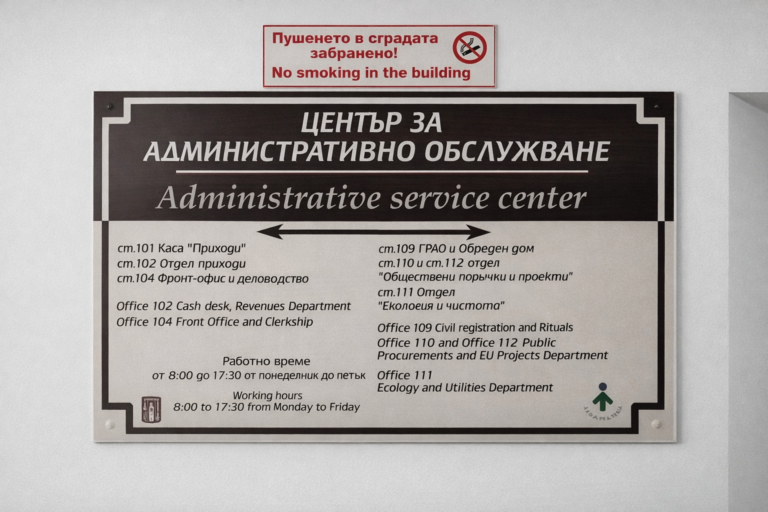
The financial backbone of development in 2021 is the Investment Program of Bansko Municipality, the total framework of which amounts to 8,281,868 leva. This volume of capital spending is indicative of the administration's desire to use the crisis as an opportunity for infrastructure renewal, preparing the city for the post-pandemic reality.
1.2.1. Funding structure
A detailed analysis of the revenue part for capital expenditures reveals a serious dependence on external financing. Of the total amount of over 8.2 million leva, only 444,184 leva are formed from the municipality's own budget revenues. This imbalance highlights a structural feature of municipal finances in Bulgaria – the strong centralization and the need for local authorities to pursue an active policy towards the central government to secure targeted subsidies.
Bansko's success in attracting nearly 95% of its investment resources from external sources (targeted state subsidies and EU projects) testifies to high administrative capacity and project financing skills in conditions of political instability at the national level in 2021.
1.2.2. Priority infrastructure projects
The investment program for 2021 was not scattered, but strictly focused on the rehabilitation of the street network and hydrotechnical infrastructure. This decision reflects the understanding that the quality of the urban environment is a direct component of the tourism product.
| Object type | Location / Specificity | Budget / Scope | Intervention goal |
|---|---|---|---|
| Street infrastructure | Bansko town | Over 2,000,000 BGN. | Complete or partial rehabilitation of worn-out flooring. |
| Priority streets | "Neofit Rilski" St., "Hristo Chernopeev" St.„ | Major repairs | Improving transport connectivity in the central part. |
| Residential areas | Peyo Yavorov St., Pito Guli St., Tsar Ivan Asen II St.„ | Rehabilitation | Improving the quality of life of the local population. |
| Neighborhood infrastructure | "Bratya Veleganovi" Str., "Hadzhi Dimitar" Str., inter-block spaces | Landscaping | Aestheticization of the urban environment outside the tourist center. |
| Hydrotechnical facilities | River beds, irrigation canals | Support and reinforcement | Flood prevention and water resources management. |
The approach to selecting these sites is noteworthy. The administration conducted an online survey among residents to identify the most pressing needs. This „participatory budgeting“ tool played a key role in legitimizing spending in a period of economic uncertainty by directing resources to sites with high public visibility and utility.
1.3. Strategic planning and project readiness
In 2021, the Municipality of Bansko is actively working on the preparation of strategic documents for the new European Union programming period (2021–2027). This includes the development of an Integrated Municipal Development Plan (IMDP), which is the foundation for any future European funding.
The public procurement of consultancy services for the development of these strategic documents shows that the administration’s focus was not only on „firefighting“ (current repairs), but also on long-term planning. This is of critical importance for a municipality that is striving to transform its economy from seasonal to year-round.
2. The Real Estate Market: The Renaissance of 2021
One of the most striking trends in 2021 has been the unexpected and powerful recovery of the real estate market in Bansko. After a decade of stagnation and oversupply (a consequence of the 2008 crisis), the market has entered a phase of accelerated growth, defying initial predictions of a collapse due to the pandemic.
2.1. Price dynamics and market conditions
Analysis of data from real estate agencies shows a clear increase in prices in all segments of the housing market. This growth is not a speculative bubble, but a correction of the long-standing undervaluation of assets in the resort, combined with changed consumer psychology.
| Property type | Price range (2019/2020) | Price range (Spring 2021) | Percentage increase (avg.) |
|---|---|---|---|
| Studio | €14,000 – €15,000 | €17,000 – €18,000 | ~20% |
| Two-bedroom apartment | €23,000 – €24,000 | €25,000 – €30,000 | ~17% |
| Three-room apartment | €27,000 – €33,000 | €33,000 – €43,000 | ~26% |
| Price per sq.m. | Under €400/sq m | €400 – €550/sq m | Varies by condition |
The data illustrates that the greatest growth is observed in larger homes (three-bedroom apartments), which is a direct indicator of a change in the buyer's profile - from an investor looking for a cheap property for resale, to an end user looking for comfort for long-term living.
2.2. Buyer Profile: Internal Capital Migration
A fundamental change in 2021 is the dominance of Bulgarian buyers, who make up approximately 70% of the market. This is a sharp contrast to previous years, when the market was dictated by British and Russian investors.
2.2.1. Inflation hedging and savings
The main driver of demand is the fear of currency devaluation. In the conditions of zero interest rates on deposits and rising inflation in the eurozone and Bulgaria, Bulgarian households with spare funds (accumulated during the lockdowns due to reduced consumption) sought a „safe haven“ in real estate. Bansko, with its still low prices per square meter compared to Sofia or Plovdiv, offered the ideal opportunity for a low-risk investment.
2.2.2. The „Second Home Office“ Phenomenon“
The pandemic has institutionalized remote work, which has turned vacation property from a luxury into a necessity. Buyers in 2021 were looking for properties not just for a ski vacation, but for full-fledged living - with requirements for good internet connectivity, space for a separate workplace and a view of the mountains. This also explains the larger price jump for two-bedroom apartments - they allow for the separation of the "living" and "working" functions.
2.3. Profitability and rental relations
Despite the price increase, the yield on Bansko properties in 2021 remained at attractive levels, ranging between 4% and 11% per year depending on management and location. The rise of short-term rental platforms (Airbnb, Booking) and the emergence of long-term tenants (digital nomads) have created a new market segment that does not depend solely on the winter season.
3. The Tourism Sector: Between Survival and Innovation
Tourism, as the main livelihood of the population in Bansko, experienced a year of extreme challenges, but also of forced innovation. 2021 proved that the „sun and snow“ model is no longer sufficient and requires flexible crisis management.
3.1. Winter season 2020/2021: "The season of masks"„
The winter season started on December 17, 2020 and continued through the first months of 2021 under strict anti-epidemic measures.
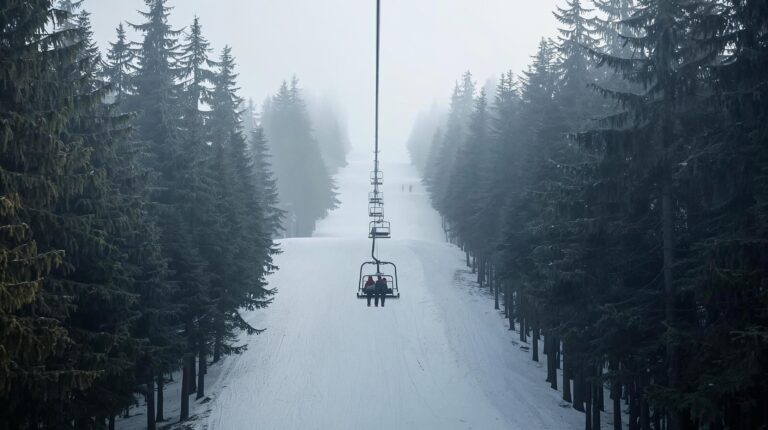
- Operational constraints and logistics: The ski area was only able to function thanks to a compromise between health authorities and the tourism industry. Strict protocols were introduced: mandatory wearing of masks (often required to be surgical type, not just cloth scarves) in the lift cabins and reduced capacity of the facilities. Restaurants and bars, which traditionally generate a significant part of their income through the "après-ski" culture, operated under highly restrictive conditions or were completely closed for long periods.
- Collapse of foreign markets and the role of Bulgarians: The statistics for the season are telling: bookings from abroad have dropped to „almost zero.“ The UK, traditionally Bansko’s strongest market, has been completely blocked due to quarantine requirements. Greece, a key neighboring market, has also closed its borders to tourist travel.
This vacuum was filled by Bulgarian tourists. The inability of wealthy Bulgarians to travel to the Alps (Austria, France and Italy kept their resorts closed or with severe restrictions) redirected this flow to Bansko. As of mid-January 2021, the occupancy rate of the bed base was around 40% – a low value for peak season, but a lifesaver against the backdrop of the total lockdown in Western Europe.
3.2. FIS World Cup – February 2021
The highlight of the year was the start of the Men's Alpine Skiing World Cup (February 27-28) and the Youth World Championships (March 1-10).
Organization in "Balloon":
Holding an event of this magnitude during a pandemic was a logistical feat. Organizers introduced the concept of a „sanitary bubble“:
- Insulation: The athletes and their teams were completely isolated from the outside world.
- Testing: PCR tests were required every 72 hours for all accredited individuals.
- Without an audience: The competitions were held without spectators in the stands, which deprived the city of ticket revenue and on-site consumption, but the television broadcast generated an invaluable marketing effect.
The event solidified Bansko's status as a leading winter sports destination. The results of the giant slalom, where competitors such as Mathieu Febvre (France) and Marco Odermatt (Switzerland) dominated, showed that the Tomba slope meets the highest world standards, despite the difficult conditions.
3.3. Summer Tourism and the Rise of Digital Nomads
The summer of 2021 marks the final establishment of Bansko as the "capital of digital nomads" in Europe.
Bansko Nomad Fest 2021: Held from June 28 to July 4, this festival attracted over 300 participants from all over the world, a threefold increase compared to 2020. The event was not just a conference, but a catalyst for the local economy during the slow summer season. The program included presentations, seminars, but also social events such as "pool parties", mountain hikes and networking evenings.
Economic effect: Digital nomads often stay in the city for months, renting apartments, using coworking spaces, and consuming services on a daily basis, providing a stable cash flow that is not dependent on weekend tourists.
4. Cultural changes and identity
The cultural life of Bansko in 2021 was marked by a deep rift related to the city's most iconic event - the Jazz Festival.
4.1. The Jazz Festival Schism
The death of the founder of the Bansko International Jazz Festival, Dr. Emil Iliev, in November 2020, opened a vacuum that escalated into conflict in 2021.
The move: Dr. Iliev's heirs and his team decided to move the festival to the Borovets resort, renaming it the "Dr. Emil Iliev International Jazz Festival." The motives were related to continuing his mission in a new location, but this action deprived Bansko of his trademark.
The Municipality's response: Bansko Municipality refused to accept the loss of its cultural emblem. The administration organized its own festival – „Bansko Jazz Festival“, keeping the dates and location („Nikola Vaptsarov“ Square).
4.2. Bansko Jazz Festival 2021 (August 7-14)
The new municipal festival took place in the shadow of this conflict, but managed to protect the city's cultural tradition.
- Program: The emphasis was placed on Bulgarian and Balkan artists, partly due to travel restrictions, but also as a strategy to support the regional scene.
- Participants: The opening was with the project "Ladies Sing Jazz" (Kamelia Todorova, Militsa Gladnishka, Ruth Koleva). Vasil Petrov, Hilda Kazasyan, Teodosii Spasov, as well as groups from North Macedonia and Greece also took the stage.
The importance of holding the festival showed the institutional resilience of the municipality. Despite the "heavy financial blows to the municipal budget", the administration invested in the event, understanding that it is an integral part of the Bansko brand.
5. Ecology, green energy and sustainable development
The environmental issue in Bansko has always been a field of tension between development (the ski area) and conservation (Pirin National Park). In 2021, the focus shifted from conflicts in the mountains to solutions in the city.
5.1. Pirin National Park: Legal road
The dream of a "Second Gondola Line" remained frozen in 2021. The situation was dictated by the final decisions of the Supreme Administrative Court (SAC) from previous years, which overturned changes to the Park Management Plan that allowed for easy construction.
The lack of a new, adopted Management Plan, consistent with the environmental assessments (EC and EIA), has blocked any large-scale investment intentions of the concessionaire Yulen AD. International pressure from UNESCO and WWF continued to act as a deterrent. The IUCN reports for 2020/2021 classify the threat to the site as „low“, but warn of the need for constant vigilance regarding tourist pressure.
5.2. Green energy and urban ecology
Blocked in the high mountains, the municipality focused its efforts on "green" projects in the urbanized area.
- Energy independence: Bansko continued to effectively use its biomass power plant for heating public buildings (schools, kindergartens, administration). This project, which started years earlier as a public-private partnership, in 2020/2021 is now fully municipally owned and serves as a model for a circular economy.
- Cross-border eco-projects: In partnership with the Municipality of Vinnitsa (North Macedonia), Bansko has launched a project for „Improving the Protection and Conservation of Nature“ under the Interreg program. The project, worth over 800,000 euros, envisages the construction of a green park area of 0.744 hectares around the Glazne River, including bike paths, pedestrian areas and planting of trees. This is a clear sign of a reorientation towards the creation of green corridors within the city, which will connect the urban environment with nature in a gentle way.
6. Conclusion
The year 2021 for the Municipality of Bansko can be defined as a year of successful adaptation and strategic repositioning.
- Economic sustainability: The municipality has proven that it can function without the mass British tourist by activating the domestic market and attracting a new demographic group (digital nomads) that brings higher added value.
- Infrastructure progress: The investment program of over 8 million leva was used effectively to solve long-standing problems with the street network, which increased the quality of life of local residents, not just tourists.
- Property market: The recovery of property prices and the exhaustion of oversupply ended the post-crisis period (after 2008) and marked the beginning of a new growth cycle.
- Cultural emancipation: By preserving the Jazz Festival, Bansko demonstrates that its cultural traditions are institutionalized and resistant to personal changes.
Looking ahead, the challenges facing Bansko remain related to finding a balance between the desire to expand the ski area and strict environmental restrictions, as well as the need to retain the interest of digital nomads and year-round visitors in the conditions of an opening world after the pandemic.

 English (UK)