


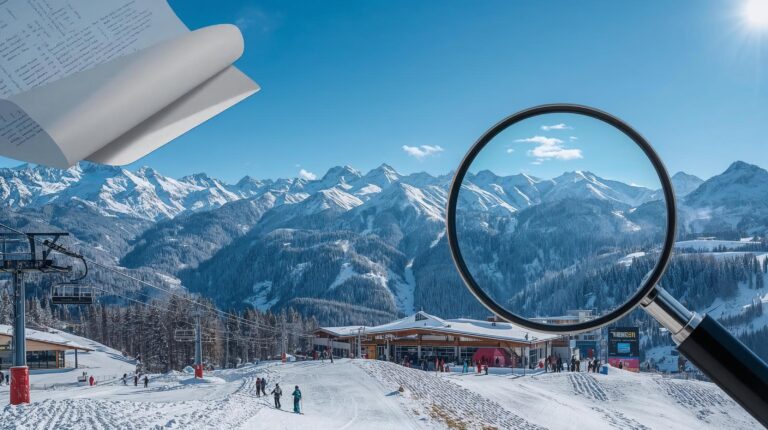
The beginning: The Bansko ski area concession agreement from 2001.
It all started on November 9, 2001. Then, after a competition, the Ministry of Environment and Water (MoEW) concluded a concession agreement with the company "Yulen" AD. The main parameters of this historical document for the region are the following:
- 📍 Territory: Pirin National Park (a site protected by UNESCO's World Cultural and Natural Heritage).
- ⏳ Validity period: 30 years (contract expires in 2031).
- 🎯 Main goal: Construction, maintenance and management of a modern ski area on a strictly defined area of 99.55 hectares.
This document gives a strong start to modern winter tourism in the city, turning it into a resort at the European level. At the same time, however, it also sets off an ecological "bomb" related to the discrepancy in the used areas, which makes the topic of ski area concession Bansko so sensitive today.
The Economic Footprint: The Engine of an Entire Region
If the concession agreement is the legal framework, then the economic effect is the real "blood system" of Bansko, Razlog and the neighboring municipalities. The influence of the resort exceeds many times the direct income from the sale of lift passes. Economists call this „"multiplication effect"“ of tourism.
💰 Key economic indicators
The „1 to 5“ effect: Economic logic and statistics show that for every 1 leva spent on ski services (passes and equipment), the tourist leaves between 4 and 5 leva in local businesses. This includes hotels, taverns, restaurants, shops, spa centers and transportation services.
Employment: The ski area is the largest employer in the region. The winter season brings unemployment in the municipalities of Bansko, Razlog and Belitsa to record lows, providing livelihoods for thousands of families.
Municipal budget: By law, 50% of the collected concession fee goes directly to the budget of the Bansko Municipality. This financial resource is critical for the maintenance of the city's infrastructure, waste collection, and social activities.
The Great Controversy: Numbers and Areas
The most debated aspect in the history of the treaty is the question: „"How big is the ski area actually?"“
According to the original contract, Yulen AD has the right to use just under 100 hectares. However, a series of state inspections and geodetic measurements, launched in 2011, established that the area actually used for runways, facilities and infrastructure is about 164 hectares. This significant excess of the original parameters is the basis of the long-standing negotiations (extremely active after 2017) to update and amend the contract to reflect reality and protect the state interest.
The financial dimension: How much does the concessionaire pay?
Finances are perhaps the most sensitive issue. Unlike the direct sale of land, there is no one-time price for a concession. The concessionaire owes an annual concession fee (fee) to the treasury.
How is the fee calculated?
The calculation methodology has been heavily criticized for years. In 2019, the government adopted important changes to the contract aimed at increasing state revenues. Currently, the formula requires the concessionaire to pay the higher of two values:
- Option A: A fixed minimum amount that is indexed to inflation.
- Option B: Percentage of all net revenues of the company from activities in the zone (about 5%).
| Period / Season type | Approximate fee (BGN) | Comment |
|---|---|---|
| Low season / Pandemic | ~ 300,000 – 450,000 BGN. | Payment of the fixed minimum base. |
| Strong season (after 2019) | ~ 800,000 – 950,000+ BGN. | Payment based on % of the realized turnover. |
Where does this money go? The amount is divided into two equal parts: 50% goes into the state budget (targeted to the environmental protection fund), and the other 50% goes directly to the accounts of the Bansko Municipality for the development of the region.
Who controls the implementation?
Control over activities in Pirin is in the hands of the Ministry of Environment, Water and Water Resources and the Council of Ministers. Their main tasks are to monitor:
- Ecological balance: Strict compliance with environmental protection regulations within the Pirin National Park.
- Territorial borders: Preventing unregulated expansion outside the established cadastral zones.
- Financial discipline: Correct reporting of revenues and correct calculation of fees due by the concessionaire.
The future of the Bansko ski area concession after 2031.
As of today (2026), the ski area is operating at full capacity, welcoming hundreds of thousands of tourists annually. But what will happen in 5 years? According to the Bulgarian Concessions Law, there are two main scenarios:
- Termination: The contract expires, the facilities pass into the hands of the state and it takes over management or seeks a new operator through an entirely new tender.
- Renewal: The current concessionaire may request an extension of the term with an annex for a new period (up to 30 years). However, this will require proof of perfect fulfillment of the previous obligations, a new environmental assessment, and categorical approval by the Council of Ministers.
Conclusion
The case with the current concession ski area Bansko remains a classic, textbook example of the difficult balance between the economic development of a region and the uncompromising preservation of its natural wealth. While thousands of tourists from all over the world continue to enjoy the excellent slopes, in the ministerial offices in Sofia and in the Municipality of Bansko, quiet but crucial preparations are underway for the decisive year of 2031. The future of Pirin and the winter capital of the Balkans depends on the decisions that are made today.

 English (UK)