

I. Ski World Cup: Image development of Bansko
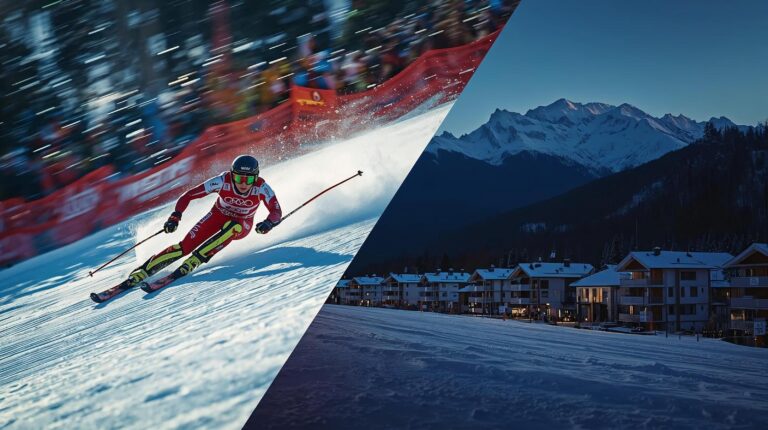
The hosting of the Audi FIS Alpine Ski World Cup for men in February 2011 was the culmination of efforts to legitimize Bansko as a world-class destination. This event not only tested the technical capacity of the ski area, but also served as a large-scale advertising campaign on a global scale.
1.1. Sports and technical triumph at the Banderitsa track“
The Banderitsa slope, known in ski circles as Alberto Tomba, was prepared to the highest FIS standards. The injection of water into the slope to achieve an „icy“ hardness allowed the elite athletes to demonstrate their full potential. The results of 2011 remain in history with a strong Austrian presence.
| Discipline | Winner | Country | Time / Achievement |
|---|---|---|---|
| Super combination | Christoph Innerhofer | Italy | Gold medal |
| Slalom | Mario Matt | Austria | 1:50.35 min. |
II. The economic crisis and the real estate market in 2011
In parallel with the glamour of ski racing, the development of Bansko faced the harsh reality of the bursting property bubble. In 2011, vacation property prices bottomed out, leading to a complete change in the region's investment profile.
2.1. Price collapse and the “British exit”
From peak values in 2008 (over 1200 EUR/sq m), in 2011 average prices fell to levels of 400-500 euros/sq.m.. This led to a massive sell-off of assets by British and Irish investors, who were the main buyers in the period 2004-2007.
- Trend 1: Oversupply of apartments in gated communities (over 7,000 new beds in 4 years).
- Trend 2: Reorientation towards the Russian market – buyers looking for properties for personal use, not for speculation.
III. Cultural Diversification: More than a Ski Destination
To survive economically, Bansko began to actively develop its summer cultural calendar. The strategy was clear: turn the city into a year-round center for events.
3.1. Jazz Festival and Opera Fest
The International Jazz Festival in August 2011 attracted thousands of tourists with a star-studded lineup including Mungo Jerry. Immediately after it, the second edition of the Bansko Opera Fest solidified the city's image as the cultural capital of the mountain.
Are you planning an investment or vacation in Bansko?
Check out our up-to-date guides to properties and events in the region.
IV. Infrastructure projects and the “Water Cycle”
Sustainable development of Bansko in 2011 would not have been possible without the large-scale repairs after the floods of the previous year. A key project was the strengthening of the Glazne River bed and the launch of the so-called “Water Cycle”.
The integrated project to improve the water supply and sewage network solved long-standing problems of the new neighborhoods in the area of The Gondola. This was a critical step in preserving the ecological balance in Pirin National Park.
Conclusion
Analyzing 2011, we see how Bansko managed to transform the property shock into a resource for quality growth. The lessons of that period have transformed the resort into what it is today – a balanced destination combining world-class sports with authentic culture and modern infrastructure. The historical development of Bansko is an example of resilience and adaptability in the face of global economic challenges.
 English (UK)