


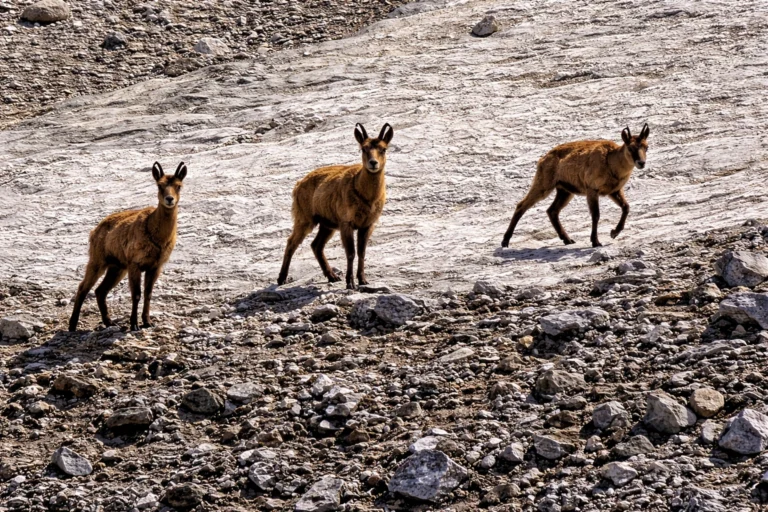
Where in Pirin can we meet chamois?
Pirin National Park is one of the most important and secure refuges for the Balkan subspecies of chamois in all of Europe. These animals are strongly attached to their territory and rarely undertake long migrations unless forced by severe weather conditions. They mainly inhabit the areas above the upper forest border (above the juniper belt). If you are fond of mountain hikes around Bansko, you have a very real chance of spotting them in the following key areas:
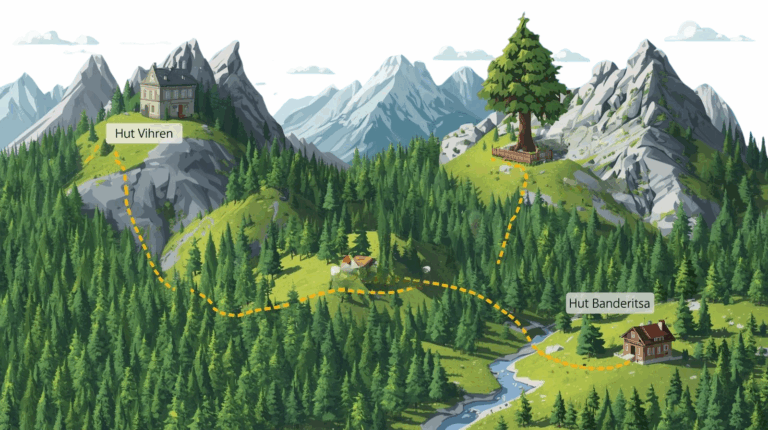
- The Banderitsa Circus and The Kazanites: One of the most popular viewing spots. Small flocks are often seen on the steep marble slopes below Vihren Peak, Kutelo and the iconic The horse.
- The area of the Bezbog hut: If you head towards Popovo Lake and the rocky peaks of Dzhengal and Kralev Dvor, look carefully at the scree - goats often rest there during the warm midday hours.
- The wall of Sinanitsa Peak: The sheer cliffs around Sinanishko Lake are a favorite place for chamois, as they provide them with perfect protection from predators.
- The Typikons and the Guards: More difficult-to-access areas that guarantee peace for the animals away from the mass tourist flow.
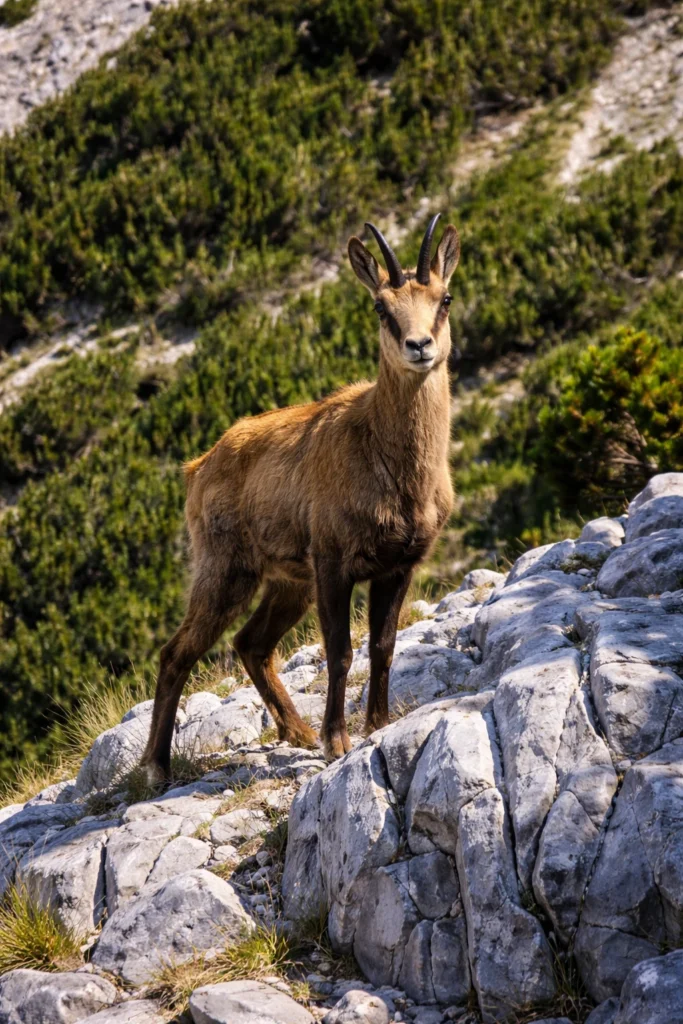
A realistic shot of a chamois standing on rocks in Pirin, facing the camera amidst a typical alpine landscape.
Anatomy and adaptation of an alpine athlete
Life on rocky terrain requires phenomenal evolutionary adaptations. The wild goat in Pirin is a perfect climber. It has unique hooves in their structure. Their outer periphery is hard like a horn to cut into the rock edges, while the inside (the so-called cushion) is soft, rough and elastic. This works on the principle of a suction cup and allows them to literally "stick" to the smooth granite and marble surfaces, which one would not be able to walk on without specialized alpine equipment.
The appearance of these animals changes dramatically with the season. In the summer, their fur is short, rusty-brown to yellowish, which helps them perfectly camouflage themselves against the sun-kissed rocks and dried alpine grass. With the onset of winter, however, they change their color - the fur becomes extremely thick, long and almost black in color. The dark shade is not accidental; it helps the animals absorb the maximum amount of solar heat during the harsh, frosty days of Pirin.
Why is their preservation critical for the Bansko ecosystem?
The Balkan chamois is a relict species and is strictly protected. It is included in the The Red Book of the Republic of Bulgaria as an endangered species. Its presence is a key bioindicator for the purity and health of the Pirin ecosystem. Any drastic reduction in their population is a clear signal of problems in the environment – most often caused by excessive disturbance, unregulated tourism outside the marked trails, snowmobile traffic in winter or poaching.
The local community in Bansko Municipality, together with the Directorate of Pirin National Park, are making continuous efforts to preserve their natural habitats. Practices such as ecotourism and wildlife watching are becoming an increasingly popular alternative to traditional tourism, but they require high culture and absolute respect for wildlife.
How to increase your chances of successful observation?
If you want to enjoy the sight of a chamois in its natural environment, you must follow a few golden rules:
- Time of day: Be high up in the mountains early in the morning (at sunrise) or in the late afternoon before sunset. That's when the goats are most active and come out to graze.
- Equipment: Invest in quality binoculars or a camera with a good telephoto lens (at least 300-400mm).
- Clothing and behavior: Avoid bright, neon colors in your clothing. Move quietly, speak in a whisper, and always stand upwind so they don't pick up your scent.
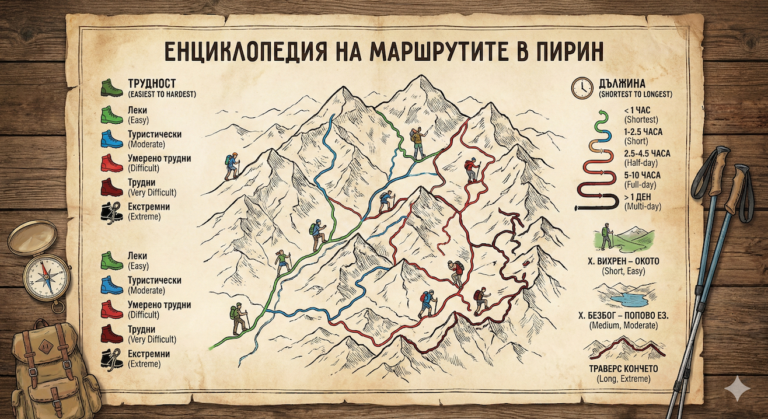
Want to learn more about the best routes in Pirin?
Frequently Asked Questions (FAQ)
Are chamois dangerous to humans?
Absolutely not. They are extremely timid, peaceful herbivores and will always choose to flee before a collision with a human. The only time when males (the rams) show aggression is during the breeding season (November – December), but this aggression is directed entirely at a rival male goat.
 English (UK)