


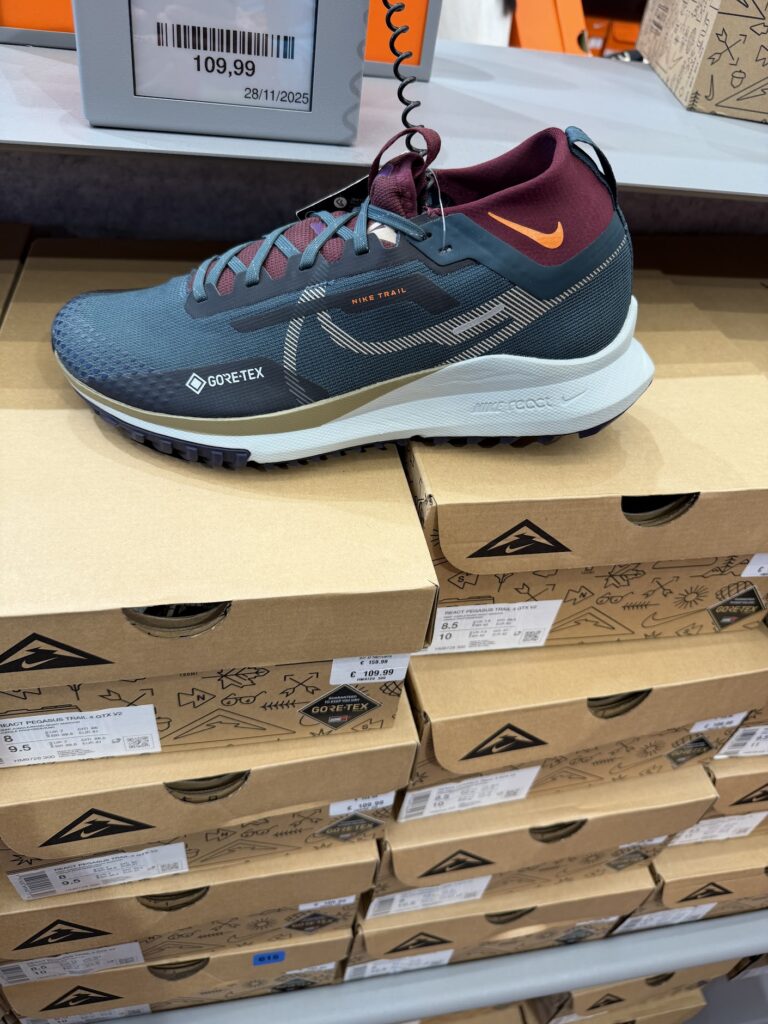
The Complete Guide to Gore-Tex: From Classic to New EPE Technology – What's Worth It for Bansko?
If you have walked through the sports shops on Pirin Street in Bansko, you have surely noticed a pattern. You take two jackets that look almost identical. One costs 400 leva, and the other – 1200 leva. The difference? On the sleeve of the more expensive one there is a small, black diamond-shaped logo with the inscription Gore-Tex.
For many skiers and snowboarders, this logo is a religion and a symbol of uncompromising quality. For others, it is simply expensive marketing. As people who spend the winter in the foothills of Pirin, where conditions change from scorching sun to snowstorm in minutes, we know that the truth is somewhere in between, but it definitely leans towards quality.
Today we will unravel the legend of "Gore-Tex": what it is, what is the difference between the old classic and the new eco-technology ePE, and when the investment is justified for the conditions in our resort.
What exactly is Gore-Tex? (The science in plain language)
The story begins in 1969, when Bob Gore discovered that if he sharply stretched polytetrafluoroethylene (PTFE – the same material as Teflon), a strong microporous structure was formed.
The secret of the membrane is in the numbers: it has about 1.4 billion pores per square centimeter. Here comes the ingenious physics:
-
These pores are 20,000 times smaller of a drop of water. That's why the rain and wet snow of Chalin Valog cannot pass through them.
-
At the same time, the pores are 700 times larger from the water vapor molecule (sweat). Therefore, when you heat up while descending the “Tomba”, the vapor passes freely outwards.
This is the definition of "waterproof and breathable" fabric.
Types of Gore-Tex: Be careful what you buy!
The market has changed dramatically in the last year. It's no longer enough to see the logo, you need to know which of the four main types you're buying, because the differences are huge.
1. The new standard: Gore-Tex ePE (The Eco-Friendly)
This is the big news for the 2024/2025 season. You will recognize it by the “PFC Free” label or simply because it is in the new collections of brands like Arc'teryx and Patagonia.
-
What is: Instead of Teflon, the new membrane is made of expanded polyethylene. It is completely environmentally friendly, without harmful “eternal chemicals”.
-
Advantages: Jackets are significantly lighter, thinner and softer. There is no “cardboard” feeling. The water resistance is the same as the classic.
-
Important for Bansko: Because the eco-impregnation (DWR) of the outer fabric is chemically weaker, these jackets require more frequent washing and spraying with impregnating spray, to prevent the outer layer from getting wet from the wet snow.
2. Gore-Tex (Classic / Performance)
-
What is: The old, tried and tested Teflon membrane. It is still widely available.
-
For whom: For 90% from skiers. Perfect balance between strength and protection.
3. Gore-Tex PRO
-
What is: „"The heavy artillery." This material is harder, makes more noise when moving (has a specific "crunch"), but is extremely resistant to abrasion on rocks, ice, and branches.
-
For whom: For freeriders, ski instructors, and people who ski 100 days a year and literally abuse their equipment.
4. Gore-Tex INFINIUM (Caution!)
-
What is: Series with white logo (instead of black). Important: This is NOT a completely waterproof membrane! It is water-repellent and highly windproof, but its priority is breathability.
-
For whom: For ski touring (panty) on sunny days or cross-country skiing on Banderishka meadow. Don't buy the Infinium for a basic jacket in bad weather!
Is Gore-Tex the only choice? (The competition)
The short answer is: It's no longer the only one, but it's still the benchmark. Here are the main competitors:
-
Dermizax (by Toray): Japanese technology. Its main advantage is elasticity. While Gore-Tex is stiffer, Dermizax is stretchy. If comfort is your #1 priority, this is your choice.
-
Futurelight (The North Face): Nano-technology with incredible breathability, ideal for very active riding, although with slightly lower water resistance under extreme pressure compared to Gore-Tex Pro.
-
Proprietary membranes (Helly Tech, DryVent): Budget solutions from big brands. They do a great job for trail riding, but fall behind in extreme storms.
The verdict: Is it worth it for Bansko?
To answer honestly, we need to consider two scenarios:
Scenario A: "The Weekend Fighter"„ You ski 5-10 days a year, mostly in the sun and on groomed slopes. When it rains, you go into the teahouse.
-
Verdict: NO. You don't need a Gore-Tex Pro or expensive ePE jacket. A quality jacket with its own membrane (10,000 – 15,000 mm) will do the job for half the price.
Scenario B: "The Pirin Veteran"„ You ski in all conditions. You are the first on the lift, you like to ski off-piste in Echmishte or Kotvite, where the snow is deep. You often sit on the snow or get wet snow at low altitude.
-
Verdict: YES, CATEGORILY. In Bansko the snow in the lower part is often heavy and wet. The wind on the plateau is merciless. Gore-Tex (especially Pro or well-maintained ePE) offer the best protection. The investment pays off in comfort and health.
Conclusion Whether you choose the classic, the new eco-friendly ePE technology or the “Pro” version, Gore-Tex remains synonymous with security. For the changing conditions of Pirin, it is insurance that is worth it, as long as you know exactly what you are buying and how to care for it.
 English (UK)