


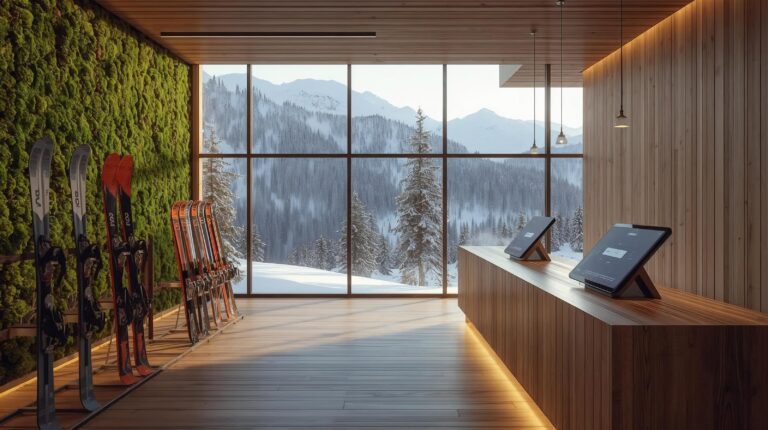
Today, the solvent tourists from Scandinavia, Germany and Great Britain who fill the hotels in the area around The Gondola and the Gramadeto area, are extremely sensitive to the topic of “Sustainability”. They are not just looking for luxury – they choose hotels, restaurants and eco ski wardrobe, which demonstrate real concern for nature. At the same time, new EU regulations on chemicals in waxes are becoming increasingly strict, pressuring businesses to adapt or pay hefty fines.
In this detailed guide, we'll look at how to transform your facility into a role model, how to attract premium customers, and why thinking “green” is actually the best way to optimize costs.
1. The Wax Revolution: The End of Fluoride
Did you know that old fluoro waxes (C8 and C6 chains) are extremely toxic and are called “forever chemicals”? They remain in the snow, seep into the soil of Pirin after the snow melts and eventually end up in the water we drink. The International Ski Federation (FIS) has already imposed a complete ban on their use in competitions, and the rental industry is following suit.
In addition to the environmental damage, fluorine fumes from iron application are dangerous to the lungs of your ski service technicians. In 2026, employee health care is a key element of a sustainable business model.
Investing in the future: Biodegradable waxes
Leading brands like Toko и Swix, as well as smaller innovators like NZero, now offer highly efficient “Eco Performance” series. These products have several key advantages:
- Plant-based: They do not pollute groundwater.
- Excellent performance: New formulas are no longer as slippery as the old chemicals.
- Marketing value: Customers love them and are willing to pay more for “Green Service”.
Marketing trick: Put a sticker on each ski or snowboard: “"Waxed with 100% Bio-Degradable Wax"”. This is a strong signal to the client that you care about the mountain they are climbing.
2. Energy Efficiency: Smart Dryers
The electricity bill is one of the biggest operating costs of any ski room, especially during the peak months of January and February. Old metal boot dryers often run at full capacity 24/7, heating the air even when they are half empty or when the boots are already dry.
Invest in systems like Wintersteiger or Montana with intelligent control. They don't just dry, they disinfect with ozone (without chemicals) and save energy.
How to optimize spending with up to 40%?
- Timers and Humidity Sensors: Modern drying systems detect the humidity inside the shoe. They only turn on when needed and stop automatically when the process is complete. This eliminates the “idle running” of the machines.
- LED Lighting: Replace old cigars and halogens with LED panels. In a room without windows (like most ground-level closets in Bansko), where the lights are on for 12-14 hours a day, the investment pays for itself in less than one season.
- Door thermal insulation: The closet entrance is opened hundreds of times a day. Installing an automatic door with an air curtain prevents heat from escaping and cold from entering, maintaining a comfortable temperature with less heating costs.
3. Circular Economy: A Second Life for Equipment
Every year, thousands of pairs of skis and ski boots in Bansko are thrown into landfill. These are tons of composite materials, plastic, metal and fiberglass that do not decompose in nature. As the owner of eco ski wardrobe, you can change this.
Instead of paying a garbage fee, turn trash into an asset:
- Furniture made of skis: Benches in front of your facility, coat racks in the changing room, mirror frames or even a fence can be made from old skis. This creates a unique “Après-ski” atmosphere and is a perfect backdrop for Instagram photos of customers that advertise your business for free.
- Donation for training: Ски, които вече не стават за комерсиален рентал (заради изтънял кант), често са напълно годни за начинаещи деца и тренировки на сухо. Свържете се с местните училища в Razlog, Добринище или Банско, или със ски клубовете. Дарете ги – това е социална отговорност, която се цени високо.
- Metal recycling: Broken sticks and metal parts from vending machines should be handed over separately for scrap, not in the general container.
4. The Paperless Office (Paperless System)
How many boxes of paper do you spend on equipment rental contracts for a season? And where do you store them afterwards? In the age of digitalization, paper archives are not only unenvironmentally friendly, but also inefficient.
Go to digital contracts via tablets and specialized rental software:
- Faster service: Customers can register online in advance or at a kiosk on site. No waiting at the slow printer.
- Cost savings: Eliminate the costs of paper, toner and printer maintenance.
- Data security: In compliance with GDPR, personal data is encrypted in the cloud, not rolled around in folders behind the counter, accessible to anyone.
- Image: You look modern, high-tech and eco-friendly.
5. “Green” Branding and Communication
Don't do all this in secret. Tell it! A successful eco ski wardrobe must communicate its values loud and clear. Tourists in Bansko are looking for authenticity and a cause.
- Visual communication: Write on the window: “We keep Pirin clean” or put a certificate of eco-sustainability in a prominent place.
- Plastic-free water: Install a filtered water dispenser and encourage customers to fill their thermoses instead of buying single-use plastic bottles from your vending machine.
- Eco accessories: If you sell accessories, bet on brands like Buff (using recycled polyester from plastic bottles) or hats made from organic cotton and wool.
Conclusion: Sustainability is the new quality
Being “green” in Bansko in 2026 doesn’t mean being a hippie or compromising on quality. It means being a smart, forward-thinking entrepreneur. Reducing electricity and utility costs directly increases profits, and caring for nature attracts the highest quality and most loyal customers.
Pirin Mountain is our “factory”, our main asset. If we don’t keep it clean, our business has no future. It’s time for ski services in Bulgaria to catch up, and why not surpass, Alpine standards.

 English (UK)