

„The "Gold Rush": The Property Boom and Foreign Capital
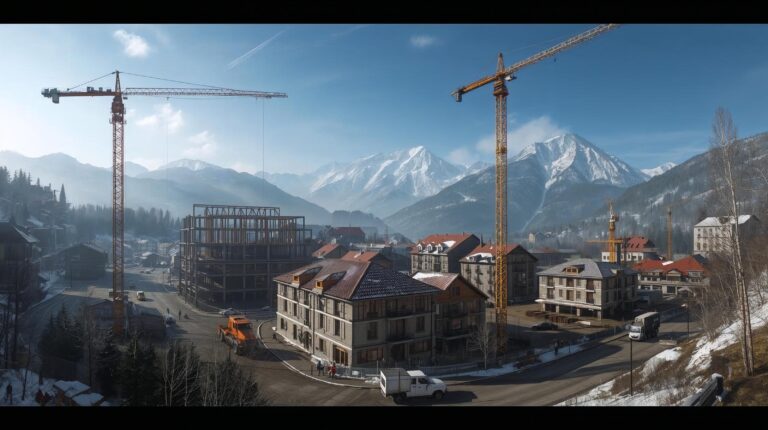
In 2004, the real estate market in the region went from a growth phase to a state of „overheating“. The main catalyst was geopolitical – Bulgaria’s impending accession to the European Union. Investors saw in Bansko an opportunity for quick and high returns, comparing it to the early stages of development of Spanish resorts.
Investor profile: This year, over 70% of property buyers were citizens of the UK and Ireland. The Island’s aggressive marketing presented Bansko as „the last cheap ski destination in Europe“. This led to the phenomenon of „greenfield“ purchases – entire complexes were sold out before the first sod was laid.
Market dynamics in 2004.
| Indicator | Trend | Economic effect |
|---|---|---|
| Property prices | Growth over 40% | Speculative transactions and quick profit. |
| Building permits | Exponential growth | Urbanization of the area around the lift. |
| Investment flow | Foreign (UK/IE) | An influx of fresh currency into the local economy. |
The infrastructure breakthrough: The gondola and the new ski area
There would have been no real estate boom without the massive modernization of the ski area. The 2003/2004 season was the first full season in which the new gondola was in operation. This facility changed the rules of the game in several ways:
- Capacity: The ability to transport thousands of tourists per hour from the city to Banderishka meadow.
- Location: The area around the lift's starting station has become the "new city" of Bansko, where land prices have reached record levels.
- Seasonality: Better infrastructure has allowed for an extension of the ski season, which is vital to Bansko's economic history.
The entry of global brands
In 2004, the construction and finalization of sites began, which put the city on the map of luxury tourism. The symbol of this transition was the "Kempinski Hotel Grand Arena". When a five-star brand of such caliber sets foot in a small mountain town, it sends a powerful signal to international markets: "It is safe and prestigious for investment here.".
📊 Key figures for the period 2001-2004
For the four-year period ending in 2004, total investments in the ski area and related infrastructure exceeded 180 million euros. The number of tourists for the 2004/2005 season crossed the psychological threshold of 400,000 people.
Want to learn more about current opportunities? See current properties here.
Sports, Culture and Economic Multiplier
The investments were not only focused on concrete and steel. 2004 also marked the establishment of Bansko as a sports brand. The opening of the Alberto Tomba slope in the presence of La Bomba himself was a world-class marketing move. This laid the foundation for future hosting of the Alpine Skiing World Cup.
At the same time, cultural tourism began to generate serious revenue. The 2004 International Jazz Festival attracted record audiences with stars like Solomon Burke. This „cultural economic engine“ helped local taverns and small hotels fill their capacity outside the winter months, combating the seasonal unemployment that is traditional for mountain resorts.
The challenges of rapid growth
Every coin has two sides. The economic history of Bansko in 2004 also revealed the first serious cracks in the model of rapid development. The pace of private construction significantly outpaced the municipal infrastructure.
Although the municipality invested millions in new streets, the water supply network began to become overloaded. Environmental organizations increased their pressure, raising the alarm about overdevelopment near the borders of Pirin National Park. These conflicts, which originated then, remain a topical issue to this day, forcing investors to seek more sustainable and „green“ business models.
Conclusion: The Lesson of 2004
2004 was the moment when Bansko crossed the point of no return. It brought unprecedented economic prosperity, turned local landowners into millionaires and created thousands of jobs. At the same time, it taught us that sustainable development requires a balance between the scale of investment and the preservation of the natural environment.
Today, looking back, we understand that the economic history of Bansko is a textbook on transformation in a globalizing market. For anyone who wants to understand how to build a resort from scratch, 2004 is the most important chapter.


 English (UK)