

1. One-time costs when purchasing a property in Bansko (Acquisition Costs)
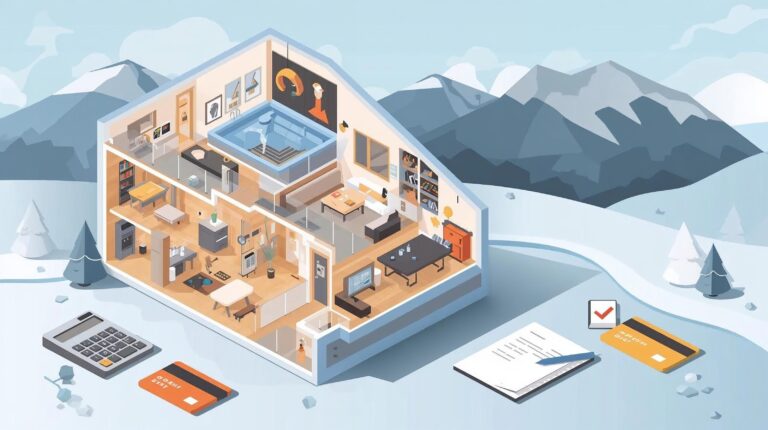
When planning your purchase budget, the golden rule is to always anticipate between 4% and 6% additional funds above the announced sale price. These funds are necessary for the legal transfer of ownership and registration of the transaction. It is important to note that the local property acquisition tax in Bansko Municipality is 3% – one of the highest in the country (for comparison, in Sofia it is the same, but in other municipalities it can be around 2-2.5%).
To be as useful as possible, let's look at a completely realistic example: buying a two-bedroom apartment worth 50,000 euros.
| Type of expense | Size / Percentage | Indicative amount (at €50k) |
|---|---|---|
| Local tax to the Municipality of Bansko | 3.0% of the material interest | €1,500 |
| Notary fee | At state rate (~1% + VAT) | ~€500 – €600 |
| Registration fee (Registration Agency) | 0.1% of the selling price | €50 |
| Attorney's Fee / Encumbrance Check | Fixed or % from the deal | €400 – €800 |
| Bank fees, transfers and declarations | Depends on the bank's tariff | €50 – €150 |
| TOTAL ADDITIONAL COSTS | ~ 5% to 6% | ~€2,500 – €3,100 |
2. The “Maintenance Fee” Trap
We come to the most discussed, most controversial and often most painful topic for resort owners. Maintenance fee in Bansko is a mandatory annual amount that you pay for the management and servicing of the common areas of the building. Unlike city apartments in Sofia or Plovdiv, where you collect 10 leva per month, here we are talking about professional facility management.
Why do these fees vary so dramatically from building to building? They are determined based on the square footage of your property (including the common areas) and are divided into three main categories:
- Low fee (3 to 5 euros per sq.m. per year): Typical for ordinary urban residential buildings, mainly in the central part of Bansko. It covers the absolute sanitary minimum - payment for a cleaner, electricity for the elevator, lighting in the entrance, snow removal in front of the door and a fund for minor emergency repairs.
- Average fee (8 to 10 euros per sq m. per year): It is found in smaller gated complexes. For this amount you get controlled access (often with live security or video surveillance), a reception, professionally maintained green areas in the summer, and organized snow removal in the parking lot in the winter.
- High fee (12 to 16+ euros per sq m per year): Typical of the large, luxurious aparthotels in the area around The Gondola. It finances the maintenance of a year-round (or seasonal) SPA center, heated pools, saunas, fitness rooms, lobby bar, as well as a free shuttle bus to the ski lift.
Critical “red flags” in the maintenance contract
Before you leave even a single euro deposit, be sure to ask the broker to provide you with a copy of the Management and maintenance contract. Read carefully for the following tricks:
- Inflation clause: Does the management company have the right to index and unilaterally raise the fee every year without convening a General Meeting of Owners?
- What does the fee actually include? Many buyers find themselves in a situation where they pay 12 euros per square meter, but still have to pay an additional entrance fee to use the pool or spa center in their own complex.
- Inherited debts: Are there any outstanding debts from the old owner to the management? According to the rules in many complexes, these can be sought by the new owner. Moreover, in the event of unpaid fees, the companies often block access to the elevator, and sometimes even to the apartment's electrical panel (although this is a legally controversial practice).
3. The Hidden Risk: Household vs. Industrial Electricity and Water Bills
This is a local specificity that can literally make your investment meaningless. During the construction boom, many of the complexes in Bansko were built and put into operation with the status of “Hotels”, not residential buildings. Subsequently, they never changed this status.
This means that the main electricity and water meters are in the name of the construction company or the management company. Accordingly, the electricity is charged at tariff for industrial users (business tariff), which can be two or three times more expensive than the subsidized price for residential consumers. In addition to the brutal heating bills in the winter, you are completely dependent on whether the complex manager transfers the collected money to the energy company. If he goes bankrupt or abuses it, the entire complex is left in the dark.
4. Annual state and local taxes
Against the backdrop of high maintenance fees, the good news is that annual state taxes on real estate in Bulgaria are among the lowest in the entire European Union. If you own a standard 60 sq m apartment in Bansko, your costs to the state will be minimal.
Expect to pay a combined Building tax and household waste (garbage) fee in the amount of about 50 to 100 euros total for the whole year. These taxes are paid directly to the local directorate “Local Taxes and Fees” of the Bansko Municipality. You can pay them in two equal installments or at once until April 30th, which will give you a 5% legal discount.
5. Realistic Return on Investment (ROI)
If the main motive for your purchase is to rent (through platforms like Airbnb or Booking), it is vital to take off your "rose-colored glasses" and make a sober financial calculation.
- Revenue: The winter season (mid-December to late March) is exceptionally strong, generating over 70% of annual revenue. Summer tourism is growing rapidly, attracting digital nomads and mountaineers, but prices for accommodation in the summer are significantly lower.
- Costs: To get the net profit, you must subtract from the gross income: the annual maintenance fee, the commissions of the booking platforms (between 15% and 20%), the costs of electricity, internet, cleaning and laundry fees, as well as the local tourist tax.
- Reality: If you hire a professional property management company to take care of everything (from welcoming guests to cleaning), they will keep between 20% and 30% of the revenue. With this configuration, the realistic annual return on investment (ROI) in Bansko currently ranges from between 4% and 7%. If you manage and clean the property yourself, the percentage can jump to 9-10%, but this effectively becomes your second job.
Now that you are fully aware of the financial framework and hidden costs, the next logical step is to understand how the legal process of the transaction itself proceeds step by step – from leaving the deposit to shaking hands in front of the notary.
 English (UK)