

The scale of the problem: Why is Bansko a “target”?
The global tourism industry is battling a huge wave of fake content. Statistically, around 30-40% of reviews on major platforms can be faked. In a destination like Bansko, where the season is intense and the choice is huge, the battle for customers often crosses ethical boundaries.
⚠️ Why is it done?
Many new properties or those with fading fame resort to artificially “inflating” their ratings to climb higher in search algorithms. The higher the rating, the greater the chance of a reservation.
Anatomy of a scam: How are reviews faked?
The fake review industry is well-organized. Here are the most common methods we have encountered while analyzing the Bansko market:
- Click Farms and “5 Star Packages”: Marketing agencies sell packages of hundreds of reviews written by bots or low-paid employees abroad.
- Emotional blackmail on the spot: It is common practice for staff to offer free coffee or dessert “in exchange for 5 stars on Google now, in front of me.”.
- Internal network (Family & Friends): The owners mobilize their entire family and staff to write enthusiastic comments.
- Negative attacks (Black Hat SEO): Ordered bad reviews for the competing tavern across the street to bring down its average rating.
Red flags: How to recognize questionable opinions?
🏨 At hotels:
- Perfect 5.0 rating with 500+ reviews: In the real world, there's always someone whose pillow is hard or whose coffee is cold. 5.0 is statistically almost impossible for an active hotel.
- Strange peaks: If in October (when Bansko is quieter) the hotel receives 50 reviews in one week, this is a clear signal of a bought campaign.
- Lack of “human” details: Fake reviews are often dry: “Best hotel, very nice.” Real people write: “Room 302 had a great view of Todorka, but the elevator was a bit slow.
🍽️ At restaurants and taverns:
- Profiles with 1 review: If 80% of the praise comes from people who have never written a review before, they are probably fake profiles.
- Generic comments: “The best food in the world!” A true connoisseur of Bansko would share about the kapama, the chumleka or the authentic taste of the local old man.
The Golden Rule: Cross-Check
The most effective way to protect yourself from fake reviews in Bansko is to compare information in several independent sources.
| Platform | Reliability | Why? |
|---|---|---|
| Booking.com | High | Only people with a real reservation can write. |
| Google Maps | Medium | It is easy to manipulate, but has the most photos. |
| TripAdvisor | Low/Medium | It is often used for massive marketing attacks. |
5 Steps for Verification:
- Check the Booking rating: If it's 4.9 on Google and 3.8 on Booking – trust Booking.
- Filter by “Latest”: See what's happening in the facility right now, not 3 years ago.
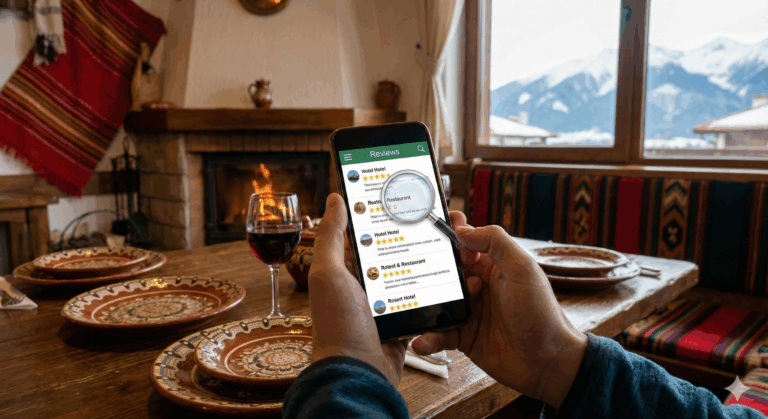
- Use Google Lens: Check that the food photos are not stolen from the internet.
- Search for “Local Guides” on Google: Trust people with level 5 or higher – they have a history and reputation.
- The “Tagged” section on Instagram: See the real, unprofessional photos of the guests.
💡 Expert advice from the vBansko team
Don't be afraid of a few negative reviews. On the contrary, they are a sign of authenticity. Look for places with a rating between 4.2 and 4.6. These are usually sites that invest in quality, not in bought opinions. Also pay attention to the management's response - a professional attitude to criticism is more valuable than 100 fake praises.
Conclusion
An informed tourist is a protected tourist. Bansko offers unique culinary and hotel experiences that do not need false glamour. By taking 5 minutes to check the reviews through our guide, you guarantee that your money will go to an honest business that works with the customer in mind.
Are you planning a visit to Pirin soon? Share this article with friends to protect them from tourist traps!



 English (UK)