


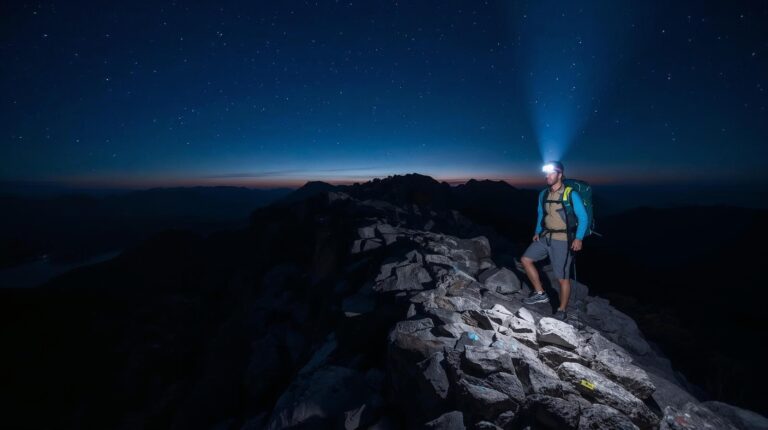
Many tourists in Bansko go for a “short walk” to Banderishka Polyana or Lake Okoto, convinced that they will return in the morning. But the mountain is unpredictable – a sprained leg, a sudden storm or simply underestimating the distance can leave you in the dark. At this point, the good mountain headlamp becomes your most valuable asset.
In the fourth part of our “Ten Most Important Elements” series, we’ll explain why your smartphone flashlight is a recipe for disaster and how to choose lighting that can literally save your life.
The “I have a flashlight on my phone” syndrome”
This is the most common mistake beginners make. Yes, modern phones have flashes, but they are designed to illuminate objects 2-3 meters away for a photo, not a path in the forest. This is why a specialized headlamp is indispensable:
- Hands free: When walking on rocky terrain (like the moraines in Pirin), you need your hands for balance or your crutches. If you're holding a phone, one slip and you risk breaking either the device or your face.
- Battery: Using the flashlight drains your phone's battery drastically. And your phone is both your navigation and your connection to emergency services. Don't waste it on light.
- Power and range: The headlamp casts a directional beam dozens of meters ahead, allowing you to see the markings on a distant tree.
How to choose a headlamp: Lumens and features
The market is flooded with models – from cheap Chinese options to professional caving equipment. What do you really need for hiking?
1. Light power (Lumens)
| Lumens (lm) | Purpose |
|---|---|
| 100 – 200 lumens | Emergency headlamp or for use in the camp/tent. Weak for active walking. |
| 300 – 500 lumens | The gold standard. Strong enough for night hiking and searching for markings. |
| 500+ lumens | For mountain running, ski touring or technical terrain where you need to see far and fast. |
2. Red Light Mode
Many people wonder why their headlamp has a weak red light. This is a feature for professionals.
- In the hut: When you get up at night in the sleeping area of Vihren Hut, the red light allows you to see without blinding and waking up the other tourists.
- Night vision: White light constricts your pupils and kills your “night vision.” Red light does not – so you retain your ability to see stars and shadows.
3. Water resistance (IPX rating)
Weather in Pirin is changing rapidly. Search mountain headlamp with a rating of at least IPX4 (splash/rain resistant). If you're planning serious adventures, IPX7 even allows for submersion in water.
Batteries: The Achilles' heel
Modern headlamps usually come with rechargeable lithium-ion batteries (via USB). This is convenient and environmentally friendly, but it has one drawback – the cold.
The reservation rule
Experienced mountaineers follow the rule: “"Two equals one, one equals nothing"”. Always carry a main powerful headlamp and a miniature backup somewhere deep in your first aid kit. It weighs only 20-30 grams (like the Petzl e+LITE model), but it can save you if the main one breaks down.
Light in the mountains is not just comfort, it is morale and safety. Invest in a quality headlamp from brands like Petzl, Black Diamond or Ledlenser – they are tested and will not let you down when the fog falls.



 English (UK)