


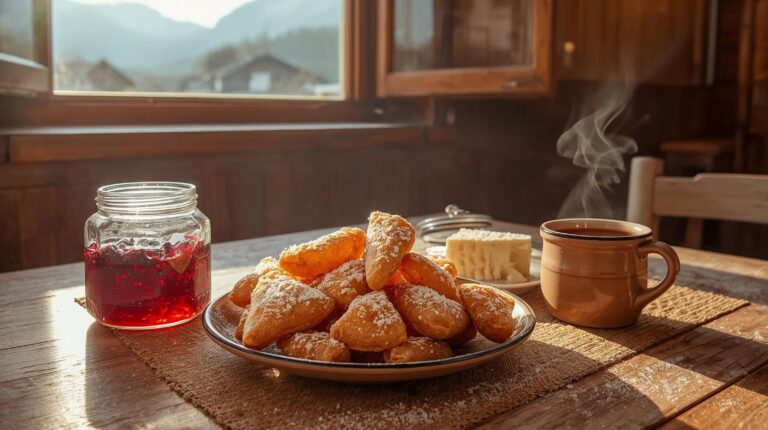
Breakfast is the last thing a guest experiences at your hotel before they leave. It's the taste that stays in their mouths – literally and figuratively.
Many owners in Bansko still watching the morning show hotel breakfast as a “necessary evil” – an annoying expense that “eats” from profits. “Guests fill the plates like it’s the last time, we throw away food, and the prices of cheese and eggs in euros have skyrocketed.” A familiar picture, right?
In the final Part 6 of “Hotelier Academy – Bansko” we will flip the pancake (literally). We will show you how with a budget of **€2.50 – €3.00 per person** (Food Cost) you can create a “Wow” effect that rivals 5-star hotels and makes guests take pictures of your pancake for Instagram instead of looking for change.
The Golden Rule: Local beats Global
No one travels to the Pirin Mountains to eat rubbery croissants from the supermarket freezer. Guests travel for authenticity. A freshly fried "bun" or homemade mekitsa costs a few eurocents as products, but is emotionally valued much higher than an expensive imported sausage.
The War of Concepts: Croissant vs. Banitsa
Let's do a detailed calculation in our new currency (Euro). Our goal is to offer hotel breakfast, which seems “rich” and generous, but actually keeps the hotel budget.
| “Euro-standard” (Expensive and boring) | “Banska Classic” (Cheap and Favorite) |
|---|---|
| Imported mini croissants (frozen) Price: ~€0.40 / pc. |
Homemade banitsa with cheese and leeks Price: ~€0.15 / serving |
| Packaged butter and jam (plastic) Price: ~€0.35 / person |
Homemade blueberry jam (in a shared bowl) + a knob of butter Price: ~€0.12 / person |
| Sliced yellow cheese and ham (from a hypermarket) Taste: “Industrial” |
Roasted pepper with garlic and crumbled cheese Taste: “Homey” |
| Effect: The guest compares the price with that in the store. | Effect: The guest says, “It’s like grandma’s!” (Priceless). |
DIY Stations Strategy
One of the biggest problems in the hospitality industry is the lack of staff. How can we reduce the tension in the kitchen and at the same time entertain the guests? Let them work on their own! DIY stations are a huge hit on social media, especially for families with children.
1. Pirin Tea Station (The Alchemist)
Instead of a boring electric kettle with ready-made hot water, invest in a large, beautiful samovar or copper kettle. Next to it, arrange:
- Ceramic bowls with loose herbs: thyme, Mursal tea, mint, linden.
- A large jar of real honey (with a wooden spoon).
- Slices of lemon and ginger.
The guest does the “alchemy” himself. Investment: Minimal. Emotion: Maximum.
2. Banski Superfoods Station“
Replace imported muesli with something local. Place a large ceramic bowl with thick buffalo or sheep yogurt (no plastic buckets!). Around it:
- Nuts from the region.
- Homemade honey or molasses.
- Prunes and apples.
This is the perfect pre-ski energy bomb and costs much less than imported protein bars.
Zero Waste: Mini-portions for less waste
The big problem with buffets is that people “eat with their eyes.” They fill their plates to the brim, eat half, and the rest goes in the trash. In the age of the euro, every gram thrown away is a direct loss of hard currency. Here’s how to hack the system:
Reduce the size of your main meal plates. Use plates with a diameter of 20-22 cm, instead of the standard 26-28 cm. When the plate fills up quickly, the guest's eye sends a signal "enough is enough". In reality, he has taken 30% less food, which reduces waste dramatically, without leaving a feeling of deprivation.
The Era of “Verrines” (Individual Cups)
Instead of a huge pan of scrambled eggs that cool down and turn green after 20 minutes, serve the food in small glass cups or shots:
- Egg muffins: They are baked in molds, look boutique and are just one bite.
- Chia pudding or oat milk: In small 100 ml jars.
- Salad: Vertically arranged in a glass.
This controls the portion to the gram and looks extremely hygienic and expensive.
Aroma Marketing: Selling Through the Nose
Do you have guests who have booked “Room Only” (without breakfast)? Or external visitors who are passing by the hotel? The easiest way to get them **€8 – €10** in the morning is through their sense of smell.
Adjust the kitchen ventilation so that the smell of:
- ☕ Freshly ground coffee
- 🥐 Warm mekitsi
- 🥓 Toasted bacon
...to go to the lobby or corridors, not just out through the chimney. When the hungry tourist comes down and smells the aroma, he is ready to pay immediately, without even looking at the price.
Mathematics of profit in Euro
Do you remember “The Lure Effect” from Article 5? Use it here too to sell breakfast as an additional service.
- “Overnight stay only” option: €50
- Option “Overnight stay + Alpine breakfast”: €58
The difference is €8 income for you.
If you follow our advice on local products (flour, cheese, eggs, herbs), your actual food cost for a good homemade breakfast is around €2.50 – €3.00.
Result: You win. €5 net from each breakfast sold. For a double room these are €10 extra profit per day. At the end of the month, with 10 rooms occupied, that's €3,000 – an amount that covers the salary of a receptionist and a maid!
Academy Final
Congratulations! You have completed the full course of the “Hoteliers Academy – Bansko”.
✅ You have vision for the interior (Article 1)
✅ You know how to you welcome guests (Article 2)
✅ You have mastered cleanliness and hygiene (Article 3)
✅ You deal with crises and reviews (Article 4)
✅ You manage the prices in euros (Article 5)
✅ Serve legendary breakfast (Article 6)
Now the most important thing remains: The action. Have a successful 2026 season!

 English (UK)