


Let’s be honest from the start: a hut is not a high-altitude hotel. It is a refuge, a shared space, and a home of hospitality that operates according to its own, harsh natural laws. In this detailed guide, we’ll cover everything you need to know about huts in Pirin and the nearby Rila Mountains to make your experience comfortable, safe, and unforgettable.
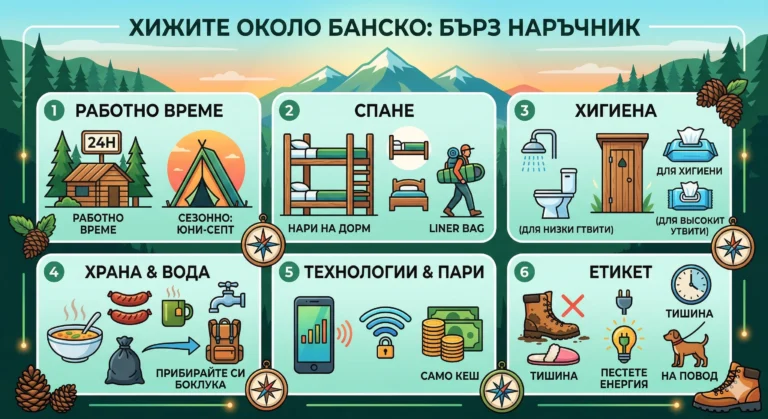
1. Opening hours: When do the huts open?
The mountain dictates the rules, and the hut owners simply comply with them. Opening hours depend directly on their altitude and accessibility.
- Low and easily accessible chalets (All year round): Objects like a hut Banderitsa, Vihren, Gotse Delchev, Bezbog, Yavorov и Demyanitsa They are usually open year-round. They are accessible by road (asphalt or macadam) or a lift, allowing for regular supplies. In winter, they are popular base camps for ski touring and snowshoeing.
- High mountain shelters and huts (Seasonal): Places like shelter Tevno Lake, Sinanitsa hut, Pirin hut (on the south side) or shelter Spano field have a distinct summer season. They open their doors fully in early June and close in late September or October when the first serious snow falls. In winter they may only offer emergency shelter (no hutkeeper, no food or heating) or operate only by prior arrangement for large groups.
2. Accommodation conditions: Where will we sleep?
Forget about king-size bedrooms and room service. Accommodation in the chalets is all about practicality and maximum use of space.
- Dormitory rooms (Beds): The classic hut experience. Large rooms with wooden platforms (nari) on which mattresses are stacked side by side. You sleep in a shared room with strangers (often between 10 and 30 people). Ideal for team bonding, but requires tolerance.
- Small rooms: Most renovated chalets (like Yavorov or Bezbog) also offer rooms with 2, 3 or 4 single beds. These are significantly more comfortable, but are limited in number and book up quickly.
- Bed linen: The huts provide blankets (often Rhodopean, woolen) and pillows. Recently, more and more huts are also offering disposable sheets for a minimal extra charge. However, bring your own liner or summer sleeping bag – this is the gold standard for hygiene in the mountains.
3. Bathrooms, toilets and hygiene
This is the topic that most often scares city dwellers. The conditions vary dramatically:
- Low huts: They have indoor toilets and bathrooms on the floor. There are water heaters, but hot water is a limited resource. If the hut is full (70 people) and everyone decides to shower after the hike, the hot water will run out in 30 minutes. The rule is: shower quickly and save water!
- High huts and shelters: Toilets are most often outside (squat type), located a few dozen meters from the main building. Running hot water for bathing is usually missing or is a luxury dependent on solar panels (if the day was sunny, you might be lucky). Wet wipes are your best friend above 2000 meters.
4. Food and water: What's on the menu?
After 8 hours of walking, every meal is delicious, but the hut cuisine has its own specific, unique charm. Every hut around Bansko offers hot food. The menu is short, high-calorie and tailored to the difficulties of logistics (products are often brought up on horses or on backs).
Expect: Bean soup (a must!), lentils, tripe soup, chicken soup, grilled meatballs/kebabs, french fries, omelettes and fried breakfast sandwiches. The hit is the mountain tea, picked from the surrounding meadows.
Own food: Consuming your own food is absolutely permitted, but etiquette requires that this happen in the so-called. tourist canteen or at the outdoor tables, not in the restaurant area (if the chalet has a separate one). Important rule: Take out your trash! The hut is not a dump. Whatever you have loaded up full, you have to unload empty in your backpack to the city.
5. Internet, coverage and payments
The mountain is a place for a digital detox. Forget about scrolling through social media.
- Scope: Around Bansko (Banderishka meadow, Bezbog, Gotse Delchev) the coverage is perfect. Up towards Demyanitsa, Vihren and Yavorov it becomes patchy. On Tevno Lake and Sinanitsa the coverage is practically non-existent.
- Wi-Fi: Some of the larger chalets now offer satellite internet for a minimal fee or free of charge to guests (e.g. Yavorov chalet). The connection is only for messaging and checking the weather forecast. the weather.
- Payments: Cash is king! There are no POS terminals. Bring enough small bills for accommodation, food and drinks.
6. Can we take the dog?
Traveling with a pet in the mountains is great, but it requires responsibility. Almost all chalets around Bansko fall within the limits of Pirin National Park“. According to park rules, dogs must be kept on a lead. strictly on occasion, so as not to disturb wild animals (wild goats, deer) and the herds of shepherds.
In the huts: Politics is different, but massively Dogs are not allowed in the bedrooms. for hygiene reasons and allergies of other tourists. Some lodgers allow the dog to sleep in the vestibule, in the dining room by the stove (in winter) or have specially built outdoor huts/sheds. It is absolutely essential to ask explicitly over the phone if they accept dogs when making your reservation!
7. The unwritten etiquette of the lodger
And finally, a few golden rules that will make you a welcome guest in any chalet:
- Shoes are left at the door: Never enter the sleeping quarters with muddy hiking boots. The huts offer special racks at the entrance. Bring light slippers for inside.
- Quiet hours after 10:00 PM: People in the hut get up early (often at 05:00 or 06:00) to catch the good weather for the hike. Parties and loud conversations after 22:00 are a sign of extremely bad manners.
- Save resources: Electricity and water are hard to come by. Turn off the lights, close the taps and doors (to keep the heat out).
The huts around Bansko are guardians of a simpler, more authentic way of life. Go there with an open heart, humility before nature, and a smile for the hut owner, and the mountains will reward you many times over.

 English (UK)