

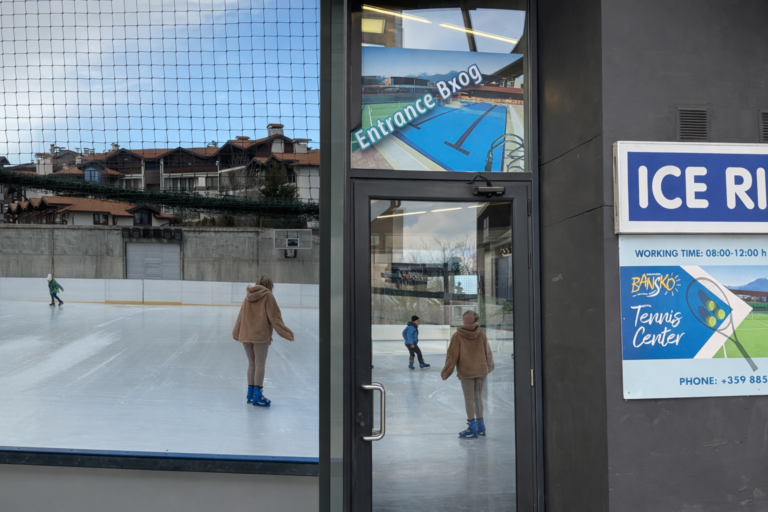
Why is Bansko the right place for your first steps on the ice?
Skating at the foot of Pirin is not just a sport, but a true alpine experience. The ice rink in Bansko is one of the largest in the country and is maintained to high standards. The atmosphere here is conducive – you are surrounded by snow-capped peaks, cozy cafes and many other enthusiasts who are learning along with you.
Skating Gear: What You Need to Know Before You Step on the Ice
Safety starts with the right choice of equipment. You will find a variety of models in the locker rooms for rent in Bansko, but here is how to make an informed choice:
1. Choosing the right skates
For absolute beginners, they are often recommended figure skates. They have a longer blade and a higher boot that keeps the ankle stable. Hockey skates are more maneuverable and light, but require a slightly better sense of the center of gravity since their blade is curved.
2. Protective equipment and clothing
Don't underestimate the cold and hardness of ice. The must-have beginner kit includes:
- Helmet: Absolutely mandatory for children and highly recommended for adults on their first attempts.
- Protectors: Knee pads and elbow pads will save you from unpleasant bruises.
- Warm gloves: In addition to keeping you warm, they protect your hands from contact with ice when you fall.
- Long socks: Avoid thin socks; choose thicker ones that go above the level of the skate to avoid chafing.
Basic Technique: How to Learn to Skate Step by Step
Correct posture (Basic level)
Forget about straight knees. Your stability comes from a “low center of gravity.” Keep your knees slightly bent, your body leaning slightly forward, and your arms out to the sides for balance—just like tightrope walkers at the circus.
The “Duck Walk” Method”
Instead of trying to slide right away, start walking on the ice. Point the toes of your skates outward (in a V shape). Take small steps, shifting your weight from one foot to the other. This will teach you how the blade grips the ice.
How to stop (Snowplow)
This is the most important skill. To stop, spread your feet slightly wider than shoulder-width apart and turn the toes of your skates toward each other (a “pizza” shape or inverted V). Press the inside edges of the blades into the ice – the friction will bring you to a smooth stop.
Progression: What comes after the first few hours?
Once you overcome your fear of falling, Bansko offers opportunities for improvement. You can try:
- Sliding on one leg: The key to real skating.
- Driving backwards: The technique of "writing lemons" or C-shaped movements with the legs is used.
- Crossovers: When you start to shift one foot in front of the other in a turn, you officially move into the advanced category.
Do you want to combine skating with other mountain adventures?
Health benefits of skating
Besides being pure fun, skating is an excellent cardio workout. In Bansko, at an altitude of nearly 1000 meters, your body works more intensively, which improves oxygen absorption. An hour of skating can burn between 400 and 600 calories, while simultaneously strengthening the muscles of the legs, abdomen and back.
Conclusion
To learn how to skate in Bansko is one of the best investments in your free time during the winter. Don't be afraid of the first falls - they are part of the magic of the ice. With the right attitude, quality equipment and a little patience, you will soon be floating with ease on the icy surface, enjoying the unique panorama of Pirin.
 English (UK)