


Practical tips for residents and guests of the winter resort
1. What new ice and snow shoes should we buy?
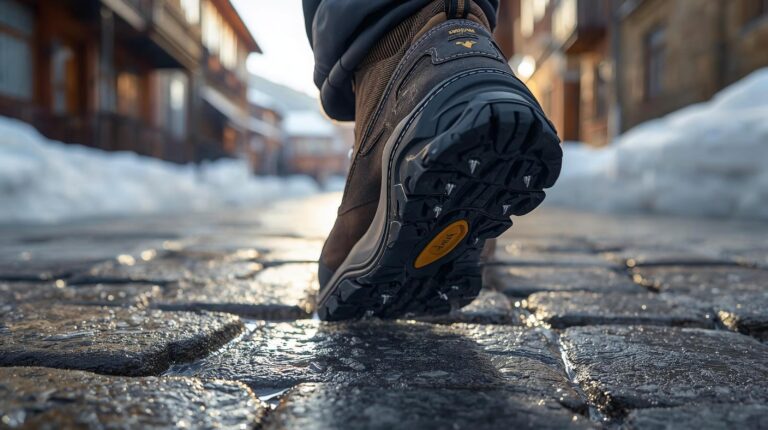
If you're choosing gear for the winter season now, don't just look at whether it's warm. Look at the sole. Here's what's important to look for when buying reliable ice and snow shoes:
The material: Soft rubber vs. Hard plastic
The biggest enemy of ice is a hard sole. In sub-zero temperatures, cheap compounds harden and become like a plastic sled.
Technology: Champions of the Ice
There are several patented technologies that have been proven to be best for winter conditions:
- Vibram® Arctic Grip: This is the gold standard right now. You'll recognize these soles by the blue particles in the grip. They contain microscopic abrasives that act like sandpaper on wet ice. (Brands: Merrell, CAT, Wolverine)
- Michelin® Winter Compound: A technology inspired by winter car tires. They use a specific pattern and compound to shed water and snow. (Brands: Columbia, Under Armour, Camper)
2. Budget solutions: How to make old shoes sustainable?
You don't have to buy new ones ice and snow shoes, If your favorite boots are sturdy but slip. Here's how to improve them:
A. External “Cats” (Ice Walkers) – The Safest Solution
For a resort like Bansko, where the streets are often covered in packed snow and ice, this is a must-have accessory.
- What are they: Rubber inserts with metal spikes or coiled springs.
- Advantage: They provide 100% traction. They cost between 10 and 30 leva.
- Disadvantage: You have to take them off when you enter a store or lobby bar because they rattle and slip on tiles.
B. Traction Spray
These are aerosols (often based on pine resin) that create a sticky layer on the sole. They are also called “liquid chains.” They help in urban conditions, but the effect is short-lived and requires frequent spraying.
C. Do-it-yourself (DIY) methods
3. Ranking: Which soles slip the least?
To make it easier to navigate when choosing ice and snow shoes, we prepared this quick comparison table:
| Sole type | Snow traction | Ice traction | Rating |
|---|---|---|---|
| Vibram Arctic Grip | Excellent | Very good | ⭐⭐⭐⭐⭐ |
| Soft natural rubber | Good | Good | ⭐⭐⭐⭐ |
| Tourist grabber | Excellent | Average | ⭐⭐⭐ |
| Leather sole | Bad | Terrible | ⭐ (Dangerous!) |
| Hard plastic/PVC | Average | Bad | ⭐⭐ |
4. The "Penguin" technique: How to walk correctly?
Even the best ice and snow shoes have a limit. When you step on clean ice in Bansko, change your gait:
- Center of gravity: Lean forward slightly. Your weight should be on your front leg, not your back.
- Hands out of pockets: Your hands are your balancer. If they are in your pockets, you will not be able to protect yourself if you fall.
- Short steps: Take small, tiny steps, stepping with your whole foot.
- Watch the road: Avoid metal shafts and marble stairs – they freeze first.
Conclusion
For walks in Bansko, the best investment is shoes with Vibram Arctic Grip or a pair of rubber ice skates in your pocket just in case. Don't rely on your city sneakers - the mountains require preparation.


 English (UK)