

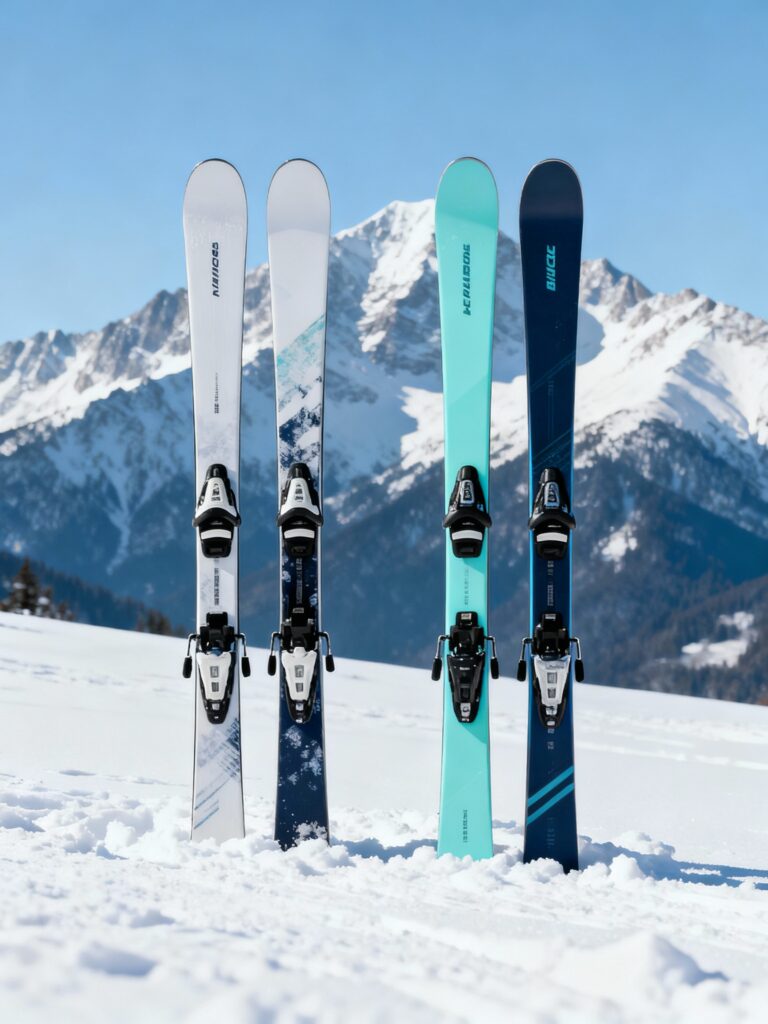
How to choose skis is the question that lies at the heart of every unforgettable winter adventure. This choice can make the difference between a day filled with pleasure on the slopes of Pirin, and a day spent struggling with equipment. Whether you are taking your first steps on the “Ski Path” in Bansko, or you are preparing to conquer “Tomba”, the right equipment depends on your technical level, physique and the budget you have.
In this detailed guide (updated for the 2025/2026 season), we'll cover everything you need to know, from the world's leading brands and their specifications, to the hidden intricacies of choosing length and stiffness. As a bonus, we'll also add the critically important, often overlooked section on choosing ski boots.
Why is this guide different?
We don't just list brands. We analyze how different skis behave in the specific conditions of Bulgarian resorts, where a combination of artificial snow, icy patches and undeveloped terrain.
1. World leaders in ski equipment: Who to trust?
The market is saturated with manufacturers, but a few brands dictate fashion and technology in the industry. Knowing them is the first step in the process of how to choose skis.
Premium and established manufacturers
- 🏔️ Rossignol – A true legend, founded in 1907 in the French Alps. Rossignol is a benchmark for innovation. The series Sender (successor to the iconic Soul 7) and track models Experience и Hero are among the most sought after, especially for the variable conditions in Bansko.
- 🏔️ Atomic – The Austrian giant that dominates the World Cup. They are known for their Servotec technology (a type of “servo control” for skis). The series Redster is for speed, while Bent Chetler is an icon in freeride.
- 🏔️ Blizzard – A leader from Austria, known for its Carbon Flipcore technology. Their skis are extremely stable. Iconic series are Brahma и Black Pearl (the best-selling women's ska in the world).
- 🏔️ Solomon – A brand that has successfully transferred its experience from trekking shoes to skis. The model QST offers excellent flotation in deep snow, and the series S/Force is uncompromising on a hard track.
- 🏔️ Völkl – German precision. Their models Mantra и Racetiger are proverbial for their "sticking" to the ice - a quality highly appreciated in the mornings on the "Banderitsa" track.
- 🏔️ Nordica – Italian style and power. The model Enforcer is considered the “Gold Standard” in All-Mountain skis for the last 5 years.
- 🏔️ Elan – The innovators from Slovenia. They created the Amphibio profile (different left and right profiles), which makes cornering incredibly easy. The series Ripstick is a favorite of many instructors.
Niche and “Boutique” Brands
If budget is not an issue and you are looking for uniqueness:
- DPS Skis – American carbon masterpieces for powder snow.
- Black Crows – French design from Chamonix, combining artistry and raw functionality.
- Stöckli – Swiss handmade skis, often described as the “Rolls-Royce” of the piste.
2. Technical Specifications: The Mathematics Behind the Choice
To fully understand how to choose skis, you need to look beyond the design. Here are the most important parameters:
Ski Length – Orientation Table
The size is not universal, but this chart will give you an excellent starting point:
| Skier level | Recommended length | Why? |
|---|---|---|
| Beginner | Height minus 10-15 cm | Easier cornering and control at low speed. |
| Intermediate | Height minus 5-10 cm | Balance between stability and maneuverability. |
| Advanced | Height to Height +5 cm | Maximum stability at high speed and long turns. |
| Freeride (Deep snow) | Height +5 to +10 cm | Additional surface for “floating” over the snow. |
Waist Width
This is the width of the slope just below the machine. This is the most important indicator of the terrain:
- Under 75 mm: Exclusively for groomed slopes. Very fast when changing edges (turns), ideal for ice.
- 76 – 88 mm: The best all-round width for Bulgarian resorts. They cope with a trodden track in the morning and broken snow in the afternoon.
- 89 – 100 mm: All-Mountain with a bias towards off-piste riding.
- Over 100 mm: Specialized for deep snow (Powder). Difficult to control on ice.
Turn Radius
This indicator (usually written on the tail of the skate, e.g. R16) determines the natural curve of the turn:
- Short (10-14 m): Slalom skis. Very agile, require active riding.
- Medium (15-18 m): Universal radius. Suitable for most tourists.
- Long (over 19 m): Giant Slalom (GS). Stable at very high speeds, but difficult in tight sections.
3. The Hidden Factor: Ski Boots (More Important Than Skis!)
Many people focus on how to choose skis, but neglect boots. Error. Your shoe is your steering wheel. If it's too wide, your commands are lost.
The key indicator is the FLEX index (Hardness):
- Flex 60-90: Soft shoes for beginners. Easy to put on, comfortable, forgiving of mistakes.
- Flex 100-120: For advanced users. They provide direct energy transfer to the skate.
- Flex 130+: Race shoes. Extremely stiff and precise, but uncomfortable for all day wear.
4. How to choose skis according to the terrain in Bansko
The specifics of the terrain in Bansko require a strategic choice:
For the slopes (Plateau, The Shiligarnika, Balkaniad):
Here the snow is processed, often hard and artificial. The best choices are Carving Skis with a width of 70-80 mm and a full Camber profile for maximum edge grip.
For afternoon riding and the Ski Road:
By 2:00 p.m. the tracks are often full of baboons. Here they help All-Mountain skis with a slight Rocker (raised nose) that "walk" through broken snow more easily than hard racing models.
For the forests and gullies (Chalin Valog, Echmishte):
If you are a freeride enthusiast in Pirin, look for a width of 95-110 mm. Very wide skis (120+ mm) are rarely applicable in Bulgaria, except in the heaviest snowstorms.
5. Budget and purchasing strategy
You don't have to spend a fortune to enjoy the mountains. Here's how to budget:
- Invest in shoes: Buy your own, new shoes, professionally selected (Bootfitting). This is hygienic and provides comfort. Price: 400 – 800 BGN.
- Skis can be second-hand or rented: Unlike shoes, a quality ski can serve well even after 1-2 seasons of use if it is serviced.
- Follow the discounts: The best time to buy is March-April, when stores are clearing out their warehouses. Discounts reach up to -50%.
Conclusion
The question of how to choose skis has no single answer, but the formula is clear: be honest about your skills. A softer and shorter ski will speed up your learning by years compared to a hard “professional” model that will tire you out and punish every mistake.
In Bansko, conditions range from icy concrete to fluffy snow in a single day. That’s why the golden mean – an All-Mountain ski with a width of around 80-84 mm and a moderate radius – is often the most sensible choice for the average skier.


 English (UK)