


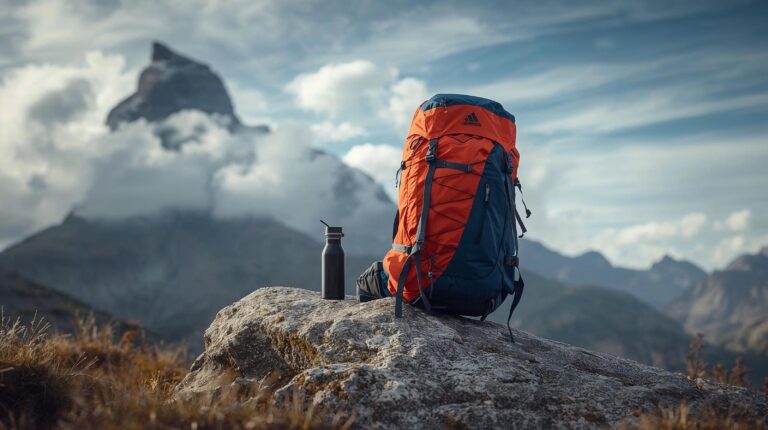
1. Volume: How many liters do I need?
In mountaineering, the following principle applies: “The bigger your backpack, the more unnecessary things you will take”. For the steep Pirin, minimalism is key.
| Litre capacity | Purpose | Sample routes |
|---|---|---|
| 20 – 30 liters | Daypack. Pack water, food, jacket and first aid kit. | Vihren Hut – Vihren Peak; Banderishki Lakes. |
| 35 – 45 liters | Weekend hikes with overnight stay in a hut. Space for a sleeping bag (light) and more clothes. | The transition "“The horse” with an overnight stay at the shelter or Yavorov hut. |
| 55+ liters | Multi-day autonomous treks with a tent. | Complete tour of Pirin (E4 route). |
2. Anatomy and Ventilation: The Back is Everything
When buying a backpack, look at two main systems:
- Carrying system (Cross belt): This is the most important part. The belt should fit snugly around your hip bones (pelvis). It should be thick and cushioned. The thin straps you see on city backpacks don't work in the mountains.
- Back ventilation:
- Net (Trampoline style): The backpack is separated from your back with a stretched mesh. Air passes freely and you don't sweat. Perfect for the summer in Pirin, but it does shift the weight slightly back.
- Foam (Contact style): The backpack adheres to the back through foam channels. You sweat more, but the stability is greater. Preferred option for technical sections (climbing) where balance is critical.
3. Top Brands and Recommendations for Bulgaria
There is a huge selection on the market in Bansko and Sofia. Here are some brands that have proven their quality:
Taschеv (Bulgaria) – The Legend
We can't help but mention the Plovdiv brand Tashev. These are the “tanks” of the backpacks.
- Pros: Extremely strong (Cordura material), literally eternal. They withstand abrasion in the Pirin rocks and squatting without a problem. Excellent price.
- Cons: The design is more classic (Old school), they are a little heavier than their Western counterparts, and the ventilation is not as high-tech.
- Model: Tashev Summit 30 or Alpine 60.
Osprey (USA) – The King of Comfort
The world leader right now. If you are looking for maximum comfort and ease.
- Pros: Incredible “Anti-Gravity” system on the back (mesh) that makes you feel the weight. Lots of pockets and extras.
- Model: Talon (men's) / Tempest (women's) – perhaps the best daypack in the world.
Deuter (Germany) – The Golden Mean
German quality, very popular in Bulgaria.
- Model: Deuter Futura. They are known for having the best ventilation system for the back, which is a salvation in the hot Pirin sun.
Decathlon / Quechua – The Budget Champion
- Model: MH500 (Mountain Hiking). For its price, this backpack offers extras (mesh on the back, rain cover) that competitors sell for three times more. An excellent starter choice.
4. How to adjust the backpack correctly? (Step by step)
Do this every time you put on a full backpack:
- Loosen everything: Loosen all straps.
- The cross belt first: Put on the backpack. Lean forward slightly. Fasten the hip belt right across your hips (not your waist, not your butt). Tighten it firmly.
- The straps: Now pull the straps down and back, but not too far. They should just fit over your shoulders without pinching them.
- Chest strap: Buckle it up and tighten it slightly. It prevents the straps from opening up and killing you under the arms.
- Load lifters: These are the small straps over your shoulders. Pull them gently. They will bring the top of the backpack closer to your head so it doesn't "pull" you back.
5. Stacking Strategy: Center of Gravity
In Pirin, you often walk on narrow ledges. If your backpack is arranged incorrectly, it can throw you off balance.
- Bottom: Sleeping bag and light, bulky items.
- The middle (to the back): The hardest things (water, food, equipment). They should be as close to your spine as possible.
- The environment (outside): Clothes, jackets (they soften the blow if you fall on your back).
- Lid/Pockets: Small items that you need urgently (headlamp, sunscreen, glasses, map).
Next step: You are already dressed (socks, shoes) and equipped with a backpack. But what should we put in it to survive a sudden change in temperature? the weather? Stay tuned for the next part: “Clothes in layers – how not to freeze in the summer”.
Frequently Asked Questions
Do I need a raincoat for my backpack?
A must! In Pirin, summer storms come in minutes. Even if the backpack is made of waterproof fabric, water will enter through the zippers and seams. Most hiking backpacks have a built-in raincover in a pocket at the bottom – check.
What is the difference between a women's and a men's backpack?
It's not just the color. Women's models have a shorter back and S-shaped straps to avoid squeezing the breasts. The waist belt also has a different curve, tailored to the female pelvis. If you are a lady, we highly recommend a specific women's model.
Where should I keep my poles?
Look for a backpack with external loops (elastic bands/clamps) for attaching poles. It is very important to be able to quickly and securely stow them when you need to use your hands to climb rock passages.
{
“@context”: “https://schema.org”,
“@type”: “Article”,
“headline”: “The house on the back: How to choose the perfect backpack for Pirin”,
“description”: “Guide to choosing a hiking backpack for Pirin. Comparison of brands (Tashev, Osprey, Deuter), tips for volume and proper adjustment.”,
“author”: {
“@type”: “Person”,
“name”: “Mountain Equipment Expert”
},
“publisher”: {
“@type”: “Organization”,
“name”: “VBansko”,
“logo”: {
“@type”: “ImageObject”,
“"url": "https://vbansko.com/logo.png"”
}
}
}

 English (UK)