


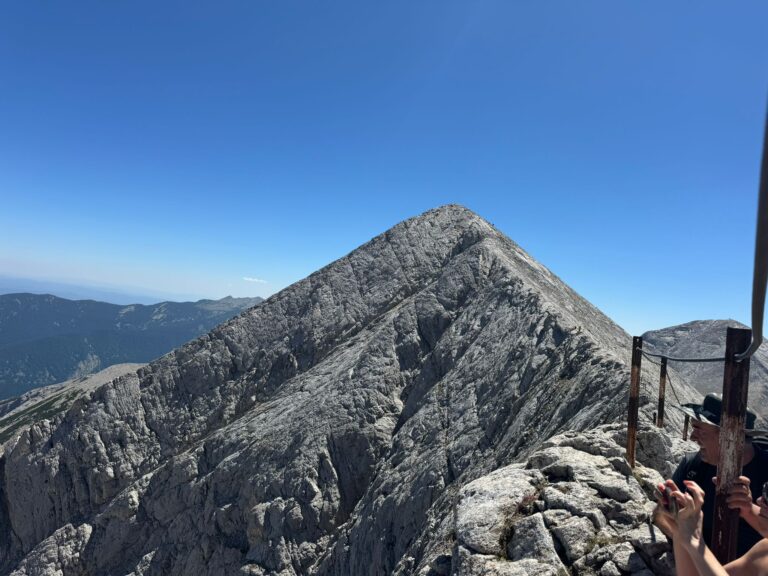
There are over 30 peaks in Bulgaria with a height of over 2,500 meters, but none of them possesses the mystique that a small, 400-meter saddle in Pirin carries. The horse. This is not just a geographical concept. This is the border where the tourist meets his own fears. The place where heaven and earth merge, and man realizes his insignificance before the majesty of white marble.
In this article, we'll delve deep into the history, geology, and psychology of this phenomenon. You'll learn why this place changes people and how to cross it safely to tell its legend.
📂 File: Karst ridge “The Horse”
- 📍 Location: The Marble Ridge (between Kutelo and Banski Suhodol)
- ⛰️ Altitude: ~2810 m
- 📏 Length: About 400 meters
- ⚠️ Path width: From 40 cm to 1 meter
- 🛠️ Security: Double steel rope (renovated 2019)
- ⏱️ Transition time: 20-45 min (only on the edge)
Anatomy of the Abyss: What is the Horse?
Geologically speaking, The horse in Pirin is a classic karst ridge. It is formed from Proterozoic marbles – a rock that is extremely hard, but under the influence of erosion, water and wind it has formed like a sharp knife. Unlike the granite parts of Pirin (towards Bezbog or Polezhan peaks), here the stone is dazzlingly white, which in summer creates a feeling of surreal brightness, and in winter merges the peaks with the snow.
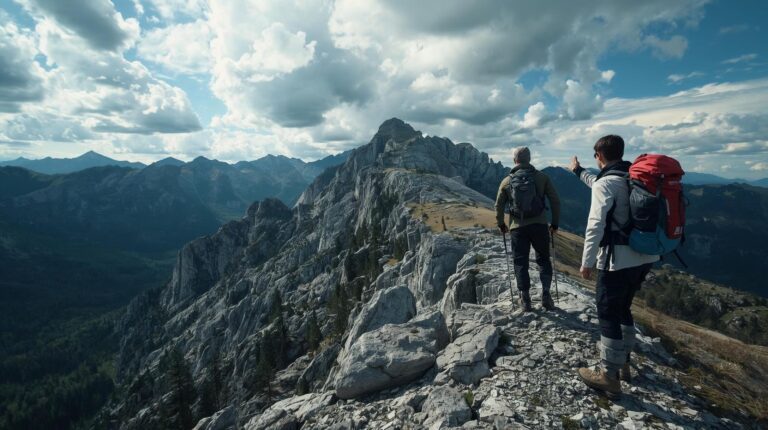
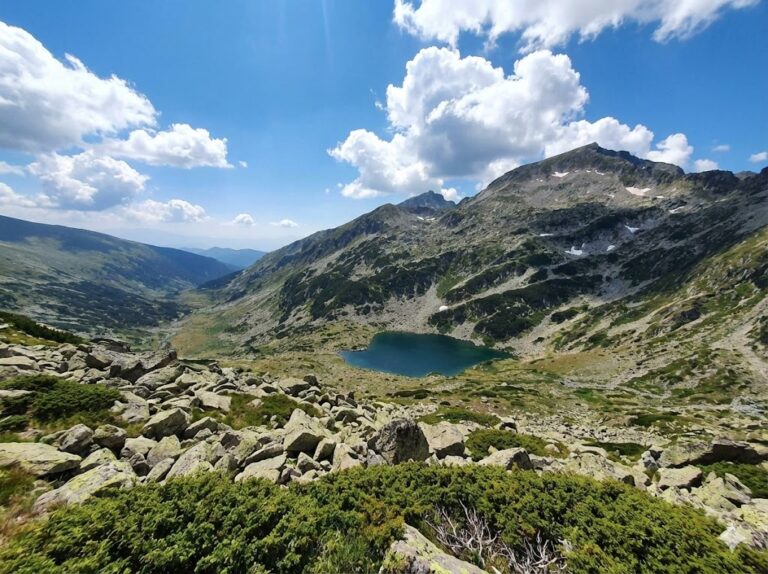
The feeling of “flight” comes from the unique structure of the terrain. From the northwest, the slopes descend almost vertically (about 70-80 degrees of inclination) towards the cirque Banski Suhodol. The depth of this “wall” is over 300 meters. On the other side – southeast – the slope is slightly more gentle (about 35-40 degrees), descending towards the valley of the Vlahinsky Lakes, but visually it looks just as bottomless.
The Story: From “Riding” to Steel
Today, crossing is relatively safe thanks to technology, but the history of The horse is imbued with the audacity of the early explorers. The name is not a random metaphor. It is a literal description of the survival technique.
The Pre-Rope Era (Pre-1963)
Imagine a time when hiking gear consisted of wool sweaters and simple shoes with spikes. Back then, the edge was completely bare. In the narrowest sections, where the width of the cliff was only 40-50 centimeters, people did not dare to stand upright. The strong winds, which are almost constant at this height, could easily push a person into the abyss.
“You sit on the rock. Your right leg hangs over a 300-meter abyss towards the Sukhodola Valley. Your left leg hangs over the Vlahinsky Valley. You grab the edge with your hands and start dragging yourself forward, throwing your body. You ride the mountain like a wild horse trying to throw you.”
That's how the name was born. It's a mix of fear and love for the mountain.
The Great Security and the Renovation (2019)
In 1963, the first metal railing was installed. This changed everything. Koncheto became accessible not only to climbers, but also to experienced tourists. But the weather and the harsh conditions take their toll. Over the years, the rope corrodes, the pegs loosen.
In the fall of 2019, one of the most important events in the modern history of Pirin took place - the complete replacement of the social security system. The old rope was replaced with a new, double steel rope, and the anchors were fixed with chemical dowels in the marble. This made the crossing much safer, eliminating the risk of breakage that had worried guides for years.
The Death Trap: When does the Horse not forgive?
Despite the new rope, The horse in Pirin remains a high-risk area. Statistics from the Mountain Rescue Service (MRS) show that accidents here are rare, but when they do happen, they are almost always fatal. There are no “minor injuries” from a fall of 300 meters.
1. Thunderstorms (The Faraday Effect)
This is danger number one. The metal rope is a perfect conductor. During a storm, even if lightning doesn't strike directly on the edge, static electricity builds up on the metal. Hikers report an eerie "buzzing" or "whistling" sound from the rope and goosebumps on their hair seconds before impact. If you see dark clouds – turn around immediately!
2. Winter visors
In winter, the wind blows snow from the Vlahinsky Circus towards Sukhodola. A “visor” is formed – a snow terrace that hangs over the abyss. It looks like an extension of the trail, but it is as fragile as glass. One step there and you are flying along with tons of snow. The winter crossing is exclusively for climbers with crampons, an ice axe and a belay device with a rope for a partner.
Psychology of fear: How to defeat ourselves?
Many people who are physically prepared get stuck on the Horse. This is the so-called “freezing”. The vestibular apparatus is confused by the lack of peripheral landmarks (no trees, no walls – only air). The brain sends panic signals.
💡 Expert tips for overcoming fear:
- The “Tunnel Vision” Rule: Don't let your gaze wander through the valleys. Focus on the next 2 meters of the path and your hands.
- Breathing: Panic leads to shallow breathing and dizziness. Stop, take 5 deep breaths, steady your pulse. The mountain will wait for you.
- The third pillar: Always keep at least one hand on the rope. If you get separated, communicate with the other person. Let the more frightened person stand still while the other person comes around them.
Travel Guide: Routes to “Hell”
The ridge is the connection between the peaks, so you have two approaches. The choice depends on how much time you have and how steep you like to climb.
| Criterion | From Vihren Hut (South) | From Yavorov Hut (North) |
|---|---|---|
| Load | Intense, steep climb. “Explosive” route. | Long, monotonous, but smooth. A test of endurance. |
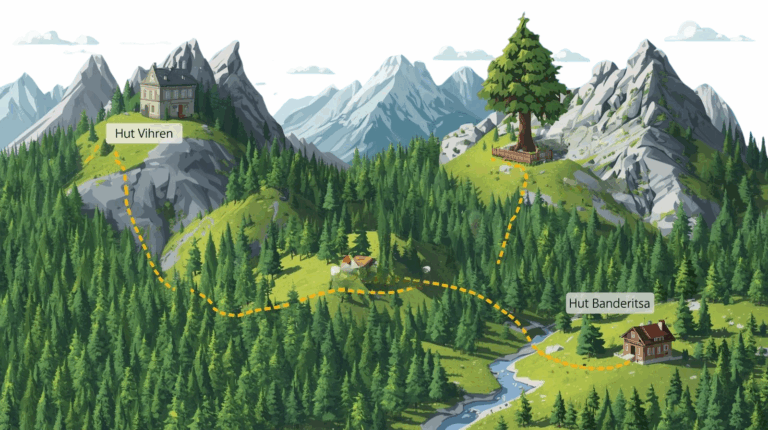
| Key points | The Kazanites (edelweiss), Premkata, Kutelo Peak. | Suhodolski Pass, Bayuvi Dupki, Koncheto shelter. |
| Time (direction) | ~ 3.30 – 4.00 hours | ~ 5.00 – 5.30 hours |
| Suitable for: | People with less time but strong legs. | Seekers of panoramas and tranquility (fewer people). |
Checklist: What to put in your backpack?
The departure to The horse without preparation is a sign of disrespect for the mountain. Here is your must-have list:
- ✅ Gloves: Absolutely essential! Steel wire rope is cold and rough. Regular rubber-coated work gloves are perfect.
- ✅ Shoes: Forget about sneakers. You need high-heeled shoes with a sole Vibram or equivalent that “sticks” to marble.
- ✅ Water: There is not a drop of water on the entire marble ridge (on both sides). Bring at least 2-3 liters.
- ✅ Windbreaker: Even down in Bansko It may be 30 degrees, but at 2800 meters the wind is icy.
- ✅ Sugar/Chocolate: Adrenaline burns blood sugar instantly. You'll need energy after the run.
Are you planning the Great Transition?
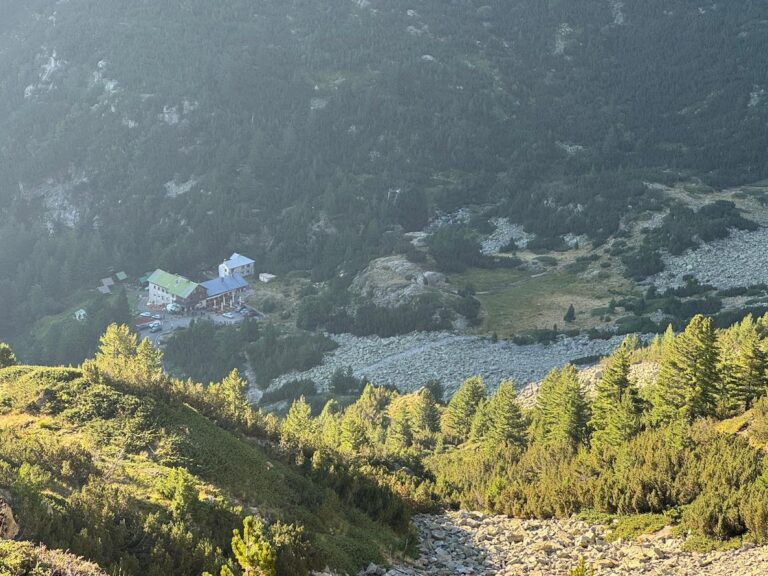
The success of the Horse starts with a good night's sleep. Bansko offers excellent bases from which to start early in the morning.
 English (UK)