


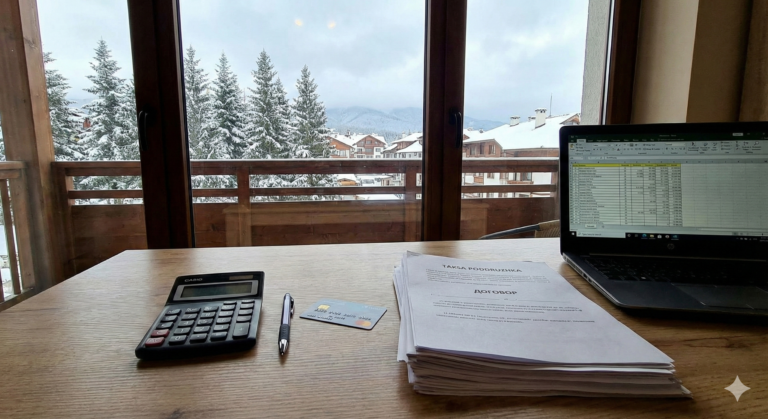
1. The Holy Grail of the Deal: Encumbrance Certificate (ECC)
If you have to remember just one thing from this guide, let it be this: never buy a property and pay a significant deposit (other than the standard small deposit) before you have seen a clean Certificate of Encumbrances. This document is issued by the Property Registry at the Registry Agency and is the complete “health record” of the property.
Why is a computer report not enough? The burden certificate must be an official document with a seal, covering a period of at least 10 years. What do we look for and what do we guard against in it?
- Contractual and legal mortgages: Is there a bank or other financial institution that has extended credit to the seller and pledged the property as collateral? If you buy a mortgaged property, the bank can sell it at auction due to other people's debts, and you will be left on the street.
- Seized by the Private Enforcement Agent: Is there a lien imposed by a Private or State bailiff due to unpaid bills, debts to the NRA or other creditors of the seller?
- Registered claims: Is there currently a lawsuit over the ownership of this property? Even if you buy it, if the seller loses the case, you also lose the property.
- Established right of use: This often happens with gifts from parents to children. The property belongs to the seller, but an elderly relative has a lifelong right to live in it. This right is not revoked by the sale!
2. The Specifics of Bansko: The “Act 16” Trap and Unfinished Complexes
In the period between 2006 and 2009 in Bansko Hundreds of large-scale buildings and aparthotels were started. Due to the financial crisis, many investors went bankrupt, and the buildings remained unfinished or without the final documentation necessary for their legal occupancy. The differences in the status of these buildings are literally critical for your portfolio:
Act 14 (Construction acceptance / Rough construction)
This means that the building has walls and a roof erected, but is definitely not fit for living. There are no installations, finishing works, and often a facade. Buying such a property in Bansko is an extremely high-risk investment, unless you have a clear and guaranteed plan for how the building will be completed by the condominium.
Act 15 (Certificate of approval for the acceptance of the construction)
This is the most massive trap in the resort! The building looks completely finished – it has a nice facade, a working elevator, furnished apartments and people even live in it. But it not put into operation from the state. The risks here are huge: you do not have your own household electricity bill with Electrohold, but you pay industrial electricity through the builder's electricity meter (which is 2 to 3 times more expensive). In addition, banks refuse mortgage loans for buildings without Act 16, which makes your property almost impossible to resell in the future.
Act 16 (Certificate of commissioning)
This is the only legitimate state guarantor that the building was built legally, is completely safe for habitation and meets all construction and fire safety standards. Only with Act 16 can you open individual bills for household electricity and water in your name.
3. Hidden owners and the traps of the Family Code
One of the most common reasons for the breakdown of real estate deals lies in the Bulgarian Family Code. Imagine the following situation: you are negotiating with a seller (for example, Ivan). His name is the only one recorded in the notarial deed of the apartment. It seems that he is the sole owner.
The risk: According to Bulgarian law, if this property was purchased during a civil marriage, it automatically falls under the regime of SIO (Matrimonial Community Property). This means that even if the wife is not listed in the document, she owns 50% of the property by law. If you buy the property only from the husband, the wife can later file a lawsuit and break the deal.
The solution: Be sure to request up-to-date information from the seller. Marital status certificate, issued by the municipality at the permanent address. If there is a spouse, he/she must also appear at the notary or provide an explicit notarized power of attorney and declarations of consent to the sale. A similar risk exists with inherited properties - there it is required Certificate of heirs, to make sure all living heirs agree to sell.
4. Discrepancy between Cadastre and reality (Property Scheme)
Before the transaction, you must compare the Sketch/Scheme from the Agency for Geodesy, Cartography and Cadastre (AGKK) with the actual physical layout of the apartment you are buying.
Unauthorized renovations are often observed in Bansko, especially in the attic (under the roof) floors. If the seller has pushed a load-bearing wall, converted a terrace into the living room, turned a common storage room into his bedroom, or combined two small apartments into one large one without the necessary architectural project and permission from the municipality - this is illegal renovation.
By buying such a property, you are also buying the problem itself. In the event of an inspection by the DNSK (Directorate for National Construction Control), you will be the person who will pay the hefty fine and will be forced to restore the property to its original appearance according to the sketch at your own expense.
5. Safe Transaction Checklist
Before you transfer a large sum of money to the seller, take a final pause and make sure you can put a definite “YES” to all of these questions from our final checklist:
- [ ] Have I hired an independent real estate attorney to represent me? my interests, not those of the agency or the seller?
- [ ] Has the property been checked for encumbrances (EBU) for a minimum of 10 years immediately prior to the transaction?
- [ ] Does the building have a legitimate Act 16 and can I find individual household bills for electricity (to Electrohold) and water (to Water and Sewerage)?
- [ ] Did the seller present current receipts for paid electricity and water bills and no outstanding debts to the maintenance fee collection company?
- [ ] Is there a Tax Assessment issued by the Municipality of Bansko explicitly stating “there are no outstanding tax liabilities for the property”?
- [ ] If I am buying from a commercial company (firm) – has the company been checked in the Commercial Register to see if it is in liquidation or bankruptcy proceedings?
If all the documents are in order, the deal has been successful, you have a notarial deed with your name on it and you hold the keys in your hand – congratulations! But the real work of being a property owner in Bulgaria is just beginning.



 English (UK)