


1. Household Bills: The Winter Shock
As we discussed in the previous part of the guide, monthly rent is a fixed amount, but utility bills are the “quicksand” of your budget. They require serious attention and prior research.
Electricity (Largest variable expense)
There is no central heating plant (CHP) in Bansko, nor is there a mass gasification for domestic needs. This means that in winter you will be heated either by electricity (via air conditioners and convector radiators) or by solid fuel (pellet or wood-burning fireplaces). Since most rental apartments rely entirely on electricity, here is what to expect:
- Summer season (May – October): The bills are almost symbolic. Without the need for heating, the cost of boiler, refrigerator and lighting usually varies between 30 and 50 BGN per month.
- Winter season (December – March): Here comes the real test for your budget. In a well-insulated two-bedroom apartment with south exposure and standard household lot For electricity, expect a monthly bill in the range of 150 – 250 BGN.
Water, Internet and Maintenance Fees
- Water: Water in Bulgaria remains relatively cheap. For one person, expect a very modest bill of around 10-20 BGN per month.
- Internet: For digital professionals, this is an investment, not just an expense. Reliable fiber-optic home internet (with real-world speeds of around 100-300 Mbps) from a local provider will cost you around 25-30 BGN/month. Mobile internet is also fast and affordable – for around 25-35 BGN you get a plan with unlimited mobile data.
- Maintenance fee: If you are renting an apartment in a gated community, check whether maintenance fee (cleaning of common areas, elevator, lighting) is included in the rent. If it is not, it usually adds between 20 and 50 BGN per month.
2. Food and daily shopping
Food costs are highly individual, but Bansko offers excellent opportunities for both budget-friendly cooking at home and quality dining out.
Supermarkets vs. Local Markets
The city has major national chains such as Bill и Lidl, as well as with the popular T-Market and Aldo. Prices in large chains are standardized across the country, which prevents “tourist markups.”.
The real jewel for nomads, however, is The Sunday market. Every Sunday morning, local producers from the region of Razlog and Gotse Delchev sell their produce. There you can buy fresh seasonal fruits, vegetables, homemade cheese, yellow cheese, sausages and real mountain honey. In addition to the top quality, the prices are extremely competitive.
Eating out and coffee culture
- Lunch menu: During the workweek, dozens of taverns and small restaurants offer lunch menus. You can eat a hearty meal (delicious soup and a main course) for around 10-15 leva. This is a preferred option for many nomads during their lunch break.
- Dinner: Dinner for one person in a nice, traditional tavern (including salad, mainly with meat and a glass of draft beer) wine) will cost you on average between 30 and 50 BGN. If you choose a luxury international restaurant, the amount can double.
- Coffee: A good espresso or cappuccino in coworking spaces, specialty bakeries, or modern nomadic cafes costs between 3 and 5 leva.
3. Work, sports and social life
If you work entirely from home, you will save money, but you will miss out on the most valuable thing in Bansko – the community. If you want to build a network of contacts, you need to budget for a social life.
- Coworking membership: The monthly fee for a fixed desk in popular coworking spaces in the city ranges between 130 and 160 euros (about 250 – 310 leva). This amount is an excellent investment, as it includes not only a desk and high-speed internet, but also free coffee, 24/7 access and, most importantly, free entry to dozens of internal events, lectures and parties.
- Fitness and Sports: A monthly pass for a well-equipped gym costs between 40 and 60 BGN.
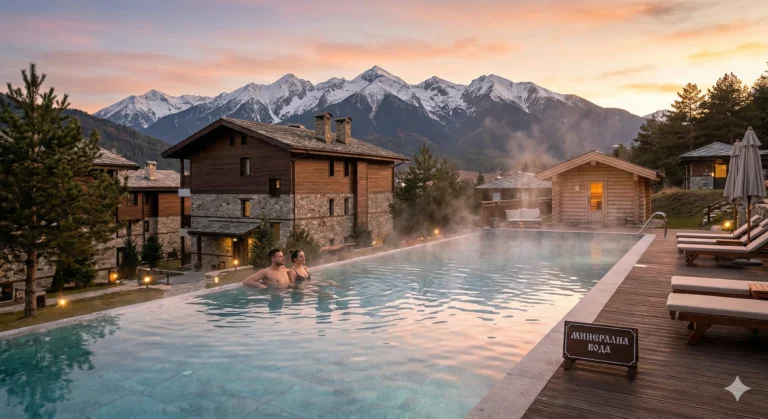
- SPA and Mineral Springs: A visit to the outdoor mineral pools in the neighboring villages of Banya or Dobrinishte costs between 15 and 25 leva per person. If you are a regular visitor, you can ask for a monthly card, which lowers the price significantly (about 100-150 leva per month).
4. Skiing and Snowboarding: The Seasonal “Tax”
If the main reason for choosing Bansko is the mountains, you should consider winter sports as an essential part of your itinerary. cost of living in Bansko.
- Season card: For avid skiers, this is a must-buy. If you buy it during the early promotions (usually in November), the price is around 1500 – 1700 BGN. If you miss the deadline, the regular price is higher.
- Daily card: The prices of day passes increase almost every year in line with inflation. For the upcoming season, expect prices in the range of 90-100+ BGN per day for an adult.
- Equipment: Renting ski equipment for the entire season can be expensive. Many nomads prefer to buy their own equipment (second-hand) from local ski shops during the end-of-season sales, saving them hundreds of leva.
5. Sample Monthly Budget (For one person)
To put everything in perspective, here is a realistic table reflecting the monthly budget of a digital nomad who lives comfortably in the winter, eats out several times a week, uses a coworking space, and has an active social life.
| Pen / Consumption | Amount (in Euro) | Notes and details |
|---|---|---|
| Renting a home | € 350 | Two-bedroom apartment, middle class, long-term contract. |
| Utility bills (Winter) | € 100 | Electricity (domestic), water, home fiber optic internet. |
| Coworking subscription | € 130 | Monthly fee for a fixed desk and access to events. |
| Food (Supermarket + Restaurants) | € 400 | Reasonable shopping, lunch menus and 2-3 dinners out a week. |
| Entertainment, Sports and SPA | € 100 | Fitness card, bars and once a week mineral bath. |
| Other (Transport and Beat) | € 50 | Laundry detergent, taxis in the city, small expenses. |
| TOTAL EXPECTED BUDGET: | ~ € 1,130 | Seasonal ski pass not included! |
Note: This is a budget calculated for a “good and peaceful life.” It is entirely possible to live in the city on a budget of €700-800 per month if you rent a more modest studio, cook mostly at home, work from your home office, and limit expensive entertainment.
Next step: Doctors, Institutions and Bureaucracy
You now know exactly how much it will cost to live in the city and have your finances in order. Now it's time to sort out the inevitable paperwork - how to register your address, how to find a GP and what institutions you need to visit.
Read Part 4: Bureaucracy and Health – Doctors and Registrations
 English (UK)