


When you start your search for a holiday property in Bansko, you will quickly notice that the market is divided into two large groups of sellers: local investors (Bulgarians) and foreign owners (mostly English, Irish and Russians).
Many experienced brokers will tell you by ear: “If you want a ready-made apartment at a good price, look for a property being sold by a foreigner who is returning to his homeland.” Why is this so? Is there a real difference in what you get for your money? Analysis of hundreds of transactions shows that buying from a foreign seller often brings advantages that Bulgarian sellers rarely offer.
The “Everything Stays Here” Effect: Furniture and Appliances
This is the most tangible and immediate financial advantage. When a Bulgarian sells an apartment, especially if he lives in another city or has another property, he is often inclined to take everything of value with him. The TV goes to the villa, the new refrigerator is moved to Sofia, and the sofa is given to relatives. Often the buyer enters a “bare” property.
For foreigners, the situation is radically different. Imagine a family from Manchester or Dublin selling their studio in Bansko.
The result? The foreigners sell the property as is – with the TV, washing machine, refrigerator, bed linen, and even the kitchen utensils. You get a truly turnkey property that you can move into and stay in that same night, without spending a single leva on furnishings.
The Hidden Bonus: The “Minimum Depreciation” Factor”
Besides leaving the furniture, it is also important what condition it is in. Here lies one of the biggest differences between local and foreign sellers.
While many Bulgarian owners actively rent out their properties or use them every weekend, many foreigners (especially those who bought properties before 2010) only visit Bansko for 1 or 2 weeks a year during the ski season. There are cases where the owners have not come for years.
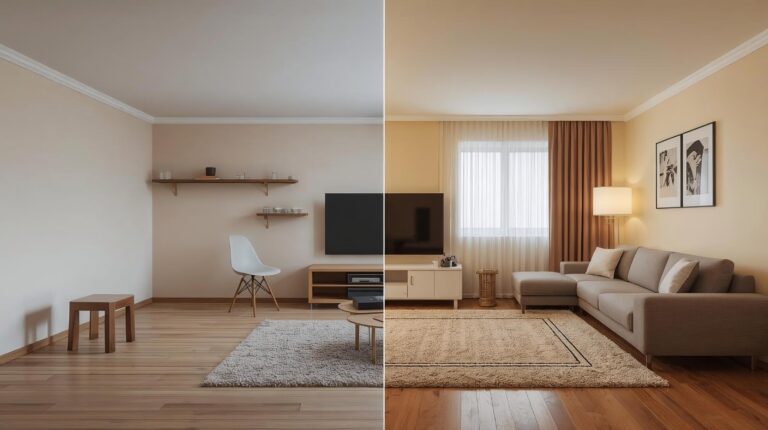
This means that you often come across homes that are 10-15 years old “according to documents”, but their interior is practically new. There are no signs of wear on the laminate, the kitchen has not been actively cooked in, and the bathroom is sparkling. You are buying a “second-hand” property with the quality of an almost unused one.
Psychology of price and negotiations
The second big plus is flexibility in negotiations. The motivation of the foreign seller often differs from that of the local one.
- Desire for a quick exit (Exit Strategy): Many expats sell because they no longer travel as often, their children are grown, or they simply want to close that investment and stop paying maintenance fees and taxes remotely. They are looking for a quick and clean deal.
- Lack of emotional attachment to the “price of the neighbor”: The Bulgarian seller often holds a high price for years, guided by the principle “Pesho’s apartment sold for that much.” The foreigner is often more pragmatic – if the offer is reasonable and payment is certain, he is willing to make a bigger discount just to complete the process.
Comparison: What do you get in the deal?
| Characteristics | Bulgarian salesman (Common scenario) | Foreign Seller (Common Scenario) |
|---|---|---|
| Furnishing | Equipment, personal belongings, and small furniture may be missing. | They leave everything: from the sofa to the forks and bed linen. |
| Negotiations | More rigid, willing to wait months for the right price. | More flexible, priority is the speed and security of payment. |
| Property condition | Often used intensively or rented out. | Often used only 1-2 weeks a year (holidays). |
“The first ones choose the best”: Location and view
There is another aspect that is rarely talked about. The big boom in foreign investment in Bansko was between 2005 and 2008. At that time, buyers from the UK and Ireland were buying properties still "greenfield" or in the newest luxury complexes.
Since they were the first to the market with capital, they often chose the best apartments in the buildings – those on the top floors, with a south-facing view and a direct view of the Pirin Mountains that cannot be hidden. Today, when you buy such a property on the secondary market (resale), you often get access to the “golden selection” of the complex, which has long been exhausted by the developer.
Is there a catch? What you need to know about the documents
Of course, every coin has two sides. Dealing with a foreigner has its own specifics that require an experienced broker and lawyer.
The main challenge is the distance. The seller is rarely present in person. The transactions are concluded through a Power of Attorney. Here the role of your agency is key:
- It must be checked whether the power of attorney is valid and translated correctly.
- Certificates of no tax liabilities must be provided (often foreigners forget to pay the last building tax, which is deducted from the price).
- The seller's marital status abroad must be verified (declarations under Art. 264 of the Code of Civil Procedure).
Conclusion: Should we "hunt" for foreign properties?
If you are a pragmatic buyer looking for the best value for money, the answer is definitely yes. yes. Buying from a foreigner who is withdrawing from the market is often the shortest path to acquiring a completely ready-to-use or rental property without having to invest additional thousands of leva in furniture and appliances.
However, these types of deals require a quick response. When a “hot offer” from a foreign seller comes to the market – fully furnished and at a good price – it is usually sold within days. Therefore, our advice is: be prepared with your finances and monitor the market actively so as not to miss your opportunity.



 English (UK)