


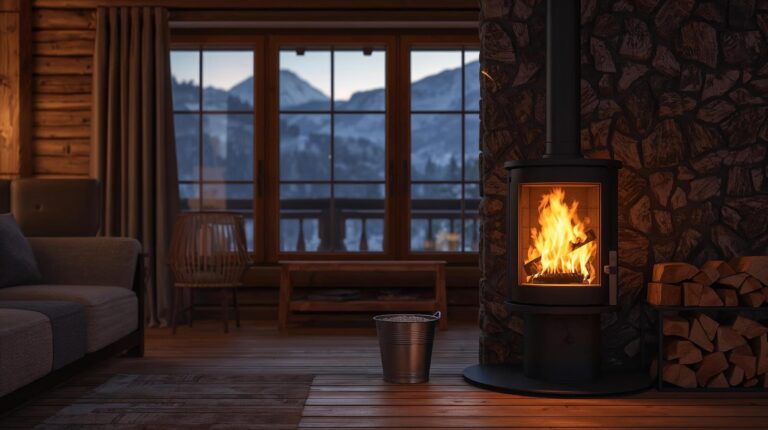
Part 1: Fuel – The Foundation of Success
Before we scratch the surface, we need to clarify the most important rule: Water doesn't burn.
- The ideal tree: Hardwood (oak, beech, hornbeam), dried for at least 18-24 months. Humidity must be below 20%.
- Why not wet wood? When you burn damp wood, the energy of the fire goes into evaporating the water, not into heat. This creates steam, which mixes with the soot and forms creosote – a sticky, flammable substance that clogs the chimney and can cause a fire.
Part 2: How to Light Easily and Smokelessly (The Top-Down Method)
Forget the old method of putting newspapers underneath and large logs on top. This method often smothers the flame and creates a lot of smoke. The most efficient and environmentally friendly method used by professionals is the so-called. „"Swiss Method" or "Reverse Fire"“.
Step by step:
- The basis: Place the largest logs at the bottom of the grill, tightly packed together.
- The middle layer: Arrange smaller logs on top of them (across the lower ones).
- The top: On top, place kindling (thin sticks, dry twigs) and kindling (eco-kindling cubes, shavings, or some paper).
- Ignition: Light the fire from the highest point.
The flame is at the top and immediately begins to heat the air towards the chimney, creating a draft (vacuum) much faster. This eliminates the return of smoke into the room. The fire burns slowly downwards, and the gases burn more completely.
Part 3: Effective fire maintenance
You now have a roaring fire. How do you control it? Every modern fireplace has air dampers. Here's how to use them properly:
| Type Valve | Function | When is it used? |
|---|---|---|
| Primary air (Bottom flap) |
It supplies air directly to the base of the fire. | Mainly when lighting. Cover it when you have stable embers. |
| Secondary air (Top flap) |
A basic tool for controlling and blowing glass ("air curtain"). | Permanently. Never close it completely when there is a flame. |
When should we add wood?
Do not add new wood while the flames are still burning. Wait until a layer of glowing embers remains.
- Open the air valve fully.
- Open the door slightly for 5-10 seconds to equalize the pressure (this way, smoke won't blow in your face), and only then open it wide.
- Place the new wood on the embers, close the lid, and wait for it to burn before reducing the air again.
Part 4: The Art of "Night Fire"„
The goal here is a slow, sustained heat release that will keep the embers hot for your morning coffee. Here are two tried-and-true methods:
The "Big Log" Technique„
- About 30-40 minutes before bedtime, let the fire settle down to a dense, red ember.
- Choose the largest, thickest, and most gnarled tree you have. Hardwood is a must here.
- Place it on the embers and wait for it to "grip" well.
- Reduce air: Close the flaps almost all the way, but never on 100%. You should see light, lazy flames.
Burial with ashes (Banking)
If you want the embers to last as long as possible, gather them into a pile and cover the sides with ash. The ash acts as an insulator. In the morning, simply dig up the pile, add kindling, open the air, and the fire will ignite on its own.
Part 5: Cleaning and maintenance
1. Glass – the best trick is free
Forget expensive cleaners. They often damage door seals. The best cleaner for cleaning fireplace glass is ash itself.
- The method: Take a piece of damp paper towel or newspaper and melt it in the fine white ash from the fireplace.
- Rub the glass in a circular motion. The ash acts as a mild abrasive, and its chemical composition breaks down the carbon deposits.
- Wipe with a clean damp cloth and polish with dry paper. The result is a crystal-clear shine in a minute.
2. Don't clean the fireplace to a shine!
This is a common mistake. The fireplace works better if there is a layer of ash on the bottom (about 2-3 cm). The ash insulates the bottom, protects the grate from burning and retains heat.
3. Chimney care
Even if you burn dry wood and burn properly, soot builds up. Mechanical cleaning is mandatory at least once a year (spring or fall). You can also use chemical cleaning (powders or specialized "pollen") once a month during the active season to dry out the creosote.
Safety Summary
Important rules:
- CO (Carbon monoxide): Never close the flaps completely while there are embers. This can cause the invisible and deadly gas to be released.
- The ashes: When disposing of ashes, always put them in metal container Cover and leave it outside, away from combustible materials, for at least 24 hours. The ashes may contain live coals for days.
By following these rules, your fireplace will burn cleaner, warmer and longer, turning winter in Bansko from a challenge into a real pleasure.


 English (UK)