


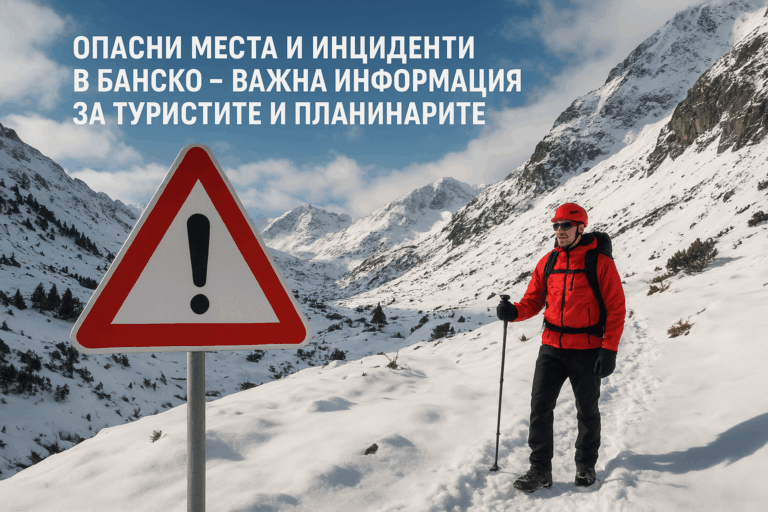
Bansko continues to be a leader in winter sports and summer tourism in Bulgaria in 2026. But behind the beauty of the majestic Pirin lies a harsh character that does not forgive mistakes. With the increasing flow of tourists, the topic of mountain safety in Bansko is more relevant than ever.
Every year, thousands of enthusiasts head to the slopes and peaks, but the statistics show a worrying persistence. This article is your up-to-date survival guide – we look at the most dangerous areas, analyze data from recent seasons, and give expert recommendations on how to enjoy the mountains without unnecessary risk.
Alarming statistics: Incidents in Bansko and the region
The data is stark and often startling. According to the aggregated data of Mountain Rescue Service (MRS), the intensity of rescue operations increases in direct proportion to the number of tourists.
Statistical Overview (Base 2024-2025):
Although we are in 2026, trends from previous years outline clear risks:
- 🔴 179 serious incidents annually in the Bulgarian mountains (search and rescue operations).
- 🔴 Over 1057 aid provided only from the Bansko team for one season. This includes treatment of injuries on the ski slopes and evacuation.
- 🔴 Main locations: Rila and Pirin hold the championship in traumatism.
The difference between an “incident” and “aid provided” is important. While over 1,000 people receive aid for fractures, sprains and frostbite in the ski area, nearly 180 cases per year require large-scale rescue operations involving dozens of rescuers, heavy equipment and helicopters.
Main causes of trauma
Mountain rescuers in Bansko identify a recurring pattern in the casualties. The most common causes are not natural disasters per se, but the human factor:
- Inappropriate equipment: Heading to a high peak with city shoes or light jackets.
- Overestimation of possibilities: Attempts to climb technical routes without physical training.
- Underestimating the mountain: Ignoring weather forecasts and avalanche bulletins.
TOP 4 Most Dangerous Areas in the Bansko Region
Pirin is a mountain with an alpine character – steep, rocky and unpredictable. Here are the places where you should be extra careful for your mountain safety in Bansko during this season.
1. The avalanche-prone chutes on Mount Todorka
The area around Mount Todorka and Banderishka meadow remains a “magnet” for freeride skiers and snowboarders. Going outside the marked slopes here is a game of Russian roulette with high avalanche danger. The western slopes of Todorka are known for their avalanche chutes, which can be fatal in unstable snow conditions. Rescue operations in this area are extremely complex, risky and expensive.
2. The horse and the circus under Vihren Peak
The Karst Edge "“The horse”" is an emblem of Pirin, but also one of the most dangerous places, especially in bad weather or icing. The narrow rocky edge (in places only 40-50 cm) requires absolute concentration. Even in summer, a sudden storm can turn its passage into a nightmare. The route is absolutely forbidden for people with a fear of heights or without appropriate equipment.
3. The “off-piste” riding zone (Freeride)
The search for adrenaline in unfamiliar terrain is a leading cause of getting lost. The forests surrounding the ski area and the chutes to Demyanitsa hut often trick skiers. Entering an unfamiliar chute can lead you to a sheer cliff from which there is no turning back without alpine equipment.
4. Places with microclimate traps
Pirin is known for its abrupt change of the weather. Areas around high peaks are often shrouded in thick fog for minutes. This leads to disorientation, hypothermia, and falls from cliffs. Fog is one of the greatest enemies of a hiker.
Mountain Insurance: Why is it mandatory in 2026?
Many tourists miss this element, but it is critical. Mountain rescue operations are not free, if you do not have insurance. The Mountain Rescue Service is an organization that relies on a delegated budget and donations, and the costs of one action are enormous.
How much does a rescue cost without insurance?
If you do not have valid mountain insurance, the costs are at your own expense (current indicative prices):
- Rescue team action: It can exceed 1000 – 2000 BGN depending on the duration and number of rescuers.
- Helicopter evacuation: The cost per flight hour is significant, with a complex air support operation often exceeding 10,000 BGN.
For an amount of about 30-50 BGN per year, mountain insurance covers these costs and provides you with peace of mind.
Expert safety advice from the Bansko Emergency Medical Service
The MSF unit in Bansko is among the busiest and most professional structures in the country. They have modern drones, off-road equipment and trained dogs. However, the best rescue is the one that did not take place. Here are their “Golden Rules”:
- Planning: Research the route in advance. Know where the huts and shelters are.
- Phone charging: Batteries drain quickly in cold weather. Carry an external battery (Power Bank) and keep your phone close to your body.
- Three-layer dressing: Use thermal underwear (wicks away sweat), fleece (warm) and a membrane (protects from wind and water). Cotton clothes are the enemy in the mountains.
- Shared location: Always tell a loved one where you are going and when you should return.
- The application

 English (UK)