

1. Introduction and macroeconomic context
The year 2025 is shaping up to be a turning point in Bansko's recent history, marked by the convergence of several macroeconomic and geopolitical factors that redrawn the municipality's development trajectory. As a leading mountain destination in Southeastern Europe, Bansko functions as a litmus test for the state of Bulgarian tourism, reflecting both national successes and systemic challenges.
Key factor: A fundamental change in the operational environment occurred with the full admission of Bulgaria to the Schengen area, including at land borders, as of January 1, 2025. This act removed long-standing barriers to mobility, dramatically facilitating access for tourists from neighboring Romania and Greece, which traditionally account for a significant share of the inbound flow.
Economic analyses indicate that the Schengen effect generates additional revenues of over 300 million leva annually for the national economy, with a significant portion of this capital flowing directly into tourist centers such as Bansko.
In parallel, the country's preparations for entry into the Eurozone (target date 1 January 2026) exerted inflationary pressure, but also stimulated investment interest in real estate as a means of hedging savings. Nationally, tourism reached record levels, with Bulgaria welcoming over 11 million foreign visitors in the first nine months of 2025 (+2.61% compared to 2024), and annual revenue forecasts exceeding 14 billion leva. In this favorable macroeconomic climate, Bansko managed to implement a diversification strategy, balancing between traditional winter ski tourism and the increasingly strong summer festival and "nomadic" tourism.
At the end of the year, however, socio-political stability was put to the test. Mass protests in November and December 2025, provoked by the 2026 budget framework and leading to the resignation of the Zhelyazkov government on December 11, created an atmosphere of uncertainty right on the threshold of the new winter season. This report analyzes these dynamics in detail, providing an in-depth look at every sphere of municipal life.
2. Winter Tourism: Analysis of the 2024/2025 and 2025/2026 seasons
Winter tourism remains the backbone of the local economy, but in 2025 it underwent an evolution aimed at higher added value and an extension of the active period.
2.1. Summary of the 2024/2025 season
The 2024/2025 season is characterized by a steady growth in attendance, aided by good snow cover and restored confidence in international travel. Statistical data shows that the winter months (December-March) generate around 23% of the total tourist arrivals in the country, with Bansko taking the lion's share of this segment.
Tourist profile and employment
The expectations for the season were justified with over 2.2 million tourists in the country's winter resorts. It is important to note the change in consumer behavior: only 1/6 of the visits are strictly motivated by skiing. The rest of the flow is directed towards SPA, wellness and culinary tourism - segments in which Bansko has invested significantly in recent years. Bulgarian tourists remain the dominant group, with the ratio to foreigners being 4:1, which ensures stability of revenues regardless of the international situation.
2.2. FIS Snowboard World Cup (January 2025)
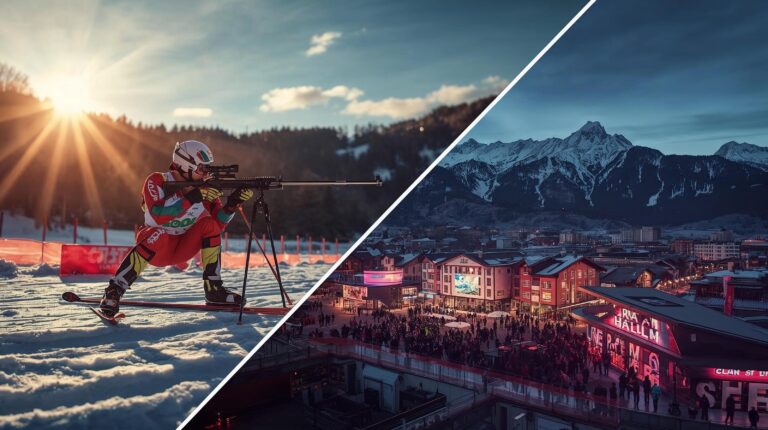
The highlight of the sports calendar was hosting the Snowboarding World Cup starts (Pamporovo and parallel disciplines), held on January 18 and 19, 2025. The event not only positioned Bansko on the world map, but also served as a test of the resort's organizational capacity.
Results and sports-technical analysis:
- Men: On January 19, 2025, the Swiss Dario Caviezel triumphed, demonstrating impeccable technique on the steep section of the Tomba track. In the starts of the previous day (January 18), the Italian performed strongly Gabriel Messner and the Austrian Andreas Promeger. The Bulgarian star Radoslav Yankov delighted the local audience by reaching the small final, ranking in the top 4, which was considered a significant success for the hosts. The young talent Tervel Zamfirov also showed potential, solidifying the rise of the Bulgarian snowboard school.
- Women: In the women's category, dominance was divided between Ramona Hofmeister (Germany) and the Japanese sensation Tsubaki Miki, who won the hearts of fans with her aggressive riding style.
The event organization confirmed Bansko's status as a "host where the World Cup feels at home", which guarantees the resort's inclusion in the FIS calendar for January 2026 as well.
2.3. Start of the 2025/2026 season: Conditions and pricing policy
The opening of the new season on December 13, 2025 was accompanied by optimism, backed by excellent natural conditions. For the first time in history, the official ceremonies were held at an altitude of 2,600 m, emphasizing the high-mountain character of the resort.
Table 1: Snow conditions and infrastructure as of 13.12.2025.
| Location | Snow cover | Facility status |
|---|---|---|
| Todorka Peak (2600 m) | 140 cm | Open |
| The plateau | 70 cm | Open |
| Chalin Valog | Preparation | Limited access |
| Ski road to the city | Preparation | Closed (as of 13.12) |
*Data: Ulen AD / Bansko Blog
Price dynamics and services (Season 2025/2026)
| Service / Card Type | Price / Details | Comment |
|---|---|---|
| Day pass (Adults) | ~115.39 BGN (59 EUR) | A budget alternative to the Alps (where prices exceed 70-80 EUR). |
| Promotion (Discovery) | 65 BGN | Valid only for December 13-14. |
| Season Ticket (Adults) | 1700 BGN | Preferred by digital nomads and long-term residents. |
| Season Ticket (Students/Pensioners) | 1600 BGN | It retains the interest of students and retirees. |
3. Transformation of the Summer Season: Culture, Nomads and Adventure
The strategy for overcoming seasonality, set out in the municipal plans, yielded visible results in 2025. The summer months are no longer a "dead season", but a period of active cultural and adventure tourism.
3.1. Festival Tourism: Bansko Jazz Festival 2025
Held between August 1 and 10, 2025, the 28th edition of the Bansko Jazz Festival established itself as a cultural phenomenon. The event attracted over 200 performers from all over the world, transforming Nikola Vaptsarov Square into a world-class stage.
- Jazz and Fusion: Ken Okada Group (USA/Japan) presented an innovative mix of jazz and video game music, while Jerry Bergonzi & George Garzone Quintet (USA) offered a classic tenor saxophone duel of the highest class.
- Ethno and Vocals: The Bulgarian icon Kamelia Todorova marked his presence with a retrospective concert, and Sultan Stevenson Trio (Great Britain) and Gabriel Palatchi Trio (Argentina) added international diversity.
- Educational element: “The Jazz Academy provided a platform for young talents who had the chance to play on the same stage as the legends, creating continuity and depth to the festival experience.
3.2. Digital Nomadism: The Ecosystem of 2025
Bansko continues to hold the title of “capital of digital nomads” in Europe, but 2025 brought structural changes to this community.
Bansko Nomad Fest 2025 (June 22-30): The event brought together over 500 participants from 56 countries. The “Unconference” format allowed for decentralized knowledge exchange, and the participation of official delegations, such as that of the Shibuya Municipality (Tokyo), highlighted the geopolitical weight of the festival as a bridge between startup ecosystems. The economic footprint of the festival is significant – hundreds of participants extend their stay, filling up accommodation and restaurants in a traditionally weak June.
Consolidation of the Coworking market: A landmark event was the acquisition of the pioneer Coworking Bansko from the chain Networking Premium. The deal, completed at the beginning of the year, marked the end of the “romantic period” and the beginning of the ecosystem’s corporate maturity. The new owners introduced a “nomadic mobility” model, allowing members to migrate between offices in Sofia, Plovdiv and Bansko. The addition of Coliving Bansko and free shuttles to the lift in winter increased the value of the service, but also standardized the prices.
The Semkovo project: In parallel, the visionary project Coliving Semkovo (a former hotel in Rila Mountains, transformed into a nomadic village) will realize its “soft opening” in July 2025. With over 70 co-owners from 30 countries, the project represents a unique experiment in collective ownership and asset management, and its full operation is expected to change the demographics of the entire region, attracting high-income residents.
3.3. Mountain Adventures and Ecology
Pirin National Park remains a major asset, but also a subject of environmental concerns.
- MTB Expansion: The mountain bike park has expanded with new trails such as the “Secret Mile” and “Who Dares Link,” opening in December 2025.
- Environmental pressure: Organisations such as WWF continue to raise the alarm about the threats to biodiversity (especially the chamois) due to tourist pressure. The lack of a new Strategic Environmental Assessment (SEA) for management plans remains a legal and ethical issue. Air quality in winter is also a challenge, with fine particulate matter levels often exceeding standards due to wood heating.
4. Real Estate Economics
2025 brought a “perfect storm” to the Bansko property market, driven by Schengen optimism, inflation, and the changing profile of buyers.
4.1. Price trends and market dynamics
After years of stagnation, prices have seen a surge that has repositioned the resort.
Current property price levels (2025)
| Property Type / Market | Price (EUR/sq m) | Analysis |
|---|---|---|
| Secondary market (Apartments) | 1000 – 1400 EUR | Significant growth compared to EUR 800 in 2023. |
| New construction | 1700 – 2200 EUR | It is approaching prices in neighborhoods of Sofia - a historical precedent. |
| Houses (Periphery/Villages) | > 1200 EUR | Increased interest in Banya and Razlog for premium properties. |
Table 2: Return on property investments (2025)
| Indicator | Value | Comment |
|---|---|---|
| Annual Return on Investment (ROI) | 4% – 11% | Depends heavily on management and location |
| Average occupancy (Airbnb) | ~35% | Peaks in winter and August |
| Buyer profile | Mixed | Growth of Bulgarian and Israeli investors |
*Source: Investropa Market Report
5. Municipal policy and infrastructure projects
The budget of the Municipality of Bansko for 2025, adopted in the amount of 44,698,631 leva, reflected the ambitions for modernization, but also revealed structural deficits.
5.1. The Airport: Strategic Ambition or Chimera?
The most controversial project for 2025 was the initiative to build an airport for small aircraft.
| Project aspect | Details |
|---|---|
| Parameters | An 800-meter-long runway and heliport designed for charters and business aviation. |
| Arguments | A tool to attract VIP tourists and improve emergency assistance (supported by the mayor's administration and the tourism business). |
| Reality (Dec. 2025) | The project is blocked by complex expropriation procedures and environmental concerns. There are no real construction activities. |
5.2. Waste management and urban environment
The growing tourist flow has necessitated investments in waste collection. In 2025, the municipality renewed its fleet with new trucks equipped with route optimization technologies in an attempt to cope with peak loads during the holidays. The investment program (6.2 million leva) also focuses on the rehabilitation of the street network in the constituent villages and the repair of social infrastructure (nurseries, sports grounds).
6. Political risk and conclusion
Despite the economic upswing, the end of 2025 brought political turbulence. Mass protests in November and December, directed against the government's budget policy and corrupt practices, culminated in the resignation of the Zhelyazkov cabinet on December 11, 2025. This power vacuum created uncertainty about state support for the tourism sector and infrastructure projects in 2026.
Conclusion
In 2025, Bansko proved its resilience and adaptability. The city successfully capitalized on the effects of Schengen and the global tourism boom, transforming itself into a year-round destination with a diversified product (skiing, jazz, nomads). The growth of property and service prices is an indicator of economic health, but also a signal of the risk of “overheating”. The main challenge facing the municipality remains balancing aggressive investment interest with the ecological limits of Pirin and the social needs of the local population, against the backdrop of an unstable national political environment.
 English (UK)