


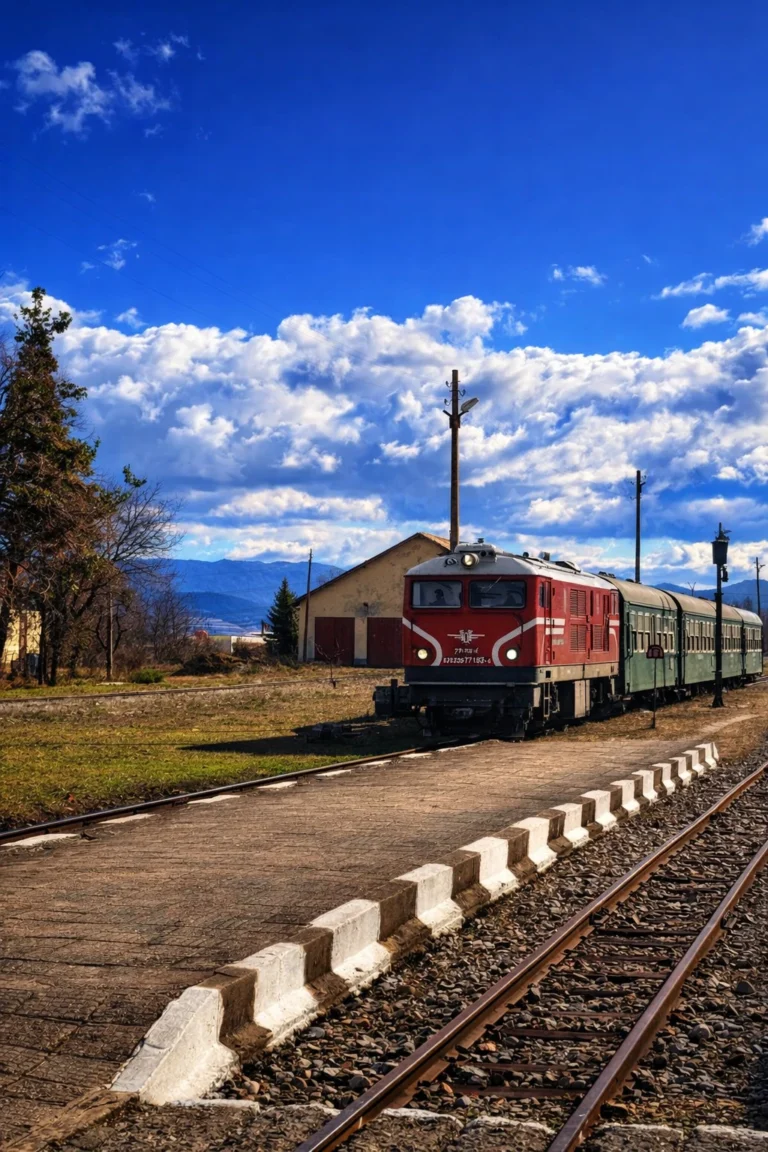
These are legendary locomotives that have been operating for decades in some of the toughest mountain conditions not only in Bulgaria but throughout Europe. To attract the attention of techno-enthusiasts, engineers at heart and true fans of the mountain railway, in this fundamental guide we will take a detailed look at narrow gauge locomotives. We will trace their history - from the German giants of "Henschel", through the Romanian models, to their modern multi-million modernization that keeps them alive to this day.
Why are these machines a true engineering marvel?
To understand how special these locomotives are, we must first realize what they face every day. The Septemvri – Dobrinishte route overcomes over 1000 meters of elevation. The gradients reach an extreme 30‰ (per mile), which means an extremely steep climb for rail transport without a rack.
All this happens on tracks spaced just 760 millimeters apart, with sharp turns and dozens of narrow and dark tunnels. To pull hundreds of tons of cargo (cars and passengers) under these conditions requires traction that few machines in the world possess.
Series 75,000: German power since 1965.
The first true "mainline" diesel locomotives on the narrow gauge were delivered by the prestigious German company Henschel–Kassel in 1965–1966. BDZ ordered a total of 10 of these impressive machines, which were specially designed and adapted under strict technical conditions for the unique requirements of the Bulgarian route.
These are diesel-hydraulic locomotives with impressive power for the weather you 1100 horsepower (hp). During their production, they were absolutely uncompromising leaders – the most powerful narrow-gauge locomotives in the world for a track gauge of 760 mm. With their introduction into service, they took over the entire heavy passenger and freight schedule from the older railcars and steam locomotives, literally saving the line from falling behind in terms of transport.
💡 Technical phenomenon
The fuel system of Henschel locomotives is unique. The main fuel tank is integrated directly into the locomotive's supporting frame itself. This ingenious engineering solution saves unnecessary weight, lowers the center of gravity extremely low and significantly improves the balance and stability of the machine when passing through steep and sharp mountain serpentines.
Technical specification: Series 75.000
| Characteristics | Meaning |
|---|---|
| Manufacturer | Henschel – Kassel (Germany) |
| Year of delivery | 1965 – 1966. |
| Power | 1100 hp. |
| Gauge | 760mm |
| Wheel axle formula | B′-B′ |
| Maximum speed | ~70 km/h |
| Operating mass (Tare) | ~25–30 tons |
Series 77.000: The Romanian "Youth" of 1988.
With the growth of passenger and freight traffic over the years and the natural depreciation of the first machines, in 1988 BDZ ordered new additions. 10 new diesel-hydraulic locomotives arrived, classified as series 77.000. They were manufactured at the Romanian August 23 Machine Building Plant in Bucharest.
Technically, these locomotives are an improved version of the previous German models, including specific improvements for the harsh climatic and relief conditions of Bulgaria. Today, there are 4 active working machines from this series left in the country (some of the others were sold as far away as Argentina). They form the main "workhorse" of the narrow gauge locomotives nowadays.
Technical specification: Series 77.000
| Characteristics | Meaning |
|---|---|
| Manufacturer | „"August 23", Bucharest (Romania) |
| Year of manufacture | 1988. |
| Power (after modernization) | Over 820 kW (~1100 hp) |
| Maximum speed | 70 km/h |
| Tara | 13.3 tons (per axle) |
| Environmental standard | Euro 5 (for upgraded units) |
Historical veterans: Ganz and the machines of the USSR
Before the era of powerful diesel engines from Germany and Romania, the narrow gauge was served by older but historically significant models. Hungarian narrow gauge diesel multiple units Ganz were used extremely actively in the early years for passenger transport, offering luxury for their time.
For heavy freight trains (mainly for massive logging) in the 1950s and early 1960s, steam and Soviet series locomotives (such as the 600.76 model) were used. These "veterans" were the backbone of the local economy, but were later replaced by Henschel. They forever remain a symbol of the era when the Rhodope narrow gauge was built with voluntary and hard manual labor by local people.
Modernization for 4 million leva: New life for BDZ
Over the decades, the technical maintenance of such old machines has become increasingly complex, and spare parts have become scarce. In order to preserve the line and ensure passenger safety, BDZ is undertaking a strategic investment. Through a large-scale public procurement worth 4.03 million leva, key locomotives from the 77.000 series are undergoing a complete modernization.
- New diesel heart: The old and heavily depreciated units have been replaced with brand new environmentally friendly engines with a power of over 820 kW, meeting the high emission standard. Euro 5.
- Fire safety: The electrical installation has been completely replaced, which minimizes to zero the risk of fires while driving in forested areas.
- Modern control: New LED lighting, powerful air conditioners in the driver's cabins, video surveillance systems and digital speedometers with memory for archiving data for up to 60 days have been installed.
⚠️ Attention to detail
The result of this renovation is striking: locomotives from 1988 (and even parts from 1965) continue to carry passengers safely and reliably, without the state having to buy completely new trains for tens of millions. This practically saves the narrow gauge from closure and guarantees its future for future generations.
The legend continues to travel
The German Henschel 75.000 and the Romanian 77.000 were not built for speed or luxury. They were built for survival. They are designed for the extremes of the mountain, are durable, are subject to heavy field repairs, and seem to "understand" the profile of this 125-kilometer line like no other modern train.
Today, when you hear the roar of the engine and see these "old soldiers" pulling the little wagons at the station Bansko, Razlog or Dobrinishte, remember: they are not just museum pieces. They do hard, real work. They carry local people, goods and thousands of tourists on a route that would otherwise have been long forgotten. So if you are traveling on the regular schedule on the narrow gauge, take a moment to photograph them up close – they deserve our respect.
🚂 Discover more about the Rhodope Narrow Gauge Railway
Interested in timetables, ticket prices, engineering wonders or secret tourist routes? Check out our main page with all the materials!
 English (UK)