

The Bulgarians: The Backbone of Bansko
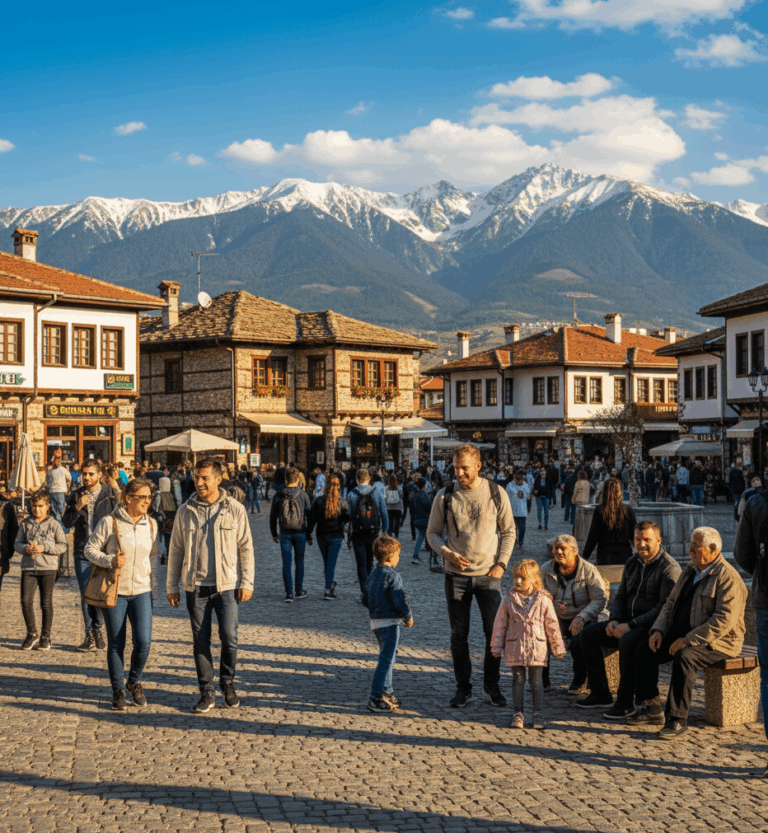
The local population continues to be predominantly Bulgarian. The town and its surroundings have been traditionally settled by local families for generations. They are the predominant ethnic and cultural group – not only as indigenous people, but also as young professionals who have chosen Bansko for its growing business, tourism and stable infrastructure.
The locals are the guardians of the unique Bansko dialect and culinary traditions, which are a major magnet for tourists. At the same time, a new wave of Bulgarians from Sofia and other major cities is settling here permanently, attracted by the opportunity to work remotely and a higher quality of life at the foot of Pirin.
Which foreigners choose Bansko as their home?
In recent years, Bansko has become a preferred place for living, investing and vacationing for citizens of dozens of countries. Among the foreign groups that the weather have created lasting communities, several main profiles stand out:
1. British and Irish
After the massive property boom around 2005, thousands of British and Irish families bought apartments in the complex below the mountain. Although some of the properties have been resold, Bansko still has a strong core of permanent English speakers. They often participate in charity events, organize pub quizzes and run small businesses.
2. Digital Nomads: The New Blood of the City
We can’t talk about nationalities in Bansko without mentioning the “technological migration.” Thanks to initiatives like Coworking Bansko, the city became European capital of digital nomads. Here you will meet Americans, Germans, Israelis and Scandinavians who spend months in the city working for global companies.
3. Russian-speaking community (Russians and Ukrainians)
Russians represent a significant part of the holiday home owners. After 2022, there has also been a significant growth of the Ukrainian community. Many of them found a safe haven and a new start in Bansko, quickly integrating into the local labor market, especially in the service and beauty sectors.
4. Balkan neighbors
Greeks, Serbs, Romanians and Macedonians are not only the most frequent tourists, but also active investors. Many Greek families own apartments and spend the entire winter season here. Romanians, on the other hand, are increasingly buying properties for rental purposes, seeing the huge potential of the region.
Statistics and population dynamics
Since many foreigners have owner-occupier status or short-term visitors, official statistics often do not reflect the real picture on the street. Here is an approximate distribution of residents according to market analyses and local registers:
| Group/Nationality | Relative share (%) | Main interest |
|---|---|---|
| Bulgarians | 75 – 80% | Business, services, indigenous people |
| Great Britain and Ireland | 5 – 7% | Retirement, vacation properties |
| Russia and Ukraine | 4 – 6% | Permanent residents, properties |
| Balkan countries (Greece, Romania) | 3 – 4% | Investments, seasonal recreation |
| EU (Germany, France, Italy) | 2 – 3% | Digital nomads, restaurant business |
The multicultural face of local business
The influence of different nationalities is most visible in the variety of restaurants and shops. In Bansko you can find:
- English pubs: Where a traditional breakfast is served and football is watched.
- Italian restaurants: Managed by Italians, who brought the taste of authentic pizza and pasta.
- “Beryozhka” and Russian stores: Offering specialties from the Eastern Bloc.
- Cosmopolitan spirit: Modern brunch spots inspired by Bali and Berlin, catering to the nomadic community.
Are you planning to move to Bansko?
Whether you are a digital nomad or looking for a new home for your family, Bansko offers an incredible combination of nature and an international community.
Bansko continues to develop as a true “melting pot” in the heart of Pirin. This unique symbiosis between the indigenous population and foreign communities makes the city one of the most exciting and cosmopolitan centers not only in Bulgaria, but also in the Balkans.
 English (UK)