


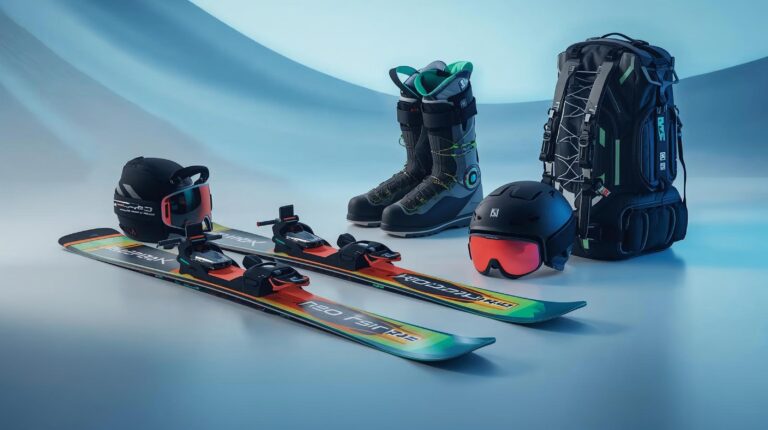
Preparing for winter vacation often begins with the question: “What will I need?” The concept full ski equipment It may sound confusing to beginners, but the truth is that it follows a logical structure aimed at one thing - your safety and comfort in the mountains.
Going skiing doesn't just mean grabbing a pair of skis under your arm. The mountains require respect and proper preparation. In this article, we'll look at the "anatomy" of a skier and give a complete breakdown of the necessary equipment, divided into three main categories: hardware, clothing, and protection.
1. The Hardware: The Foundation of Riding
This is the technical part of the equipment, without which physical skating is impossible. Here, the compromises with quality are immediately felt on the track.
Skis and machines
Skis are your vehicle. They vary greatly depending on the terrain – from narrow and stiff models for groomed slopes (piste skis), to wider “All-mountain” models, to specialized skis for deep snow (freeride). The machines are the mechanism that holds the shoe to the skate, but also ensures that it will detach in the event of a dangerous fall to protect your knees.
Ski boots
Experts agree: Ski boots are the most important element of complete ski equipment. They are the steering wheel of your skis. If the boots are too big, you lose control. If they are too small, you feel pain and your feet freeze. Choosing the right size and stiffness (flex index) is critical.
Ski poles
Often underestimated, the sticks are your metronome. They help with the rhythm of turns, balance, and moving on flat sections. For beginners, they are also an important support for psychological security.
2. Protection and Accessories: Safety First
Modern ski culture puts safety above all else. You'll rarely see a skier without a helmet anymore, and in many resorts it's mandatory for children.
- Helmet: Protects the head in the event of a collision or fall. Modern helmets are lightweight, warm and ventilated.
- Ski mask (Goggles): It's not just a fashion accessory. The mask protects your eyes from wind, snow and the strong UV radiation that is reflected off the snow. A good visor improves contrast and visibility in fog.
- Back protector (optional): Highly recommended for more aggressive skiers and freeriders.
3. Ski clothing: The three-layer principle
To feel comfortable in minus 10 degrees and wind, you don't need one thick coat, but a proper layering system.
Base layer (Thermal underwear)
Its role is to “breathe.” The thermal shirt and leggings should wick sweat away from the body to keep you dry. Never use cotton as a first layer because it traps moisture and you will freeze.
Middle layer (Insulation)
This is usually a fleece or thin down jacket. Its job is to retain the heat generated by your body. In warmer weather, this layer can be omitted or made thinner.
Outer layer (Jacket and pants)
Your shield against the elements. Your ski jacket and pants should be windproof and waterproof. Look for gear with a good membrane (breathable and waterproof) so you don't sweat while you're skiing and don't get wet when the rain is heavy.
🧤 Don't forget the limbs:
Ski socks they must be specialized (higher than the shoe and reinforced in pressure areas). The gloves are mandatory – choose a model with good insulation and water resistance.
Summary
The investment in full ski equipment can be significant, but you don't have to buy everything at once. Many of the items such as skis, boots and helmets can be rented initially. However, clothing and personal protective equipment should be kept personal.
In our next articles, we will take a detailed look at each of these components to help you make the best choice according to your budget and skills.



 English (UK)