


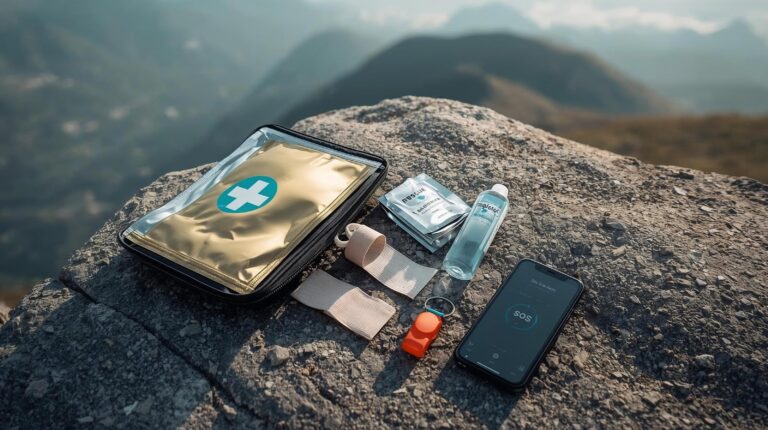
When you're walking down the main street in Bansko, there's a pharmacy on every corner. But when you're 2,500 meters above sea level, beneath the peaks of Pirin, the nearest medical help could be hours away. Your personal mountain first aid kit It's not just an accessory – it's your insurance.
In the fifth part of our “Ten Most Important Items” series, we’ll look at how to put together a compact, lightweight, and effective first aid kit instead of carrying around useless pre-made packs.
Why don't ready-made first aid kits work?
Many novice hikers buy ready-made kits from the supermarket. The problem with them is twofold:
- Volume and weight: They often contain large scissors, huge amounts of cotton and gauze that take up space.
- Lack of specialized tools: You will almost never find the most important thing for a hiker in them – quality blister patches (Second Skin).
The Holy Trinity of Traumas in Pirin
Statistics show that the most common problems in the mountains are not dramatic fractures, but minor injuries, which can, however, turn the hike into hell.
1. Blisters (Pishki)
This is enemy number one. The usual adhesive plaster falls off as soon as the foot sweats. Be sure to wear hydrocolloid patches (Compeed type). They act like a second skin, relieve pain immediately and don't fall off for days.
2. Sprains (Ankles and Knees)
The terrain in Pirin is rocky and unstable. One wrong step on the moraine can sprain your ankle. Wear elastic bandage or an adhesive bandage (Coban). This will hold the joint in place and allow you to limp to the hut instead of waiting for a stretcher.
3. Cut wounds
Sharp rocks and rocks cut deeply. Carry some sterile gauze and a roll of waterproof adhesive tape to stop the bleeding and close the wound.
Medications: The bare minimum for survival
Note: Always consult a doctor before taking medication, especially if you have allergies!
| Type of medication | Why do you need it? |
|---|---|
| Painkillers (NSAIDs) | Ibuprofen, Paracetamol or Analgin. In case of altitude headaches, toothache or trauma, they help you get down. |
| Antihistamine (Antiallergic) | Critically important! A wasp sting or contact with an unfamiliar plant can cause a strong reaction far from civilization. |
| Stomach (Activated charcoal/Imodium) | Stomach upset leads to rapid dehydration and loss of strength. |
Special focus: Snakes in Pirin
In the low parts around Bansko and on the slopes of Pirin, poisonous snakes are found, most often Viper. In your mountain first aid kit there is no room for serums (they are kept in the refrigerator and beaten by a doctor!).
Do not cut the wound! Do not suck out the venom with your mouth! Do not apply a tourniquet (tightening), as this can lead to necrosis of the limb.
The correct action: Flush the wound with water, immobilize the limb (splint it so the venom doesn't spread quickly) and call EMS or 112. Stay calm - bites are rarely fatal for an adult if they don't panic.
Organization and storage
Everything listed above should fit in a small, waterproof bag (Dry bag) with a bright color (usually red) so you can easily find it in your backpack.
Carrying a first aid kit is not pessimism, but a responsibility to yourself and the group. Be that prepared person who can help when someone on the trail is in need.

 English (UK)