

Why is it important to monitor precipitation in Bansko?
Pirin Mountain is known for its harsh nature. Rain here is not just drops of water – it changes the temperature in minutes, makes the rocky paths slippery and is accompanied by thunderstorm activity, which in the open alpine parts (like the marble ridge) can be extremely dangerous.
Graph and analysis of precipitation during the year
The statistics show a clear cyclical pattern. If you're looking for sunny windows for climbing, you should avoid certain months, while for lovers of green and fresh nature, spring rains are a real boon.
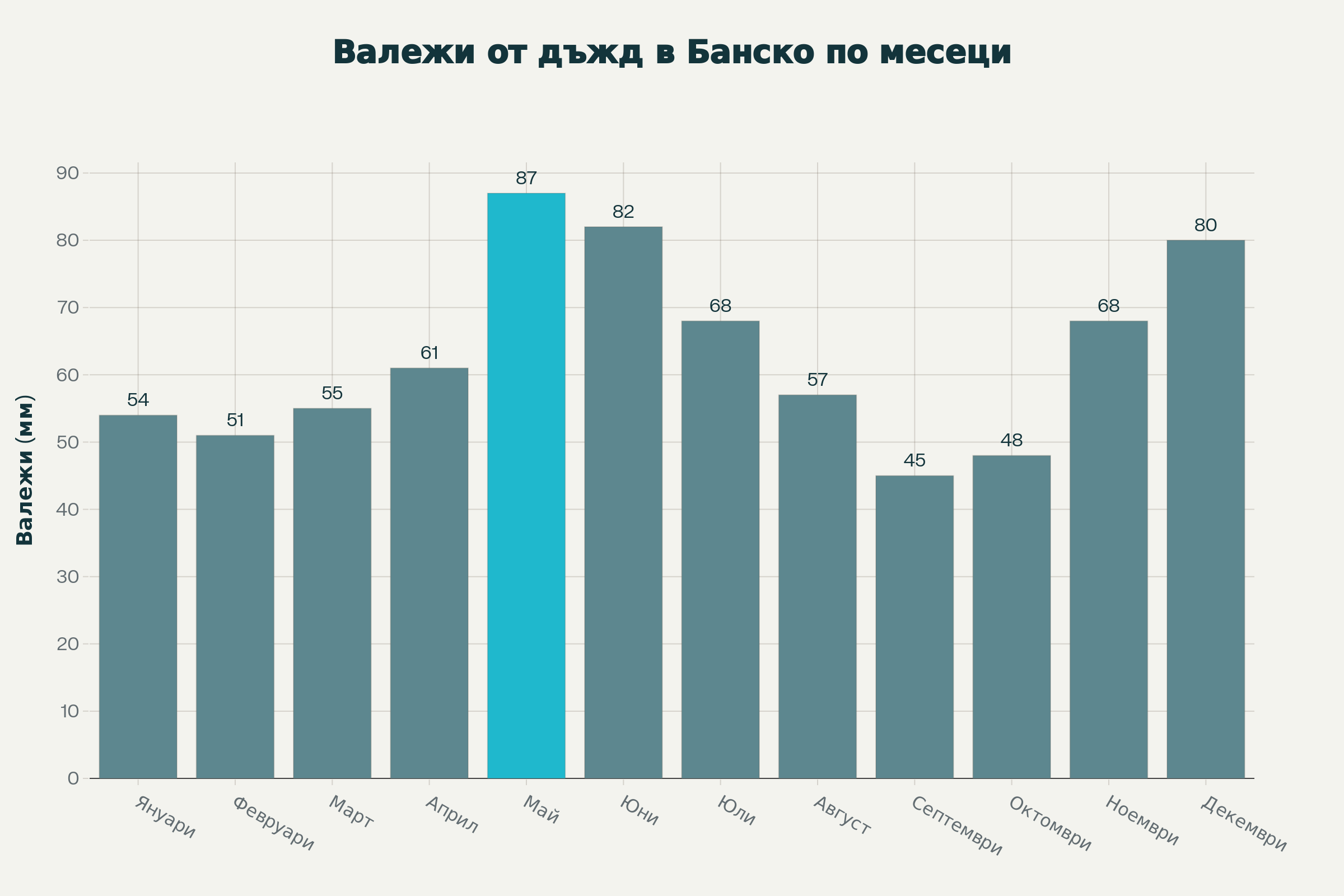
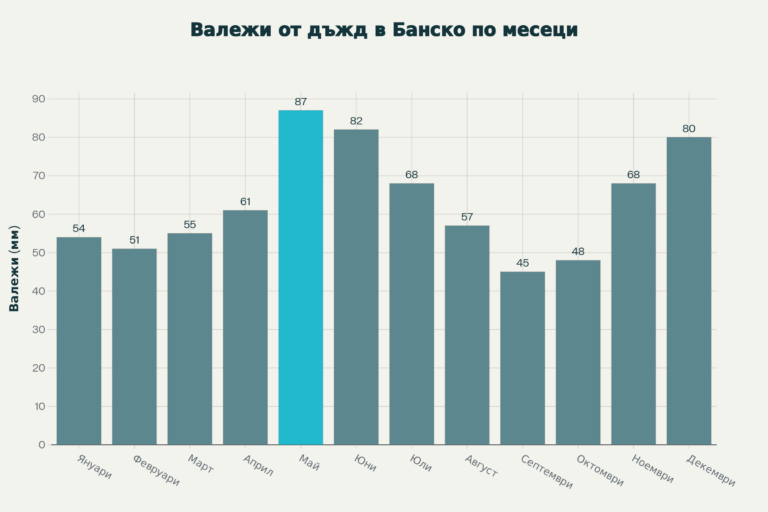
Figure 1: Visualization of the rainiest and driest periods in Bansko.
May and June: The peak of rainy days in Bansko
If you're wondering when you're most likely to need an umbrella, the answer is May. With an average of 87 mm of precipitation and about 13 days of precipitation, May is statistically the wettest month. This is the period of the “spring transformation”.
Nature of spring storms
Rainfall in May and June in Bansko is usually convective. It is formed as a result of evaporation and warming of the earth's surface. The usual scenario is:
- Clear and sunny morning until about 1:00 p.m.
- Rapid accumulation of cumulus-rain clouds over the peaks of Vihren and Todorka.
- Intense torrential rain with thunderstorms lasting between 30 and 60 minutes.
- Rapidly clearing skies and high humidity.
Because of this dynamic, experienced guides advise starting hikes at 5:00 or 6:00 in the morning so that you can get below the forest belt before the afternoon storms.
When is the driest time for hiking?
August and September are the months in which Bansko reveals its most hospitable face to mountaineers. In September, precipitation drops to just 45 mm, making it the driest month of the year.
This is the perfect time for technical hikes like the ascent of The horse or long routes to Tevno Lake. The rocks are dry, the traction of the shoes is maximum, and the risk of sudden thunderstorms is significantly lower.
Autumn rains and the transition to winter
In October and November rainy days in Bansko acquire a different character. Here we are no longer talking about short summer torrents, but about the so-called frontal precipitation. They are often heavy, small and can last for days.
An interesting fact is that in November, when the city is experiencing cold rain, a permanent snow cover is already forming at altitudes above 1800-2000 meters. This is the time when skiers start watching the cameras with impatience.
Rainfall statistics by month
| Month | Quantity (mm) | Days with precipitation | What should we expect? |
|---|---|---|---|
| January | 54 mm | 4 days* | Mostly snow |
| March | 55 mm | 6 days | Changeable weather |
| May | 87 mm | 13 days | Peak precipitation |
| August | 57 mm | 7 days | Warm and dry |
| September | 45 mm | 6 days | Most stable time |
| December | 80 mm | 6 days* | Heavy snowfall |
*Note: In winter, precipitation days in statistics often refer to snow, which is critical for the quality of ski services.
What to do in Bansko when it rains?
Rainy days in Bansko don't mean a ruined vacation. The town offers numerous alternatives that will make you forget about the bad weather outside:
- SPA and relaxation: Bansko and the neighboring village of Banya are famous for their mineral springs. Rain is the best time to take a dip in a hot outdoor pool.
- Cultural tourism: Visit the house-museum of Nikola Vaptsarov or the unique church "“Holy Trinity.
- Local gastronomy: The coziness of the old Bansko taverns, the fireplace and traditional dishes such as kapama and chomlek are the perfect "protection" against the rain.
- Shopping and entertainment: A walk along Pirin Street or a visit to the modern coworking spaces if you combine vacation with work.
💡 Expert advice:
Always check weather in Bansko in real time via local webcams before you head to the mountains. Fog and rain in the city could mean snow or wind at 2500m!

 English (UK)